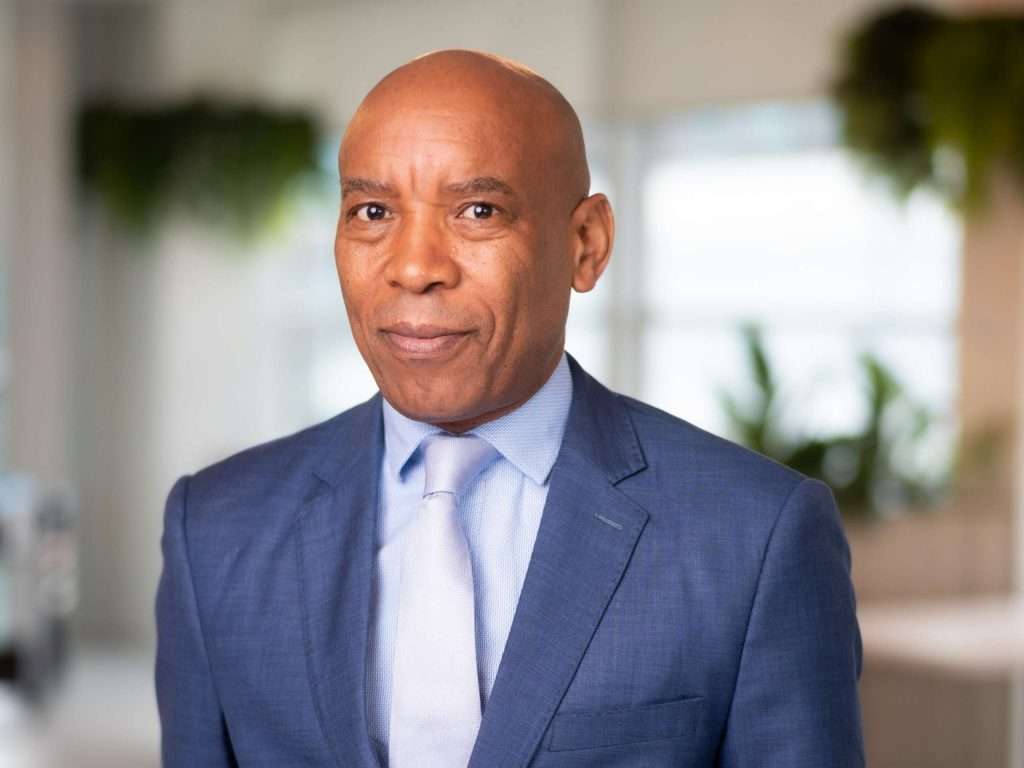
AI is reshaping finance and accounting by automating repetitive work, amplifying human judgement and creating opportunities for professionals to become more strategic advisers. Alfred Ramosedi, the president at CIMA and co-chair of AICPA, explores how the profession can harness AI while managing its risks and responsibilities.
Artificial intelligence is not just a set of nifty time-saving tools or even a major technological advance. It is an exponential force that is disrupting our profession at a rapid rate. The finance and accounting profession has already embraced AI for a wide range of operational and strategic purposes, from data entry and bank account reconciliation through to fraud detection, in-depth tax research and advanced financial analysis.
What’s more, despite all the gloomy predictions that AI is taking our jobs, the opposite is true. Finance and accounting professionals remain highly sought after by employers, who believe they can better deploy their unique human skills and expertise by harnessing the power of AI. A survey by Deloitte found that finance departments globally are wrestling with a shortage of skilled staff, with 40% investing in AI and automation to address their productivity gaps. The research also found that 64% of finance leaders planned to infuse more technical skills and capabilities within their functions.
AI is amplifying the capabilities of our profession
The truth is, rather than replacing us, AI is acting as a force multiplier for our profession. It is boosting our efficiency and productivity, allowing us to deliver even better results for our organisations than we could achieve as individuals or even as teams.
Going forward, it will continue to enable our profession by:
Amplifying – but not replacing – our judgement. AI allows us to deliver significant new insights that can help to enhance the performance of our organisations. Nevertheless, we must avoid the temptation to give into ‘cognitive offloading’ – the practice of outsourcing our thinking and decision-making to AI tools. Instead, we should view intelligent systems as a collaborative partner – a partner that frees us up to better apply our critical thinking skills so that we find new solutions to problems and create more value through our work.
Helping us to anticipate the future. No one can perfectly predict what will happen next, but being able to look ahead, and plan for different scenarios, is key to success in a fast-changing world. AI tools will enable us to identify and analyse important market trends so that we can support our organisations to seize opportunities and pre-solve problems before they become crises. AI tools will also enable us to embrace systems thinking so we can assess the interconnections between issues and understand the ripple effects of decisions made across our organisations.
Showcasing our role as responsible stewards of AI technologies. By drawing on our high ethical standards and acute professional judgement, we can guide our organisations in the competent and responsible adoption of AI systems. We can also provide assurance that those systems are working reliably and as intended. It is not just at a day-to-day, operational level that we can make a difference either. We can also support our colleagues to navigate the complex moral questions created by AI and automation, to ensure our organisations retain public trust.
Acting as a catalyst for us to evolve into strategic advisers. As I have written previously, our profession is on a journey from the business partner of today to the strategic adviser of the future. This journey will be enabled by AI and other cutting-edge technological tools. AI will enable us to move upstream from recording what has happened to prescribing what should happen, making our role less scorekeeper and more futurist.
Building an AI-enabled profession
Rise2040, a profession-wide research initiative launched by AICPA and CIMA, has highlighted the huge potential of AI as an enabler for the finance and accounting profession. The initiative brings together 6,000 insights from across the globe to collectively explore, challenge and shape the future of the profession.
The research highlighted that AI can be a liberating force that automates repetitive tasks and frees up professionals to focus on higher-order advisory work, judgement and strategy. To fully harness its potential, however, we must also find ways to manage the risks it presents. These include training gaps for early-career professionals, overreliance on automation and the erosion of experiential learning.
AI will transform our profession, generating exciting opportunities for us to create new value for our organisations. To seize these opportunities, we must look forward with confidence and be prepared to continuously adapt. We should also remain mindful that AI is the entry point to the future – not the endpoint.