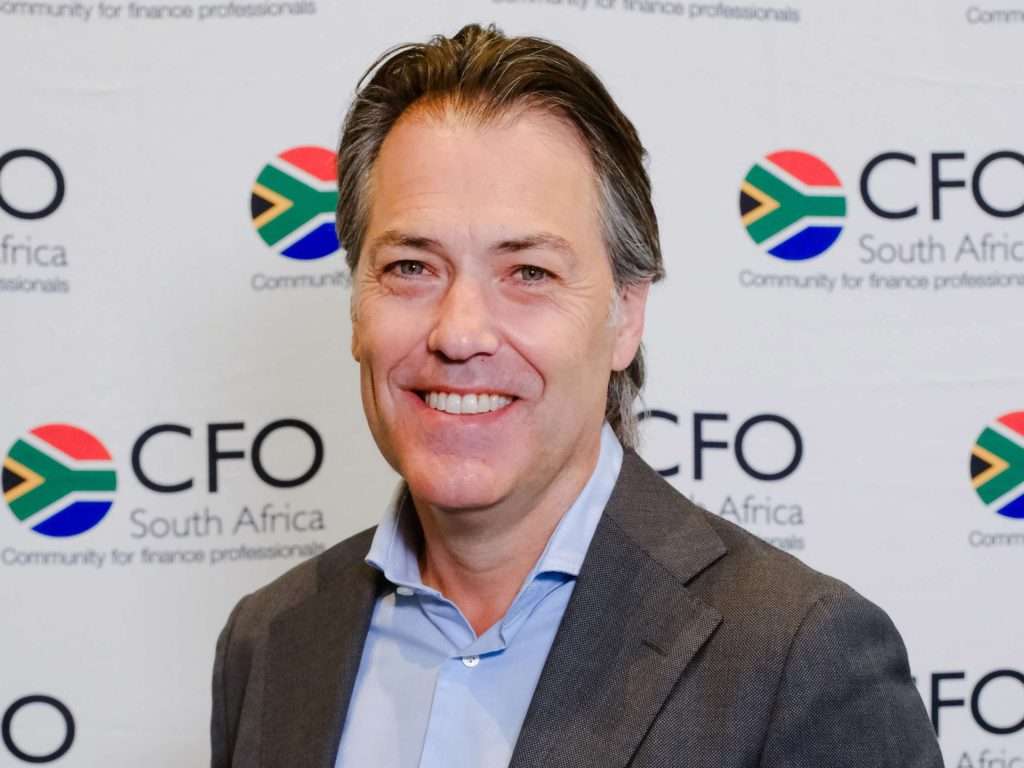
From performance guarantees to trade credit, Pieter Dingemans, head of credit specialties IMEA at Marsh, explains the benefits of freeing up capital for growth.
In today’s volatile environment, CFOs face increasing pressure to secure funding, manage guarantees and protect balance sheets while still enabling growth. According to Pieter Dingemans, head of credit specialties IMEA at Marsh, the answer lies in unlocking liquidity.
“At Marsh, our primary message to CFOs is simple,” he says. “We help you with liquidity. All our solutions, whether finance-related or surety-related, directly impact how you can attract finance. By doing this, we inject cash into your business and improve your financial flexibility.”
Marsh is part of Marsh McLennan (NYSE: MMC), a global professional services firm with annual revenue of over $17 billion, and as such, Pieter and his team are uniquely positioned to support CFOs in dynamic markets.
With 40,000 employees across 130 countries, Marsh has scale, data-driven insights and advisory depth to help finance leaders turn risk management into a tool for growth.
From surety to financial flexibility
One of the clearest ways in which Marsh assists CFOs is through insurance-backed surety solutions. Many companies, particularly in sectors such as construction, manufacturing, energy and mining, face heavy guarantee requirements for tender participation, utility payments, or exporting. The default option has traditionally been a bank guarantee, but this comes at a steep cost: banks almost always demand 100 percent collateral, effectively tying up capital that could otherwise fund operations or expansion.
Pieter illustrated the impact with a simple example: “If a company has a R100 million banking facility and needs to issue a R10 million bank guarantee, suddenly their available headroom drops to R90 million. But if they use an insurance guarantee instead, they don’t touch their banking facilities. It’s effectively an additional pool of unfunded capital,” he says.
This difference can fundamentally change a company’s financial position, freeing up liquidity to be redeployed. “That means companies have much more financial gunpowder to work with,” he adds.
South Africa’s guarantee burden
“These solutions are particularly relevant in South Africa, where companies carry some of the heaviest guarantee requirements,” Pieter says. “In the construction sector, for example, performance guarantees are standard when bidding on infrastructure projects like roads, rail or ports. Project owners will only award a tender if they have a guarantee that the contractor will complete the work, and insurance guarantees are a strong alternative to bank guarantees because they don’t tie up collateral.”
According to him, the pressure is just as intense in other industries. “Large electricity users must post payment guarantees with Eskom to access supply and many exporters also have to provide guarantees in order to move goods across borders. Transnet guarantees, along with customs and excise bonds, add to the burden,” he explains.
The mining industry, he adds, faces particularly complex obligations. “In addition to providing guarantees to Eskom, mining companies are required by the Department of Mineral Resources and Energy to post mine rehabilitation guarantees at the end of a mine’s lifecycle. These decommissioning bonds are critical for environmental rehabilitation, but they can be extremely capital-intensive,” he says.
These decommissioning bonds ensure environmental rehabilitation but are highly capital-intensive. “All of these obligations can suffocate working capital,” Pieter notes. “By using insurance guarantees, CFOs gain breathing space. It’s about improving financial headroom so they can invest, grow and compete.”
He says that the impact of this flexibility can be seen across sectors. “A construction company with more liquidity can bid for additional projects, a mining company can fund expansion while still meeting its rehabilitation commitments, and a manufacturer can secure electricity supply without draining its banking facilities. Across industries, CFOs gain the ability to pursue more opportunities without weakening their balance sheets,” he explains.
Managing risk and accountability
Liquidity is only one side of the story but how risk is managed plays an equally important role in how CFOs make decisions. Pieter pointed out that today’s finance leaders are often required to navigate geopolitics as much as they navigate financial statements. Trade wars, sanctions and shifting alliances directly affect credit exposures, particularly across the diverse IMEA region.
In this context, Marsh’s trade credit insurance and risk advisory services provide a stabilising force. By protecting receivables, securing cash flow and managing counterparty risk, these solutions give CFOs confidence that they can weather external shocks.
Surety bonds also bring discipline and trust into the system. For project owners, they provide assurance that contractors will deliver. For contractors, they act as a powerful motivator to perform. “If the guarantee is called, it usually means the company is in real trouble,” says Pieter. “It also damages trust: once a guarantee has been called, it’s very unlikely another insurer will back you. And the guarantor will come after the contractor for their money. That’s why we say bonds keep everyone honest.” For project owners, guarantees provide comfort that financial loss can be recovered if obligations aren’t met. For contractors, the knowledge that default closes the door to future projects keeps standards high. “It’s not just about compliance,” Pieter adds. “It’s about ensuring accountability across the industry.”
Liquidity as strategic capacity
The lesson is that CFOs should not think of liquidity as idle cash, but as strategic capacity. “It’s not just about surviving disruption,” he says. “It’s about having the flexibility to expand, invest and take advantage of opportunities.”
Through Marsh’s scale and global expertise which spans risk, strategy and people under the Marsh McLennan umbrella, CFOs can access solutions that free up capital, improve resilience and strengthen competitiveness.
“In a world where volatility is the norm,” Pieter says, “our role is to help CFOs preserve capital while unlocking growth. We help them unlock liquidity so they can do more with the resources they already have. That’s the real value of Marsh.”