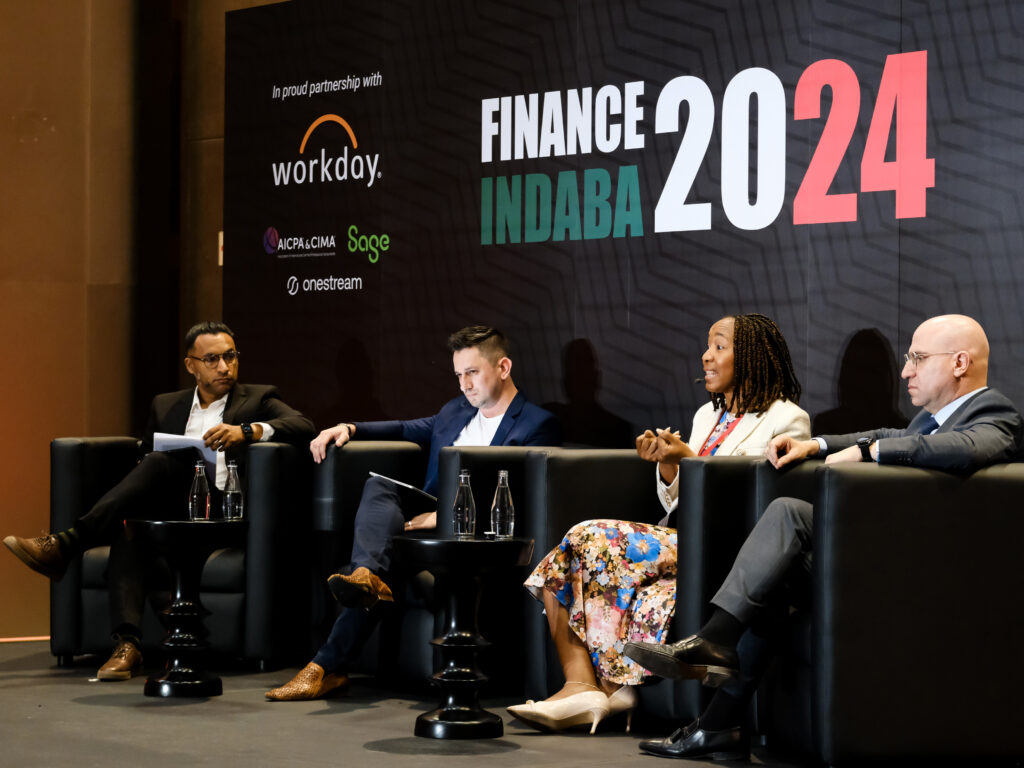
Delegates at the 2024 Finance Indaba heard how Zeda, best known for Avis rentals, successfully unbundled from Barloworld, as well as how Bridgestone South Africa went from making a loss to being a key part of the global company.
Zeda, which listed on the JSE on 13 December 2022, followed a complicated, yet carefully mapped out, process before unbundling from Barloworld and – having had to introduce itself as a new entity – is poised for more growth, just two years later.
Thobeka Ntshiza, Zeda CFO – speaking at the Showcasing South African excellence: Business leaders making a global impact session at the 2024 Finance Indaba – said that the company was unbundled from Barloworld to unlock value for shareholders. “We had to prepare to carve ourselves out on a standalone basis.”
The company had to look at which group entities to carve out as optimally as possible, taking legislation into account such as laws in the countries in which it operated across sub-Saharan Africa, Thobeka says. “What you wanted, really, is to minimise that disruption as much as possible, as it can get muddled up and delay the process.”
Having looked at where the operations that needed to be carved out were sitting, Zeda started creating new entities, Thobeka says. This process of ringfencing entities took 12 to 18 months.
One of the challenges was when it came to the rental side of Avis, which recycles its rentals every year and then sells them as secondhand. Thobeka says this was tricky because it could have meant creating a new entity and then going through the process of selling the cars to it, and then going through transferring licences. “The biggest issue is what do we do with the cars?”
Thobeka says the solution was to create a new statutory entity and then lease the cars from it.
The next challenge Thobeka says was introducing Zeda to the capital markets as it only had transactional accounts, and no funding lines. “Those were the most difficult discussions – how could we get them comfortable that we were not going to default? We had to look at what security we could provide to ensure that their debt would be in good hands and be protected.”
In addition, the company had to provide the JSE with a 12-month working capital model to show it would be successful on a standalone basis.
The third aspect was to untie the intertwined IT systems, which was “the one, single element that almost derailed us because we didn’t understand the intricacies from a skills perspective. We ended up having to boost resources and discuss contracts with Microsoft, because everything was one,” she says.
Having successfully done all of this, Zeda raised R7 billion on the JSE, continues to grow, and is now targeting mobility as a new business strategy, says Thobeka.
From loss to profit in 3.5 years
Fellow panelist Mikaeel Tayob, executive FD at Bridgestone Southern Africa, says that when he joined the company, it was a culture shock as the company was transparent about its loss-making over the past 15 years.
The core issue, Mikaeel told an audience at the Finance Indaba today, was that it was being led from a different country, which was a key issue in its loss-making position. “That is significant for a company that makes a lot of topline.”
To resolve this issue, Mikaeel says, the company did a few basic things, including determining what sustainability meant to it, which it decided was efficiency and sustaining families in terms of employees, which led to it investing in local management.
“We took a hard look in the mirror and looked at the things that were not working. Those decisions had to be made. So, we exited a lot of businesses that were a drain on the P&L,” Mikaeel says.
He adds that the company had to solve for unique local challenges, such as loadshedding. “These things allowed us to move the needle quickly. There was an immense turnaround quickly.”
Mikaeel says, after three-and-a-half years, it is on track to deliver a 19 percent return from a 16 percent loss. “Our single biggest competitive advantage is South Africans making South African tyres for South African consumers.”
Mikaeel says the local entity is now on the global map and has been nominated for a global company award. “We’re on the map for a company that was historically a blip. Everyone is talking about the South Africa story.”