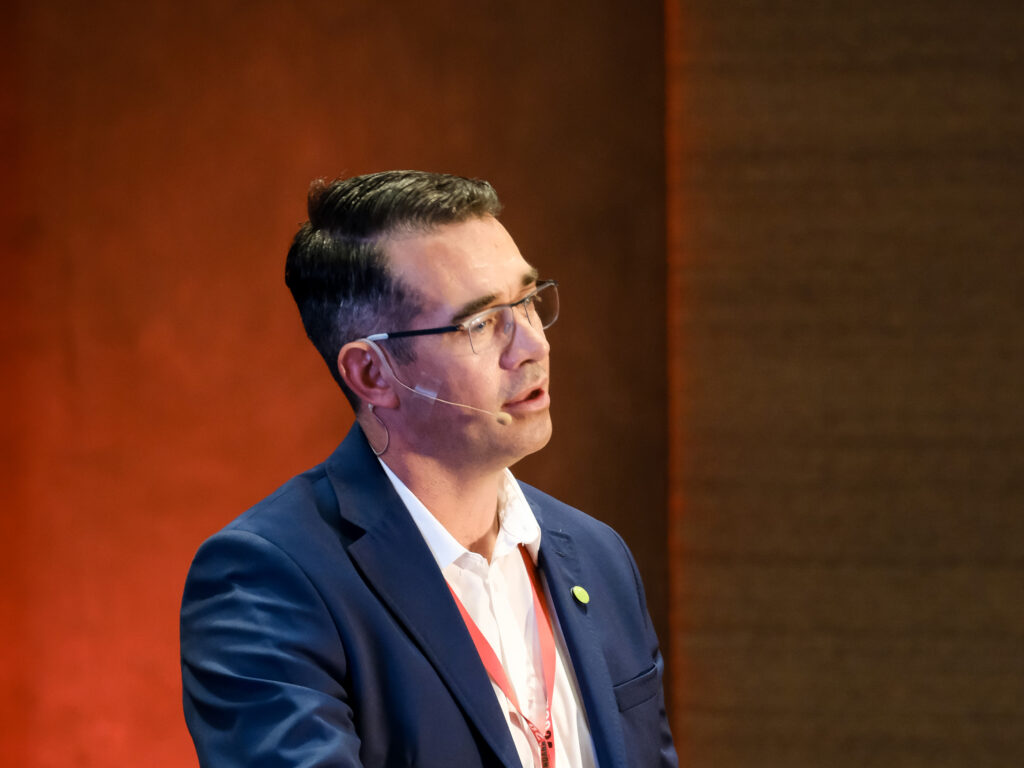
A 2024 Finance Indaba big topics session explored how "lights out" finance is here to stay.
In an informative session entitled Forever Forward with Workday: Lights Out Finance, how automation can transform your finance function, Andries Van Den Berg, finance and performance leader at Deloitte, maintained that disruption of the finance function is here to stay. This shouldn’t be feared, however, and finance leaders can take their organisations into the future through automation – underpinned by a concept dubbed ‘Lights Out’.
“Let’s turn the lights out on back-office finance, like manual invoicing processing and reconciliation, so that the finance function can get to things that’ll move the business needle forward, like innovation,” said Andries. “It’s not an on/off switch, though, it’s more like a thermostat with up and down levers powering up different enablers.”
Andries added that the finance function is expected to keep going no matter what happens, even if their people, data, and processes aren’t up to the challenge. Chasing down multiple sources of truth and different Excel spreadsheets isn’t sustainable. Ideally, the finance function should be able to “set it and forget it” so they can spend their time on more important tasks that drive the business’s success.
“As a finance leader, you want your team to do the analysis and present the best possible options – you want them to do human work that adds value, that shifts the finance focus from transactions to outcomes, processes to opportunities.”
Andries conceded that this is somewhat of a “Nirvana state”, but the key to starting this transformation journey is through automation.
A critical starting point, according to Andries, is having a single source of truth, standardised data, and a clearly defined, end-to-end strategy in all functions. It’s also important to remember that you must consider what impact you want automation to have, figure out what your organisation’s enablers are, and connect the benefits to the enablers.
For Andries, getting started with automation is about small steps and gradations of change. Finance leaders need to ask questions like, what’s the reality now versus where does the business want to be? How touchless do you want your processes to be and why? How ready is your data? Do you feel confident in the organisation’s standardisation processes? If not, get a mechanism to establish where the gaps are. Process mining tools can see deviations and how much time is lost, advised Andries.
He pointed out that change management is more important than automation itself, because you don’t want to lose good talent if they fear losing their jobs to a bot.
“You also need the right skills and processes to leverage your data. What’s the target operating model you may need to do things differently? Think beyond the numbers and reskill your finance function to become storytellers about underlying aspects that drive the numbers.”
Andries added that as the CFO, you need to get your hands dirty in data to provide real business value. A finance professional should be data literate and be able to use storytelling through visualisation dashboards. But it’s okay to just be a functional expert, he noted. Technical experts can be sourced from Centres of Excellence – you just can’t be completely ignorant to data.
His parting words? “Start the data-cleansing process now and test the hell out of whatever you want to automate. Finance is changing, whether you like it or not – start small, but think big,” he concluded.