Tokenisation is rapidly moving from concept to reality, with South Africa helping to write the playbook for its development. According to Ninety One's head of corporates, Quaniet Richards, finance leaders who embrace the technology early could unlock faster settlements, stronger liquidity management and entirely new investment opportunities.
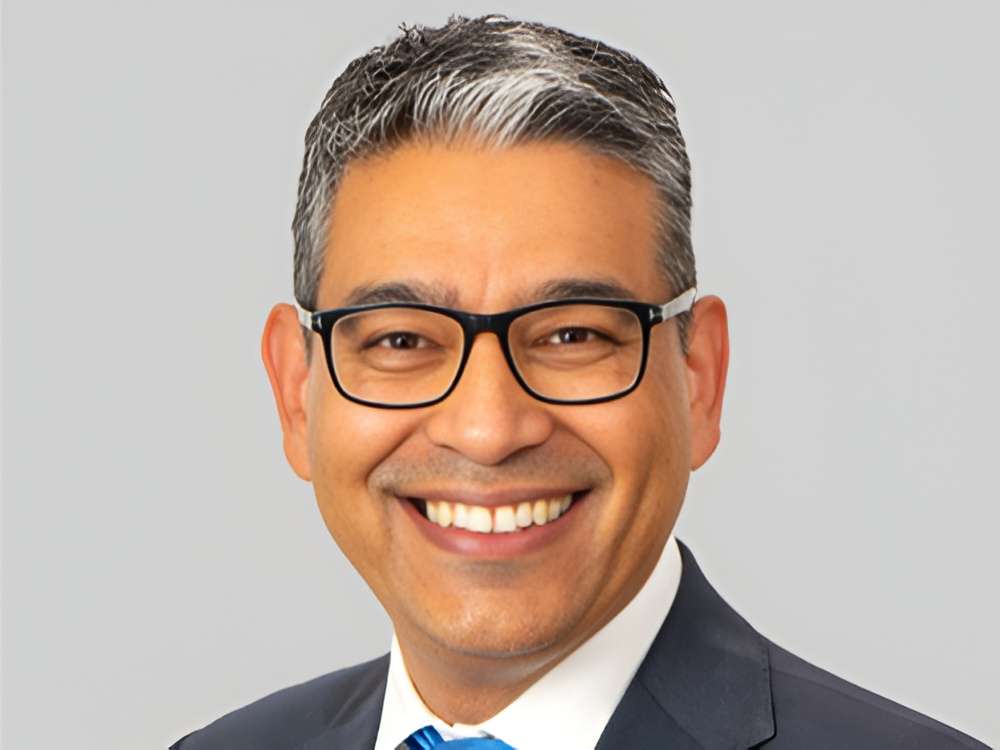
Corporate treasury is on the cusp of one of its biggest transformations in decades, and according to Quaniet Richards, head of corporates at Ninety One, finance leaders who dismiss tokenisation as simply another cryptocurrency trend risk overlooking one of the most significant developments in modern financial markets.
Speaking to CFO South Africa, Quaniet explained that tokenisation has the potential to fundamentally reshape how organisations manage liquidity, investments, settlements and cross-border payments, while simultaneously reducing costs and operational complexity.
“Strip away the jargon and tokenisation is simply a better record of who owns what. A record that updates instantly, runs on far longer hours, and needs fewer middlemen,” he says.
“The asset itself does not change. A tokenised government bond is still a government bond; a tokenised money market fund is still a money market fund. What changes is how quickly, cheaply and transparently it moves.”
He notes that some of the world's most established financial institutions have already embraced the technology.
“Notice who moved first. Not speculators. The most conservative names in world finance, including BlackRock and JP Morgan, chose to tokenise the safest instruments they have: government debt and money market funds. The boring stuff went first. That tells you everything.”
South Africa is not starting from scratch
While tokenisation is often viewed as an emerging global trend, Quaniet points out that South Africa has been experimenting with the technology for several years.
He highlights the South African Reserve Bank's Project Khokha, which successfully demonstrated the use of digital currency and tokenised settlement systems.
“It is also worth remembering that this is not a foreign idea arriving on our shores. In 2018, our own Reserve Bank ran Project Khokha, in which it and the major South African banks settled a full day's worth of interbank payments in two hours using a digital rand, with each transaction taking less than two seconds,” he says.
He adds that the second phase of the project saw the Reserve Bank issue its own debt instruments as digital tokens alongside major financial institutions and explained that South Africa helped write the playbook.
Unlocking smarter liquidity management
Quaniet believes one of the biggest advantages for corporate treasury lies in improving cash management.
Rather than operating around fixed dealing windows and settlement schedules, tokenisation enables assets and cash to move almost instantly, allowing treasury teams to optimise liquidity throughout the day.
“Today, cash management runs on a timetable. Miss the morning cut-off on your money market fund and you wait until tomorrow. Tokenisation gradually removes the timetable,” he explains.
He says this allows organisations to separate operational cash from longer-term investments while ensuring surplus cash works harder, adding that cash stops being a parking problem and becomes a working asset.
Quaniet explains that even relatively small differences in returns can have a significant financial impact.
“At today's interest rates, a company leaving five hundred million rand in a call account earning one percent less than it should is giving up five million rand a year, every year, quietly.”
Faster settlements and more efficient working capital
Beyond investment returns, Quaniet believes tokenisation could dramatically improve working capital management by eliminating settlement delays.
“The biggest prize is the death of waiting. Today, payment and delivery happen at different moments, and treasurers park spare cash against that gap, just in case,” he says.
He explains that tokenisation allows payment and delivery to occur simultaneously, freeing up cash that would otherwise remain idle. “Payment and delivery settle together, in the same instant. The gap disappears and the parked cash goes back to work in the business.”
He adds that reconciliation processes could also become largely redundant, saying that when everyone works from one shared record there is nothing to reconcile.
Tokenisation is not cryptocurrency
Quaniet says one of the biggest misconceptions among finance leaders is confusing tokenisation with crypto assets.
"The biggest by far is that tokenisation is crypto. Crypto is an asset class, and a volatile one. Tokenisation is a filing system. Judging tokenisation by Bitcoin is like judging the internet by one bad website,” he says.
He stresses that South Africa's regulatory framework around digital assets has evolved significantly. “The second misconception is that it is unregulated. In South Africa, crypto assets are classified as financial products, providers are licensed, and our regulators have been coordinating on this through a joint working group for years.”
He adds that technology does not eliminate the need for sound financial judgement.
“A tokenised bad fund is still a bad fund. The wrapper changes; the need for someone to judge credit, duration and risk does not.”
Innovation must be balanced with discipline
Although Quaniet believes tokenisation presents significant opportunities, he cautioned CFOs against adopting new technologies without robust governance.
"My rule is simple: innovate in the wrapper, never in the standards. The technology can be new; the discipline must remain exactly as boring as it has always been,” he says.
He encourages organisations to work only with regulated providers, ensure reserves are independently audited and involve auditors and risk teams from the outset.
“Pilot with money you can afford to have stuck, never core cash. This is also why the choice of investment manager matters more in this transition, not less. Someone has to do the work of engaging regulators and auditors through the grey areas,” he advises.
He believes treasury teams will increasingly need to combine traditional financial expertise with a practical understanding of digital infrastructure.
"The core skill does not change: judgment about liquidity, credit and risk. What changes is that treasury professionals will need to become bilingual, fluent in finance and conversant in technology,” he says.
Rather than learning to code, treasury professionals should focus on asking the right questions.
“Who holds the keys? Who audited the system? What happens if a counterparty fails?”
He adds that finance teams have successfully adapted to previous technological shifts and will do so again.
“Our profession has absorbed bigger shifts, from paper to electronic banking to integrated systems. This is simply the next one.”
A competitive advantage for early adopters
For CFOs wondering where to begin, Quaniet recommends starting with treasury fundamentals rather than technology.
“Start with arithmetic, not technology. Audit what your cash actually earns in its call accounts against what it should earn, split your cash into working and core layers, and fix the easy yield immediately.”
He also encourages finance leaders to educate themselves, engage investment managers and auditors, pilot small projects through regulated providers and regularly discuss tokenisation within treasury governance structures.
Looking ahead, he believes the organisations that succeed will be those that embrace innovation thoughtfully rather than waiting for complete certainty.
“The treasury function that thrives will treat cash as a live, working asset rather than an idle balance, and the trait that separates the winners will not be technology. It will be curiosity, backed by discipline.”
“The finance leaders who understand that early will hold a real advantage, and we would like to help them do it,” he says.