Top finance executives gathered in Sandton for the first CFO Summit of 2026, exchanging practical insights on capital allocation, AI adoption, organisational culture and the changing role of finance leaders as strategic change agents.
Not even Johannesburg’s peak traffic congestion could dampen the spirits at the first CFO Summit of 2026. The Return on CapExcellence Summit was hosted on 10 February at the Sandton Hotel in the heart of the bustling business district.
The high level of excitement among finance leaders and industry peers, eager to reconnect over good food and conversation, was palpable.
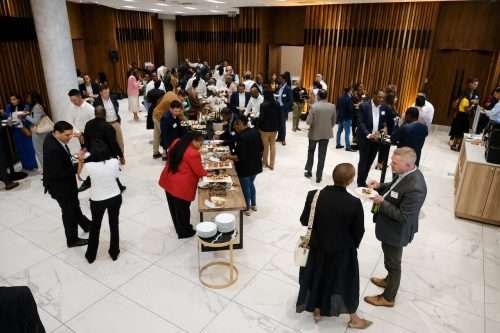
The evening kicked off against the backdrop of a magnificent and sunny Johannesburg afternoon. The cool, air-conditioned lobby and welcome drinks on ice provided a much-needed respite from the heat for CFOs who began to trickle in.
They converged around a beautifully laid out table covered in an assortment of light finger foods, chatting among each other.
As the afternoon wore on, the lobby quickly filled out, with CFOs soon easing into the evening.
The first event saw the packed lobby split into two groups for a quick ice-breaking activity titled Rands and Sense.
Evaluating investments
During this peer-led discussion, CFOs discussed insights and hacks for unlocking value on high-ticket investments. Attendees were asked how they determine what qualifies as capital expenditure, and how to evaluate a potential capex investment?
“My biggest learning is to bring the auditor on board quickly,” said Omair Zafar Khan, group financial director at Anchor Capital. “Let them guide you to what the right accounting treatment should be, or whether it should be capital expenditure from an accounting perspective, or whether it should be expenditure.”
Adding more insight was Mpolaheng Mohlopi (Kekana), CFO at Lanseria Airport, who told finance leaders that managing a medium-sized airport had its advantages and disadvantages.
“It’s been challenging for us in that being a medium-sized airport when compared to our big brother, we don’t have a bottomless cheque. We don’t have the luxury of accessing funding as quickly as they do,” she explained. “We are highly regulated so for us, return on investment is secondary.”
The conversation then shifted to AI and its role in the changing workplace. While some companies like Anchor Capital were using AI to simulate competition, other companies like Altron were interested in helping small businesses incorporate the new technology into their operations for a fee.
Spending wisely
“There are many small businesses who don’t know what this is and they just want somebody to become their trusted partner in their AI journey and that is what we provide,” said Carel Snyman, group CFO at Altron.
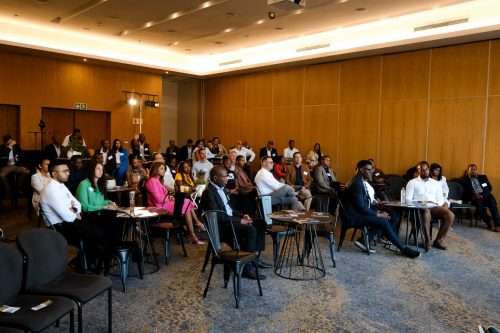
But, before the conversation could flow any further, the ice-breaker group activity timed out and CFOs were ushered into the main hall for a debrief session, aimed at summarising learnings from each group.
“We had two perspectives, one from the public sector and I spoke from financial services at Access Bank,” Avashnee Ramdial, chief financial officer at Access Bank South Africa, informed the room. “From the public sector side there is a lot of scrutiny in terms of revenue you are generating,” she added. “Whatever you are doing, you have to spend the money responsibly.”
She also touched on her own situation in which Nigerian financial services firm, Access Bank, is trying to break into the South African market. Avashnee said competing against the big four in a mature banking market had its challenges.
Richard Tanner, CFO at Korridor said the group also had conversations around software development. “I think everyone had a lot of concerns around the amount of money that firms want to spend on software and is it going to deliver what the guys say it's going to deliver,” said Richard.
CFOs as fixers
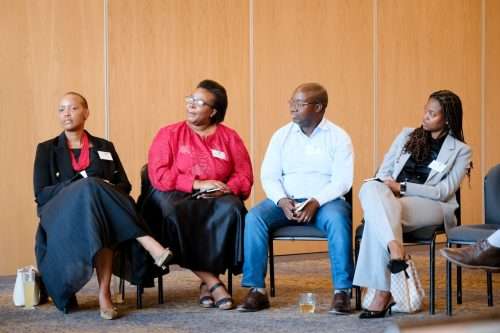
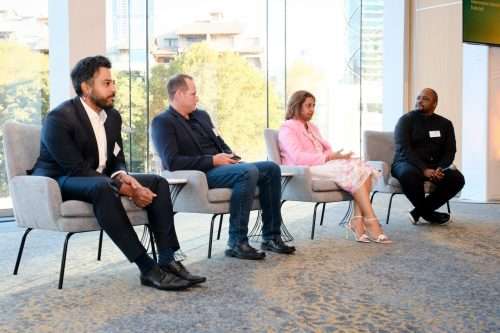
After a brief networking break, to both connect and sample more of the delicious canapes, attendees then entered the final stretch in the form of a panel discussion, titled CFOs Agents of Change: The CFO role as a fixer and a catalyst for strategic reinvention.
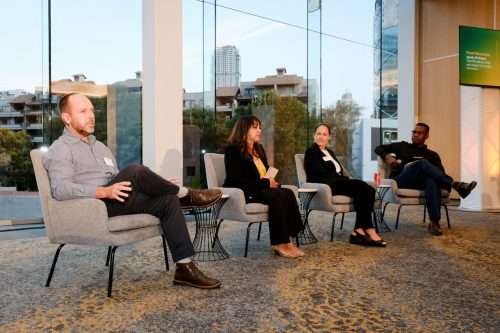
The speakers included Carel, Aalia Manie, MD at Webber Wentzel Fusion and Rebecca Pole, VP: finance at NTT Data Southern Africa.
As the skies darkened into evening, the panel took a deep dive into topics, such as navigating change management, office culture, risk management and how to deliver bad news to people.
For Carel, it comes down to communicating clearly and more often if necessary about where the company is going and its expectations.
But at the same time, he believes in not begging people to want to be at work. “I don’t believe that you should convince people to work where they work,” he said.
It was a sentiment echoed by Rebecca. “Not everyone wants to get on the bus, but at the same time there are plenty of people who want to get on the bus. You have to stay true to strategy and understand that there will be casualties. You are never going to please everyone,” she said.
For Rebecca, it is necessary to invest in new talent if necessary.
Carel added that he saw resistance to change when the world was coming out of the Covid-19 pandemic and there were big debates about working from home and returning to the office.
Work culture, incentives and change management
“We wanted the office to be a lekker place to hang out,” he said. Surprisingly it was younger people who were among the first cohort of staff to return to the newly furnished office. “It was young people who were full of bright ideas because they were excited to be part of a community,” he said.
Work culture, office atmosphere and incentives must make people happy to be present at their jobs, Aalia believes.
“There was a time when talent was scarce and we were so scared to lose people and we didn’t know how the work was going to be done,” she explained. “We were really desperate and over communicating and really thinking about how everyone can be part of this community of kumbaya and we eventually realised it’s not going to work out,” Aalia recalled.
“But on the flipside we learnt that you have to be realistic about incentives,” she stressed, saying it was also important to be practical with expectations and how long it would take to achieve certain goals.
Carel, who jumped from MultiChoice to Altron, gave his team and staff freedom to execute their ideas without the fear of losing their jobs, or making mistakes.
Mitigating risk and allowing for mistakes
“I had a bunch of guys whom I told they could do whatever they wanted. They didn’t have to tell me what they were doing. I just put the money aside, I didn’t report on it. If anything comes out of this, let me know, if it doesn’t I already wrote it off as experience education,” he said, adding that the exercise enabled him to see what each member could and could not do.
“You will be surprised at how people are suddenly prepared to go out and try things because the minute you take that fear of losing their jobs or bonuses from people, it's amazing what they come up with,” he added.
But while giving staff freedom to explore ways to make money, he emphasised that they were not allowed to bring the company into disrepute.
Rebecca also felt strongly about being able to understand and mitigate risk-taking in business.
“There’s always a trade off when you make decisions as a CFO. You have to be able to take risks, but balance that out with your fiduciary duties, cash flow, regulations, whatever that might be,” she said. “For me, it's about not being afraid to take a calculated risk and recognising when the risk is at a tipping point.”
Rebecca also reiterated the importance of fostering an environment that allows for mistakes and staff being able to learn and grow from error without fear.
“We try to create a culture where the number one goal is to stay humble,” Aalia said. “So, if we assume that we are all humble, we know that we don’t know everything.”
Communicating difficult decisions
For Aalia, it is key that companies acknowledge the mental load people face daily. “We always joke that we are saving PDFs, not lives. We are not doctors and we are not surgeons,” she stressed.
She added that lawyers are also just trying to do their best in an environment where they have to make a lot of money for clients. “We know February and August are particularly busy, so we try to ensure people take leave before and after these periods,” Aalia said.
On delivering bad news to staff, Carel said he’s had to do it twice in his career and hopes he never has to do it again. “It’s important to remember that you are dealing with humans, people with families, children and responsibilities,” he said. “If you are delivering bad news, do it quickly. Put all your facts on the table and there’s no point in dilly-dallying.”
The summit provided lots of food for thought, as finance professionals milled around the buffet table for a final round of drinks and to enjoy a tempting last-minute dessert canapé or two.
“The finance and accounting profession has changed so much in the last few years alone. It can be very overwhelming, that is why I am so glad for events like this. It is great to be able to connect with people and have these discussions,” was a closing thought from one CFO.
The CFO Return on CapExcellence Summit was held in partnership with Allan Gray, BDO SA, Caseware Africa, Marsh, Stanlib, Workday and Yellow Card.