Against the backdrop of a conversation about capital investment, Cape Town's finance leaders turned their attention to one of South Africa's most pressing challenges: youth unemployment. At a CFO dinner at Mount Nelson, the discussion explored how businesses can help young people enter the workplace, develop the skills needed for tomorrow's economy and become the finance leaders of the future.
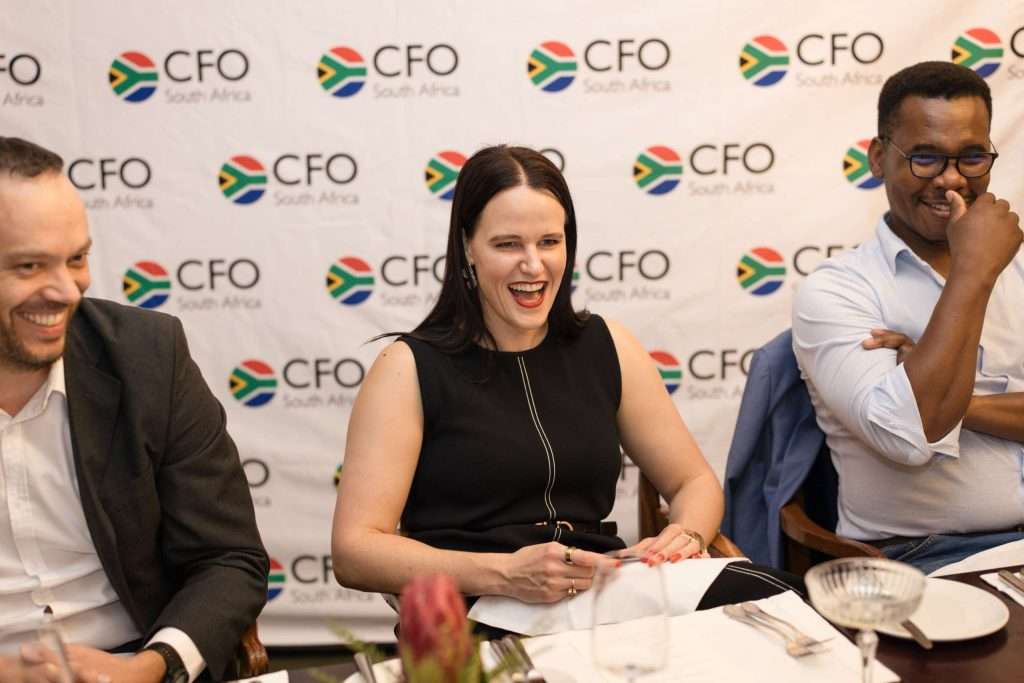
Some of Cape Town’s leading finance executives gathered around the table at the Mount Nelson Hotel on 12 November, where a shared dinner, lively conversation and personal stories created an opportunity to connect, exchange perspectives and reflect on the experiences shaping their world of finance.
The CFO dinner brought together finance leaders under the theme, “Why is capital sitting on the sidelines?”, exploring why investment remains subdued despite an increasingly optimistic economic outlook, moderating inflation, easing interest rates and significant cash reserves sitting on corporate balance sheets.
But while capital allocation and investment provided the starting point for the evening, the conversation soon moved towards something that reaches beyond balance sheets and financial forecasts: the future of South Africa's young people.
Youth unemployment, the difficulty of connecting job seekers with meaningful opportunities and the responsibility of businesses to develop future talent became important talking points. The discussion also raised questions about whether the next generation is receiving the education and workplace exposure needed to become tomorrow's business and finance leaders.
For the CFOs around the table, the conversation was a reminder that investment is not only about where money goes, but also about what it makes possible.
Turning capital into opportunity
One of the challenges raised during the evening was the growing gap between the number of young people looking for work and the opportunities available to them.

A finance leader described how employers can receive enormous numbers of applications when advertising entry-level positions. In one example from Nigeria, an internship advertisement attracted almost 1,000 young applicants.
“For an employer, the challenge is identifying the right candidates from such a large pool. For the young people applying, the challenge is getting their applications noticed and having an opportunity to demonstrate what they can offer,” he said.
Technology is increasingly helping businesses manage recruitment, using algorithms to screen applications and identify candidates whose skills and experience match particular requirements. However, the discussion highlighted that access to technology is not always straightforward.
The CFO explained that across parts of Africa, mobile phone usage is high, but the way people use their devices differs from that in more developed markets. Many job seekers rely on platforms such as WhatsApp and Facebook, where they can access services without necessarily having to pay for mobile data. This can make it difficult for them to access recruitment platforms that require an internet connection and regular data usage.
“The result is a technology gap between employers' advertising opportunities and the young people who need to find them,” he said.
The finance leader explained that recruitment businesses must consider both how they match candidates to vacancies and whether those candidates can access the opportunities in the first place.
Another CFO added that artificial intelligence is becoming an increasingly important part of that process, but it still needs to be supported by a practical understanding of the communities it is intended to serve.
The conversation also highlighted the difficulty of maintaining contact with job seekers. Some candidates frequently change their phone numbers and email addresses, making it harder for recruitment businesses to keep their information current.
“For employers, these challenges can make recruitment more complicated. For young people, they can mean missing out on opportunities simply because they cannot remain connected to the process,” he said.
The importance of the first opportunity
One of the most significant points raised during the dinner was the effect that prolonged unemployment can have on a graduate's career.
“Completing a qualification is an important achievement, but without an opportunity to apply that knowledge, young graduates can find themselves falling behind,” A CFO said.
One attendee explained that research conducted a few years earlier had highlighted the importance of graduates gaining relevant work experience soon after completing their studies.
“Within those first three years of them graduating, they need to find something that sort of aligns with what they studied."
The concern is that when graduates spend several years outside the workplace, the knowledge they acquired during their studies can begin to fade. By the time an opportunity eventually comes along, they may find themselves competing against candidates who have already gained practical experience.
Internships were therefore identified as an important way of helping young people bridge the gap between education and employment.

The discussion highlighted the role of impact partners and organisations that can help businesses create internship opportunities. These partnerships allow young people to gain exposure to working environments, build their experience and retain the knowledge they acquired through their studies.
“They can also help employers build a database of candidates who have had an opportunity to demonstrate their abilities,” stated a CFO.
“However, creating these opportunities requires funding and support. Businesses cannot necessarily carry the cost of every initiative themselves, making partnerships with organisations that share the same objectives important,” said one CFO.
“For finance leaders, this is where the discussion about capital becomes particularly relevant. Investment in young people may not always deliver an immediate financial return, but it can help build the talent pipeline that businesses and the broader economy will need,” another pointed out.
Getting young people through the workplace door
The conversation also moved beyond recruitment to consider the practical challenges that young people face when they secure their first jobs.
One participant shared an experience from their time at a previous company, where expanding operations into smaller towns presented a particular challenge. Although the business had a strong presence in metropolitan areas, finding suitable employees in outlying towns was more difficult.
“The issue was not necessarily a shortage of people looking for work. Rather, it was about connecting the available workforce with the requirements of employers,” he said.
The discussion then highlighted that young job seekers can face financial and personal obstacles before they even receive their first salary. For someone paid monthly, getting through the first 25 days of employment can be difficult when there is no existing income to cover transport and other costs.
“For a young mother, the challenge can be even more complicated. Finding childcare, arranging transport and contributing to household expenses can make accepting a job financially demanding,” said a CFO.
“These are realities that employers do not always see when they advertise a vacancy or assess a candidate's suitability,” added the CFO.
The discussion also touched on financial literacy and the importance of helping young people understand how to manage their money.
One participant described how recruitment businesses are increasingly looking at ways to empower job seekers beyond simply matching them with vacancies. Understanding financial behaviour can be important because financial pressure can affect a person's ability to remain employed.

“Transport, airtime and other everyday expenses can consume a significant portion of a young person's income. The conversation also raised concerns about online gambling and the impact that gambling-related debt can have on financial stability,” she said.
The participant noted that young people are not always given the financial education needed to make informed decisions about their money.
"To teach them, to show them, because no one ever has."
Who is preparing tomorrow's CFOs?
As the evening progressed, the conversation moved from getting young people into the workplace to considering what happens once they arrive.
With businesses changing rapidly, one CFO questioned whether universities are adequately preparing students for the demands of the modern workplace.
“Are universities producing the right financial managers, or CFOs, or teachers, with what they have right now? Or is the curriculum preparing these kids to be the future CFOs? The answer is no.”
The question prompted a discussion about how education needs to evolve alongside changes in technology, business and the expectations placed on finance professionals.
One participant argued that the traditional classroom model has remained largely unchanged for generations. A subject matter expert stands at the front, students listen, complete homework and write tests. Yet the way younger generations consume information and learn has changed considerably.
To illustrate the point, the CFO shared an example of watching Formula One with his daughter.
While he followed the traditional television broadcast, she followed the race through social media, online commentary and discussions on digital platforms. She was not necessarily watching the television, but she was still following the race closely and engaging with what was happening.
When he questioned why she was not watching the broadcast, her response demonstrated how differently younger generations approach information.
“Failing to recognise generational change could affect how future finance professionals are trained. It also raises questions about whether universities are equipping students with the practical skills and adaptability needed to succeed beyond their qualifications,” the CFO said.
Learning beyond the classroom
Another important point was the gap between academic knowledge and the experience required to lead a finance function.
“Qualifications provide the technical foundation for a career in finance, but the responsibilities of a CFO extend well beyond accounting principles and financial reporting,” said another CFO.
One participant reflected on the lessons gained through years of working in finance, explaining that experience and learning from mistakes had played a much bigger role in shaping their ability to do the job.
"If I relied on the stuff I learned at university and at Articles, I'd fail as a CFO. I promise you. What I learned on the job was far more, 70 to 80 percent more."
The comment highlighted the importance of giving young finance professionals opportunities to work on real business challenges, make decisions and learn from experienced colleagues.
The discussion also touched on the mindset that graduates bring into the workplace. One CFO observed that newly qualified chartered accountants can sometimes approach their responsibilities with a strong risk mindset, rather than looking for opportunities to contribute to business growth.
“While risk management remains an essential part of finance, the role of a CFO increasingly requires an understanding of the wider organisation and the ability to identify where value can be created,
“For young professionals hoping to move into senior finance positions, developing this broader perspective will be important,” said a CFO.
The human skills AI cannot replace
Artificial intelligence inevitably became part of the discussion, with finance leaders considering how its growing presence will affect young people entering the workforce.
There was recognition that technology will change the nature of many jobs, but also that businesses cannot overlook the human skills needed to make technology useful.
One participant questioned how young employees would gain experience when tasks traditionally used to develop workplace skills could increasingly be automated.
If entry-level employees no longer perform some of the tasks that helped previous generations learn the fundamentals of finance, businesses will need to reconsider how they develop their people.
The concern is particularly relevant to young professionals who are still learning how to interpret information, solve problems and understand business operations.
Another CFO argued that universities should place greater emphasis on communication, problem-solving and emotional intelligence.
"I want to see a university teach soft skills. Actually, soft is the wrong word because it's not soft anyway."
The participant went on to identify communication, problem-solving and the ability to understand people as important qualities that distinguish human employees from machines.
"What distinguishes you from a machine or AI is the ability to think for yourself, critical thinking, those are the skills."
The discussion also explored whether young people who have grown up with AI risk becoming too dependent on it before developing their own critical thinking abilities.
For a generation that has access to information at the touch of a button, the challenge may be learning when to question the answers being presented.
One participant observed that people who use AI effectively understand their subject matter well enough to challenge its responses. They know what questions to ask and can recognise when the information they receive does not make sense.
“Without that foundation, there is a risk of accepting information without understanding whether it is accurate,” he said.
“This is an important consideration for the next generation of finance professionals. They will enter workplaces where AI is increasingly part of everyday operations, but they will still need the knowledge and confidence to exercise their own judgement,” said the CFO.
Those in attendance were:
Andrew Day - CFO, South South North
Brendon Lucke - CFO, Commercial Cold Holdings
Craig Mitchelle - CFO, Biovac
Danya von Scheliha - CFO, JOBJACK
Herbert Pasipamire - CFO, ROAM Africa
Tommie Koeries - CFO, Much Asphalt
Zaf Mahomed - CFO, Oceana Group