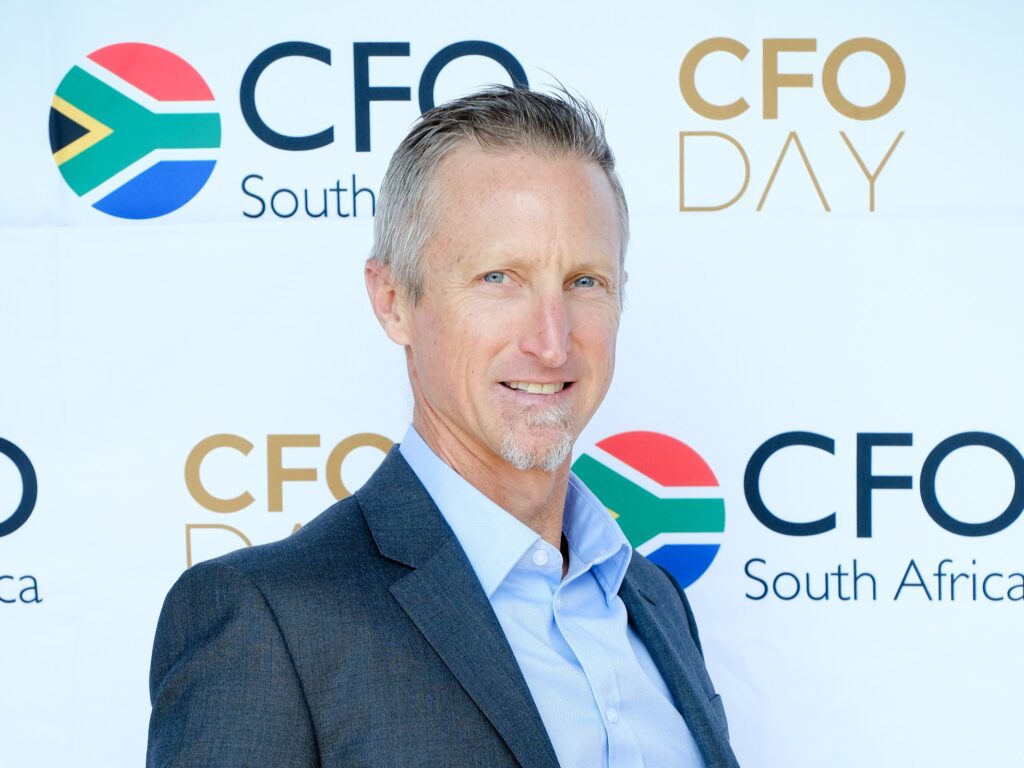
As economic outcomes in South Africa weaken, Nedbank CFO Mike Davis explains what businesses and government can do to improve the country’s GDP growth.
Over and above the impact of high levels of inflation and steep increases in interest rates in South Africa, the economic outcomes in 2023 were weak. “This is evident in South Africa’s GDP growth of only 0.6 percent, deteriorating levels of business confidence, a rise in bond yields, a trend of continued bond and equity sales by foreigners and a depreciation of the rand,” explains Nedbank CFO Mike Davis.
“Unfortunately, as a result, South Africans continue to become poorer, with real GDP growth below population growth in rand terms, and even weaker in dollar terms,” he says.
Mike believes that higher levels of GDP growth are key to resolving many of the challenges the country faces and ensuring long-term progress and prosperity. “The key structural constraints that are preventing this from happening, however, centre around energy supply, logistics, as well as crime and corruption,” he explains.
“These are being addressed through partnerships between government and business to accelerate progress,” he adds.
In 2023, CEOs from more than 130 of South Africa’s leading corporations, including Nedbank, signed a pledge underpinning their collective belief in the country, and their determination to assist in realising its potential. “Businesses are committed to working with government to play their part in helping address the economic challenges facing South Africa to achieve higher levels of sustainable and inclusive economic growth.”
Energy
Throughout 2023, Eskom only managed to maintain an electricity availability factor of 54.7 percent, compared to 57.6 percent in 2022. “From an energy perspective, it is estimated that the negative impact of the current very high levels of loadshedding is somewhere between one and three percent of GDP,” Mike says.
He explains that, although slow, progress on resolving the energy constraint is evident, catalysed by the legislative changes to enable private sector energy generation. “The private sector has made significant investment in renewable energy, with 6GW worth of registered renewable energy projects, and more to come.”
From a government perspective, however, progress on the Renewable Independent Power Producer Programmes (REIPPPs) remains mixed, Mike says, with the finalisation of some projects in late 2023 and the termination of others.
“If the planned progress continues, loadshedding could possibly be curtailed to mostly stages one and two in 2025, but delivering on this will be contingent on several factors, including improving Eskom’s production levels, addressing grid constraints, further developing IPPPP [Independent Power Producer Procurement Programme] capacity, and ongoing momentum in private power generation.”
Logistics
Unreliable rail and port services continue to further burden the private sector, Mike says, negatively affecting trade, disrupting supply chains and eroding the country’s international competitiveness. “The estimated impact on South Africa’s GDP is as high as five percent.”
He explains that the establishment of the National Logistics Crisis Committee, the publication of the freight logistics roadmap and some progress on clearing port blockages also represent slow but steady progress in this area.
Crime and corruption
“Regarding crime and corruption, there is still much to be done,” Mike says. “The FATF [Financial Action Task Force] greylisting also continues to be in effect, informed in large part by limited success on state-capture-related investigations and prosecutions.
“All of the progress in addressing energy, logistics and corruption will go a long way to enhance the resilience and stability of the South African economy and operating environment – supporting stronger levels of GDP growth, lowering the high levels of unemployment and crime, and improving fiscal revenues,” Mike explains.
Nedbank playing its part
Businesses can play different roles in addressing societal challenges, based on their core capabilities and roles in the economy, Mike says.
“While banks are not large employers, we are highly integrated into the economies where we operate – safeguarding deposits, managing and optimising investments, and facilitating transactions. Through capital allocation decisions, we play a significant role in determining the shape of society and supporting the economy over the long term.”
He explains that, at Nedbank, the focus has been on sustainable development finance. “Aligning to the United Nations’ sustainable development goals (SDGs) sees us using more of our investment and lending to deliberately deliver positive social and environmental outcomes across a wide range of sectors.
“We increased our support for small businesses and their owners, which is evident in loan exposures of R22 billion at the end of 2023, and provided banking solutions to more than 300,000 small-and-medium-enterprise [SME] clients.”
In 2023, Nedbank also welcomed its fourth intake of 2,835 Youth Employment Services (YES) participants. “Including this intake, close to 10,000 previously unemployed youth have been afforded the opportunity of employment through participating in Nedbank’s YES programme,” he explains. “To date, 1,140 participants have been permanently employed within Nedbank and our YES programme partners.”
Within the township economy, Nedbank continues to innovate and leverage partnerships to co-create solutions. “In 2023, we continued hosting Kasi Business Workshops across the country, creating shared value through our partnership with the Township Entrepreneurs Alliance [TEA]. We have impacted more than 48,000 township SMMEs, sponsored more than 165 township exhibitors with Nedbank point-of-sale devices, and created supplier procurement opportunities for more than 180 black-youth-owned service providers.”
Mike adds that significant work has also been done to launch a CVP (cost-volume-profit) analysis for informal traders, customised to their unique needs and behaviours in 2024.
“The current partnerships across energy supply, logistics, crime and corruption, and other challenges are driving positive change and collectively address challenges South Africa is facing. We need more such partnerships, and we need to execute at speed!” he concludes.