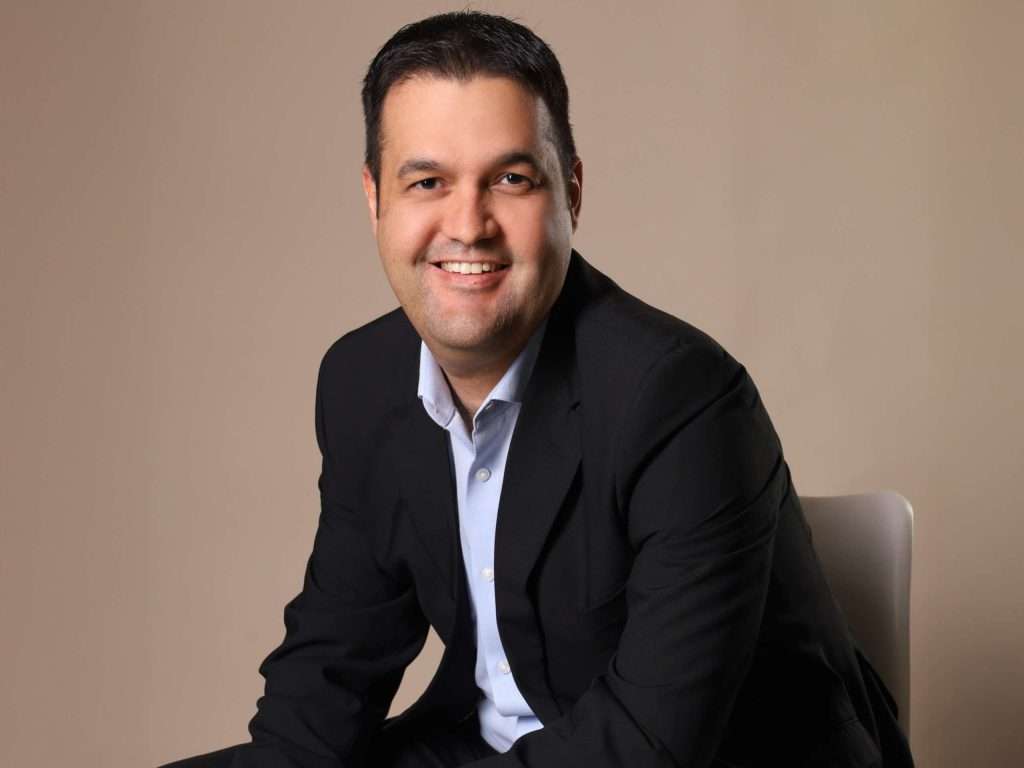
As deputy CEO and CFO of Octodec Investments, Riaan Erasmus is redefining what it means to be a modern finance leader. From shaping long-term strategy and transforming the company's property portfolio to embracing technology and developing future talent, he believes today's CFO must be far more than a custodian of the numbers.
For many finance leaders, becoming CFO represents the culmination of a career built on technical excellence. For Octodec Investments' deputy CEO and CFO, Riaan Erasmus, finance has become a platform to shape the broader direction of the business.
His appointment as deputy CEO in November 2024 reflects not only his own career progression, but also the evolution of the finance function itself. Today, his responsibilities extend far beyond financial reporting to include long-term strategy, portfolio transformation, and helping steer one of South Africa's oldest listed property companies into its next phase of growth.
“I really enjoy the strategic side. I'm more commercially minded than a numbers-crunching person. The deputy CEO role allows me to think much longer term rather than focusing only on the immediate financial cycle,” he says.
Long before boardrooms and executive leadership, Riaan spent most of his school years at boarding school, dividing his holidays between helping his father on the farm and spending weekends with his mother and stepfather, a medical doctor. Like many children, he initially imagined a very different future. However, encouraged by his mother, who worked at one of the large banks, he began exploring the opportunities a career in finance could offer.
“When I was in primary school, I wanted to become a medical doctor. But when I reached high school, I discovered accounting. I’ve always loved mathematics because it speaks to logic, but accounting really captured my interest.”
"I decided then that I wanted to become a chartered accountant, and ever since then the world of finance has fascinated me."
His fascination with investing also began early. At just 16 years old, he bought his first share, an investment he still owns today.
Building experience rather than following a script
After studying at North-West University and completing his articles at KPMG, Riaan qualified as a chartered accountant. His career, however, did not follow the path he had originally imagined.
He had once envisioned working in banking, perhaps even becoming a commodities trader. Instead, opportunities led him into the hospitality and property sectors, experiences that ultimately broadened his commercial perspective.
One of the most valuable lessons from those early years, he says, was understanding every detail behind the numbers being presented. Leaving auditing also proved to be one of the defining moments of his career.
“When you're in a large audit firm, it's a very safe environment. Walking away from that certainty and moving into industry was probably the biggest challenge I’ve faced. But it taught me an enormous amount about business, particularly cash flow management and operating under pressure.”
Why today's CFO is much more than a finance executive
For Riaan, the traditional perception of CFOs as custodians of spreadsheets is long outdated. Although he believes that historically this may have been true, today the role is far more than numbers and spreadsheets. And holding both the deputy CEO and CFO roles has strengthened this position even further.
He believes the CFO occupies one of the most influential positions in any organisation.
“You need to be the CEO’s soundboard. It’s lonely at the top, and the CFO sits at the centre of everything. Information flows through finance, giving you visibility across the organisation. Your responsibility is to bring that perspective into strategic conversations,” he says.
“I definitely see myself as a bridge. The CEO, our executives, and I constantly exchange information, challenge each other's thinking, and shape decisions together. It helps break down silos and ensures strategy and financial reality remain aligned,” Riaan adds.
Balancing the two executive roles, he says, depends on building a strong leadership team. And when he joined Octodec, rebuilding the finance function became a priority. Creating capacity within the team meant he no longer needed to be involved in every spreadsheet or operational detail.
“My team supports the finance function, allowing me to focus on strategic matters. I like asking people for their input, what should be done, why we should do it, and how we should do it. Ultimately someone has to make the decision, but I want people to feel heard,” he says.
He also deliberately rotates responsibilities across the finance team instead of allowing individuals to become specialists in only one area. The objective is to develop individuals to be multi-skilled within the finance team.
“If there are 10 people, I don’t want only one person doing valuations or only two preparing financial statements. I want everyone exposed to different projects because that’s how people learn and grow.”
Using technology to transform property
Technology has become central to Riaan’s vision for Octodec’s future and rather than viewing artificial intelligence as a replacement for finance professionals, he sees it as an enabler that frees people to focus on higher-value work.
“We’re automating many of our finance processes. AI should handle repetitive tasks so that people have more time to think strategically.”
The same philosophy is shaping Octodec’s property portfolio. One example is Yethu City, an affordable housing development that incorporates facial recognition, digital leasing, automated utility management, and advanced data analytics to improve both operational efficiency and the tenant experience. However, he adds that technology is only valuable when it enables better decision-making.
“The data tells us far more about what our tenants actually want. That allows us to make better investment decisions instead of relying on assumptions. You should use AI to work smarter, not harder.”
While innovation excites him, South Africa's infrastructure challenges remain a significant concern. Water shortages, electricity disruptions and the rising cost of maintaining resilient buildings continue to place pressure on property owners.
Even so, his focus remains firmly on transformation and over the next five years, he wants to help reshape Octodec into a more focused, higher-performing property business, even when that requires difficult decisions.
“We've taken bold decisions to rationalise the portfolio. That can be uncomfortable because people naturally worry about change. That's why communication is so important. People need to understand the long-term vision rather than focusing only on the short-term impact,” he says.
Lessons for future CFOs
For aspiring finance leaders, Riaan believes technical competence is only the starting point and he believes that it is important to learn the systems, learn the processes, and build experience in financial reporting and commercial finance. Above all, he believes integrity is the quality that defines great leadership.
“I've always remembered advice from someone I worked with years ago. He told me he never worried about remembering what he'd said because he always spoke the truth. That's stayed with me. Be honest, have integrity, and communicate openly. Those principles never go out of style.”