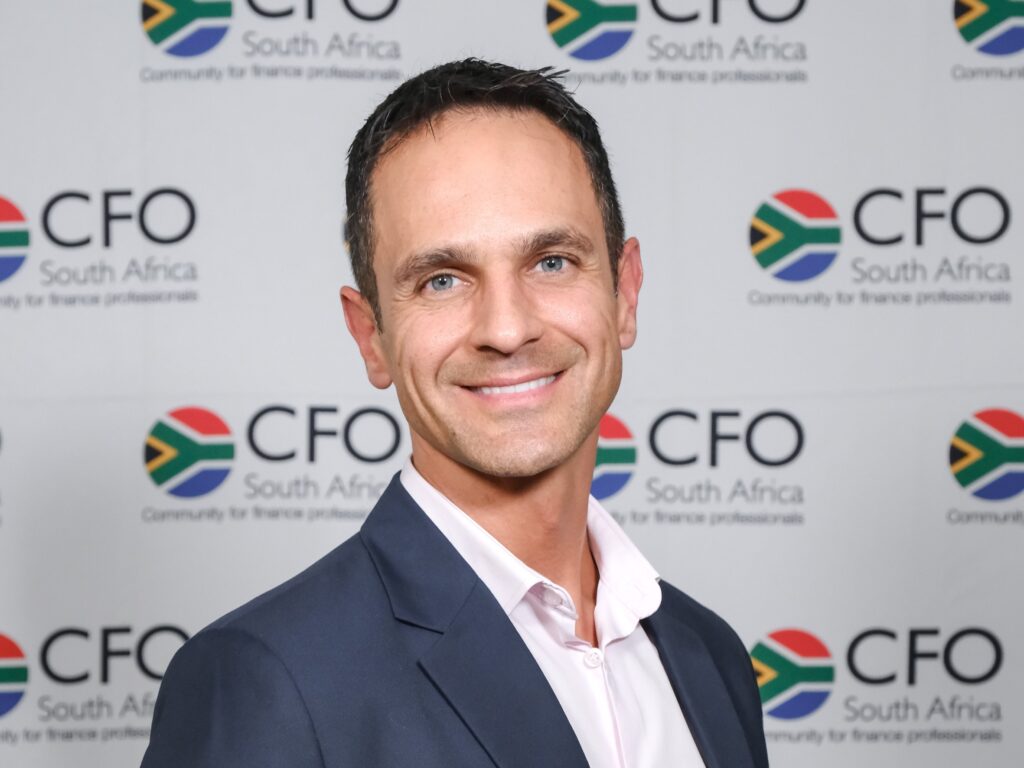
Poor infrastructure challenges are plaguing SA Inc, but CFO D’Shorne Human unpacks how SAFCOL’s diversifying strategy is helping the SOC continue crucial business operations, like automation and diversification.
One of the biggest challenges facing South African industry at the moment is poor infrastructure, especially when it comes to power and transport. The South African Forestry Company (SAFCOL) CFO D’Shorne Human reveals that as soon as the country enters stage four loadshedding, the company starts to see losses. “Customers can’t take on more logs, because they’re unable to process them.”
Similarly, customers are turning away from the export market, as it’s becoming too costly to take products to the harbours. “Upstream, we as the raw material provider also feel the impact,” he explains.
As a result, the company’s liquidity warnings have started going off. “We can still meet our commitments, but we have set an internal benchmark and buffer that we believe we should stay above,” he says. “The system triggers that we’ve gone below a certain benchmark and then targeted action follows accordingly.”
Any expenditure we incur has to be revenue-generating or compliance-related
D’Shorne and his team frequently run scenario plans with the organisation’s upper management, including the worst, best and most probable scenarios. “One example is, as we see loadshedding nearing stage six, we’re unsure of how long it’s going to last, so we’ll plan multiple time-based scenarios and what our reactions would be to get us back to a stable position in terms of liquidity,” he explains.
To help endure the liquidity challenges, there has been a concerted effort to go back to the basics at SAFCOL. “One example is where we used to have many different product lines at our sawmill, we’re now cutting down to less product lines per sawmill,” D’Shorne says.
He also implemented a temporary cost curtailment strategy to preserve cash. “Any expenditure we incur has to be revenue-generating or compliance-related. This means no travel expenses, professional fees or consultant costs.”
D’Shorne explains that there’s also been a lot of work done around optimising teams at the entity. “We’ve put a moratorium on filling vacancies. As someone leaves, we look at their function and whether it can be absorbed by someone else. Once activities scale up again, we can reopen those vacancies if still required.”
Keeping employees motivated during times like these can be difficult, but D’Shorne is proud of the company’s transparent communication strategy. “I’ll share the cash levels with our entire organisation monthly and explain why it’s gone down and what we have to do to improve it,” he explains.
“Through this, we can show them if they push through and get back to the buffer zone, we can go back to normal.” SAFCOL is also advancing a hybrid working model to reduce the cost of office leases and provide its employees with more flexibility.
We have strategic projects that will touch on elements like engineering wood, biochemicals, and more, because you can get almost anything out of a tree.
A brand-new ERP
D’Shorne believes there are many things the public sector can learn from the private sector – and vice versa. One example of something the public sector can learn is ERP adoption and agility. “I’m the chairperson of our project steering committee for a new ERP software,” he says, beaming with excitement.
SAFCOL’s previous ERP software was over 10 years old and had been customised to such an extent that it couldn’t upgrade anymore. “We decided to put out a public tender,” D’Shorne explains. “Luckily, the CIO and I are very close and well-aligned when it comes to ERP solutions. I’ve gone through three implementations in my career so far and she has also done a number.”
Together, D’Shorne and his CIO agreed that the one thing they didn’t want from their new ERP system was overkill, because they can’t afford to spend a fortune on a “Rolls Royce of ERP solutions”.
They’ve decided to go with Sage X3, and are using an implementation partner called CCG. “We’re incredibly impressed with them so far. They haven’t fallen behind the timeline yet and there are only two months left to go,” D’Shorne says.
He explains that rolling out this new ERP system will automate many business processes. “This is going to free up so much more time for employees to focus on what they really should be doing instead.”
D’Shorne also recently received an asset-backed funding increase to finance the rollout of mechanised harvesting equipment. “We invested R100 million into a new mechanised fleet and we’re already seeing the harvested log volumes increase,” he says.
It’s also having an impact on the company’s disabling injury frequency rate, which has gone down significantly. “It might not be as sexy as bots and AI, but it’s making a change on the ground, which is where we need it the most,” he adds.
Embracing diversity
With a subdued local market, the additional stock might not have been necessary, but has presented new opportunities for SAFCOL. “Through GIBS Business School, we’ve revised our export strategy and identified clients in India and China who are looking to take on substantial volumes,” D’Shorne explains.
Because of the transport challenges, SAFCOL plans to diversify its export routes, possibly redirecting deliveries through Maputu.
“Something I’m very excited about personally is our quite sizeable project pipeline, with lots of attractive projects – projects with impressive margins,” D’Shorne says. “We’re collaborating with the likes of the CSIR to do research around those projects and we’re busy building them into our five-year strategy.”
He explains that the entity has to mitigate the risk of being in a low-margin logs and lumber environment by building in higher-value revenue streams and product lines. “We have strategic projects that will touch on elements like engineering wood, biochemicals, and more, because you can get almost anything out of a tree.”
He adds that: “As the global economy moves towards increased sustainability, we really see that’s where we, as a grower of the raw materials, have an opportunity to capitalise on the full value chain and integrate vertically.”
D’Shorne concludes that, from year four of our strategy, SAFCOL should benefit from a significant pickup on its topline.