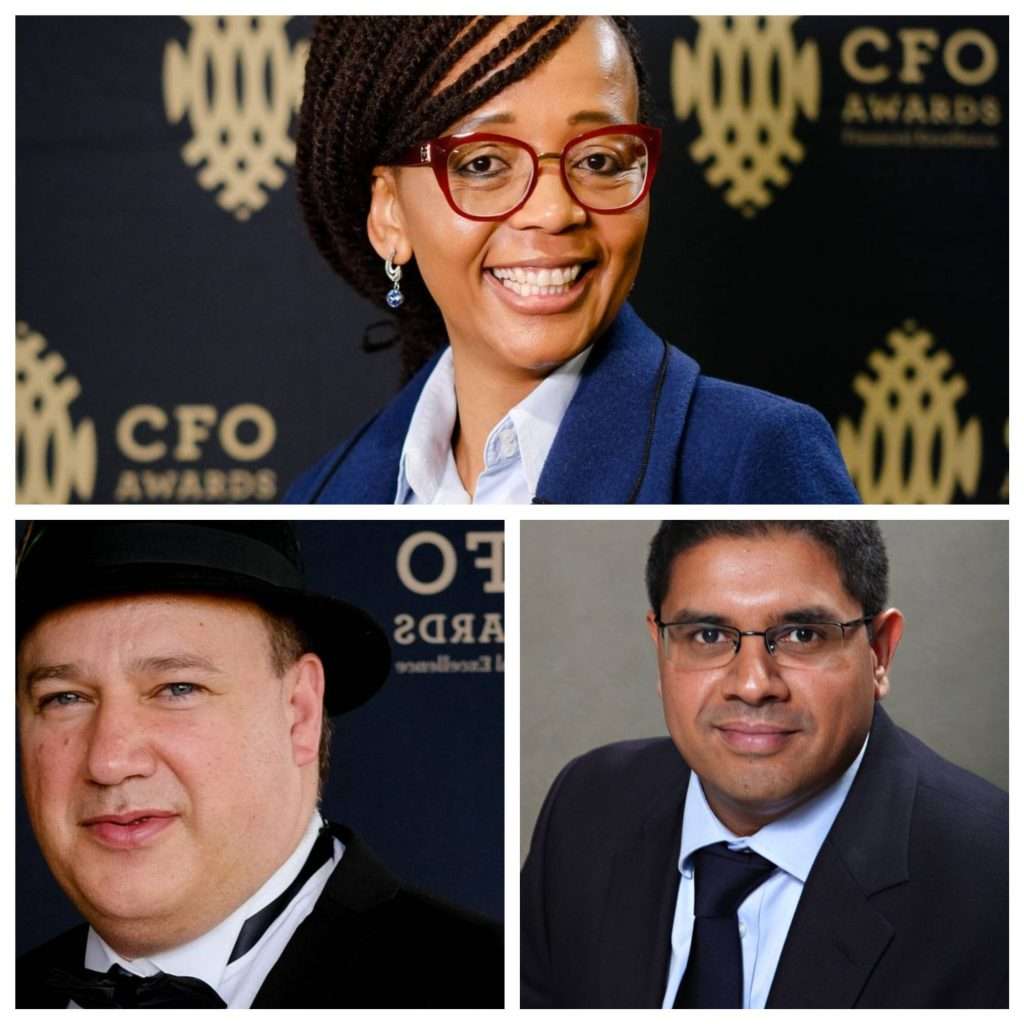
CFO South Africa spoke to CFOs-turned-CEOs Ramasela Ganda from Avis Southern Africa and Zeda Limited, Jaco Maritz from Syspro, and Yuresh Maharaj from Liberty, to find out more about the traits required for a successful transition from CFO to CEO.
A CFO’s ability to harness technical finance and strategic management skills, while operating from good governance principles – all while ensuring stakeholder value – is a strong foundation from which to transition to a CEO role. While there are universal principles in any executive role, a technical financial background is a solid stepping stone in the progression from CFO to CEO. This is clearly a running theme for CFOs who have successfully made the change.
“I was a CFO for more than a decade – from a technical CFO then graduating to a strategic CFO. When the CEO position became available there was no doubt in my mind that I was ready for it. Becoming a strategic CFO was a conscious and deliberate work that I did to prepare myself for a CEO role,” says Ramasela Ganda, CEO of Avis Southern Africa and Zeda Limited.
Syspro’s CEO, Jaco Maritz, has a similar view. “My role as CFO was very operational: getting involved in the business, implementing some critical projects and initiatives, making the business more efficient and creating capabilities to execute on strategy. I had always been working very closely with the CEO and management team, not only on financial matters but also creating a foundation for growth for the business. So, when I was asked to step into a COO role in 2019, with a possible opportunity to eventually move into the CEO role, I accepted it wholeheartedly.”
Liberty’s Yuresh Maharaj also feels that his CFO role had prepared him for the CEO role. “I have spent the majority of my career in the financial industry, and the transition to the CEO role felt like a natural progression. My extensive industry experience has not only equipped me with a deep understanding of financial intricacies but has also provided me with valuable insights into strategic planning and organisational leadership,” he says.
He adds that, throughout his tenure as CFO, he had the privilege of collaborating closely with the CEO and being part of the executive team. “This collaboration offered me a firsthand view into the intricate workings of executive leadership and fortified my conviction in steering the organisation towards greater success.”
Multiple factors and variables
The multifaceted nature of running a company, characterised by factors such as earnings volatility, fluctuating interest rates, and the intricacies of risk modelling, demands a deep understanding to successfully navigate business challenges effectively.
Ramasela says her role as CFO allowed her to start thinking about the sustainability of the business and how she would be able to contribute to the overall growth direction of the company.
While his finance background formed the backdrop to managing the business, Jaco says that once he became a CEO, he realised that strategic decisions also required multiple other factors and variables to be considered, “including soft factors that I may not have considered as CFO”.
At Liberty, his tenure as CFO allowed Yuresh to drive commercial decisions and work closely with the executive team in assessing the implications of these decisions on business strategy. “This understanding has equipped me with the ability to make informed trade-offs and strategic decisions that steer the organisation towards its objectives with foresight and precision,” he asserted.
Solid foundation
Ramasela feels that a key aspect shared by the CFO and CEO is that cash is the lifeline of the business.
All organisations have the same challenge of deciding how to use their limited resources. The goal is to always allocate resources, be it financial or human capital, in a manner that brings the highest return and benefit.
“This is a universal principle in any executive role. So as a CFO, in addition to making big decisions in relation to the more obvious financial and human resources, you also have to worry about making decisions pertaining to how you can effectively utilise your relationship capital, core competencies and capabilities, including any other assets at your disposal, to bring maximum benefit and value to the business. These are the same skills one needs to possess to make a success of their CEO job,” elaborated Jaco.
He adds that, with both roles, there is also the responsibility of determining which decisions not to make and actions not to take.
For Yuresh the roles of CFO and CEO have a number of important similarities. Prioritising growth and balancing revenue and costs are some of them. “One needs the ability to optimise existing resources and allocate space for bold growth initiatives. You also need to be able to consider relative growth, as well as the absolute levels of revenue and costs.”
He adds that both roles also require the ability to bridge strategy and finance, and understand commercial and value trade-offs in decisions. They also require someone who is able to make tough decisions in relation to stopping activities that are not adding value over a defined timeframe.