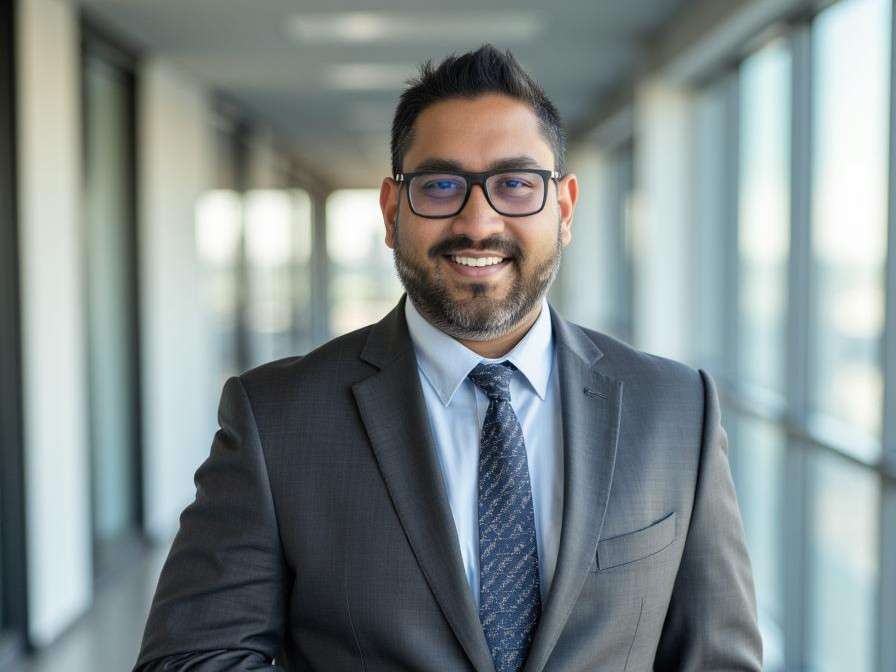
Trained in Indian classical music, finance leader Ravi Rugbeer has performed on global stages and brings the precision of a drummer to the boardroom.
For Nu-World Industries CFO Ravi Rugbeer, leadership is measured in rhythm and restraint. A classically trained percussionist and champion of accountability, he brings calm, clarity and disciplined execution to every environment he leads – building trust not through volume, but through consistency.
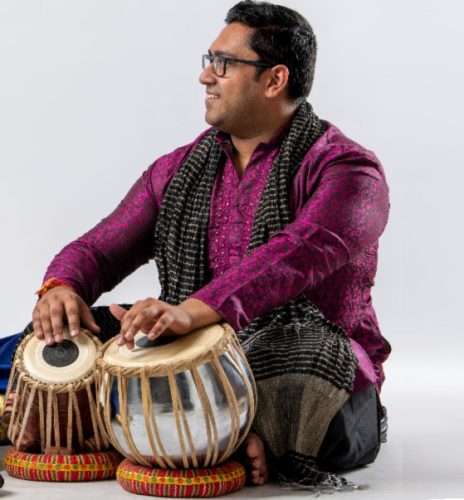
Outside the office, Ravi’s life opens into a world that feels both grounding and extraordinary. A musician at heart, he has spent more than three decades mastering Indian classical drumming – a discipline as precise as it is expressive – performing on global stages and even sharing one with his teacher in India, an experience he describes as both daunting and affirming.
For Ravi music is not a hobby but an inheritance, a lineage passed through generations, and today he pays it forward through a music school he co-runs, teaching and nurturing the next wave of artists. Away from the drums, he is a new father, discovering a different kind of rhythm in late-night feeds, early smiles and the recalibration of priorities that parenthood brings.
Add to that two devoted German shepherds, a love for Lego, gaming, and building computers from scratch, and you begin to see a man who finds balance not by switching off, but by engaging fully. That same curiosity extends to the books Ravi gravitates towards, favouring reads that challenge how he thinks about accountability and humanity’s place.
“I think one of the books that really impacted me was Measure What Matters by John Doerr,” Ravi says. “It helped me put language and structure around something I already believed in – that clarity, alignment and accountability are what actually move organisations forward. Accountability, in particular, is something I often see lacking when businesses are trying to drive growth. The book gave me a very practical framework for goal setting, for making sure people understand what they are responsible for, how progress is measured, and why discipline matters if you genuinely want results rather than noise.”
A runway for change
Another book that had a very different but equally profound impact on him was Sapiens by Yuval Noah Harari. “It shook some of my core beliefs, in a good way. As you move through your career, there’s a real risk that your sense of self-importance can grow unchecked. That book forced me to confront how small we really are in the context of human history and time. It made me more present – more intentional about spending time with my son, about not postponing what matters for work that will still be there tomorrow.”
In professional terms, the defining highlight of Ravi’s career is being appointed to his current position.
“Stepping into a listed environment is great, not because of the title, but because of what it represented in my journey,” he explains. “This was the one gap I felt existed in my experience and what really drew me in was the environment and the runway for change. Nu-World is an old-school organisation in many ways, and I could immediately see the potential to modernise, to bring in better systems, better data and a more future-focused way of thinking. The board and leadership trusted me with that mandate and that trust meant a lot to me. Being able to do what I’ve always done – connect people, strategy and numbers – but now at scale, with more eyes on you and higher levels of accountability, is what makes this role a real career highlight for me.”
Prior to joining Nu-World, Ravi spent over three years in a private-equity-backed FMCG business, where his role went far beyond traditional finance. Working under a private equity ownership structure, he was involved in strategy, liquidity management and business modernisation. During this time, he led the implementation of stronger business intelligence frameworks and the use of technology and data to improve decision-making, giving him exposure to finance as a driver of strategy rather than a reporting function.
Before that, Ravi’s career-defining growth came at The Walt Disney Company Africa. Initially appointed into a statutory accounting and financial controller role, his responsibilities quickly expanded to include business development support, IT compliance, HR and legal coordination.
He became closely involved in operational finance across theatrical releases and home entertainment and regularly stepped in to cover roles for senior finance leaders. One of the most formative experiences of this period was his role as a key coordinator in the Disney–Fox integration, working alongside UK-based legal and tax teams to ensure a seamless and compliant transition following the acquisition.
Learning accountability
Earlier in his career, Ravi built a strong commercial foundation across retail, manufacturing and infrastructure-heavy environments. After completing his articles at PKF Chartered Accountants – having deliberately chosen the firm for its holistic exposure across audit, tax, valuations and client accounting – he moved into industry roles at Bata Shoe Company and later Vopak Terminal Durban.
At Bata, he oversaw finance for more than 100 retail stores with a strong focus on production and supply chain complexity. At Vopak, part of a global listed group in the oil, gas and chemicals sector, he served as assistant financial manager, managing day-to-day finance operations and contributing to a multi-billion-rand capital expansion programme that required engagement from contractors through to board level.
Before his professional career, Ravi grew up in a home where responsibility arrived early.
“From a young age, I had to learn accountability and to think beyond just myself,” he recalls. “My dad ran one of the largest office furniture manufacturing businesses in the country, and when that business collapsed under pressure from imports, our family lost almost everything. We went through sequestration and business rescue, and life became very tough very quickly. But my parents never lost sight of what mattered – food on the table, a roof over our heads and education. After school, I would help my dad in the garage assembling furniture so he could go out and sell and deliver it. That period shaped me deeply. It taught me that when adversity hits, you don’t wait to be rescued – you keep working, you stay calm, and you find your way forward.”
Today, Ravi defines success in far more nuanced terms than position or authority. Rather than titles or hierarchy, he measures it through freedom and impact – the freedom to guide his own career choices with intention, and the ability to meaningfully influence the people and environments he leads. For him, success is found in being able to shape outcomes, support others’ growth and leave systems and people stronger than he found them – an enduring form of power that reflects both how he leads and how he lives.
“I think my X factor is what I’d call quiet leadership,” he explains. “I have a very calming way of engaging with people, especially when things feel broken or overwhelming. When someone walks into my office with their heart pounding, my instinct is to simplify the issue, give clear direction and then support them through the delivery. I show up the same way every day – whether things are going well or not – and that consistency builds trust. I don’t rely on hype; I focus on being deliberate, disciplined and delivering on what I say I will do. That calmness and clarity, especially under pressure, is something I carry from my upbringing, and it’s what allows me to lead people confidently without needing to be the loudest person in the room.”
Creating safe spaces
“I believe very strongly in lifting as you rise, in growing decision-makers, not followers. People need clarity on what good looks like, because clarity is a service to your team. When individuals understand the standard, they can hold themselves accountable and perform without fear. I try to create environments where people feel safe to challenge ideas respectfully, to think independently and to take ownership. Integrity sits at the core of everything I do – not as a buzzword, but as something you prove through action and consistency. If people know you will stick to your word, trust grows naturally and that’s when teams truly perform,” he adds.
Over the course of his career, Ravi has learnt that panic solves nothing. Instead, he aims to stay level-headed, anticipate risk before it becomes existential, and engage openly with boards, lenders, suppliers and teams to create workable paths forward. These experiences cemented his belief that calm decision-making under pressure is not an optional trait for leaders – they are the foundation on which trust and long-term stability are built.
“For me, strategy only becomes real when it is translated into a work plan that people can actually execute. You have to be clear about the purpose – everyone needs to understand exactly why you are doing something, not just what needs to be done. One of the biggest reasons I’ve seen strategies fail is that no single person is accountable. If there isn’t one clear owner, responsibility becomes diluted and progress stalls. A successful work plan needs ownership, measurable milestones and regular feedback so people know where they are, what has been achieved and what still needs to happen,” Ravi says.
“The other critical element is being honest about risk. Momentum and motivation are important, but if leadership only focuses on hype and positivity, you miss the chance to stop and ask whether the plan still makes sense in light of new information. I believe strongly in creating safe spaces where people can raise concerns, ask difficult questions and challenge assumptions without fear. That’s how you adapt early instead of discovering problems at the end of a project. In my experience, the strategies that succeed are the ones where progress is tracked, risks are acknowledged upfront and leaders are willing to adjust course rather than push blindly forward,” he adds.
In closing, Ravi’s reflections settle not on missed opportunities, but on perspective gained. He is candid about having underestimated himself early on, allowing confidence to be mistaken for a lack of self-belief, and staying too long in comfort zones before recognising his own ability.
Yet he views those delays without bitterness, acknowledging that maturity and emotional intelligence arrive through experience, not acceleration. To younger professionals, his advice is disarmingly simple: be reliable, take pride in your work, and focus on building a reputation rather than chasing titles. Visibility, he believes, is no substitute for substance.