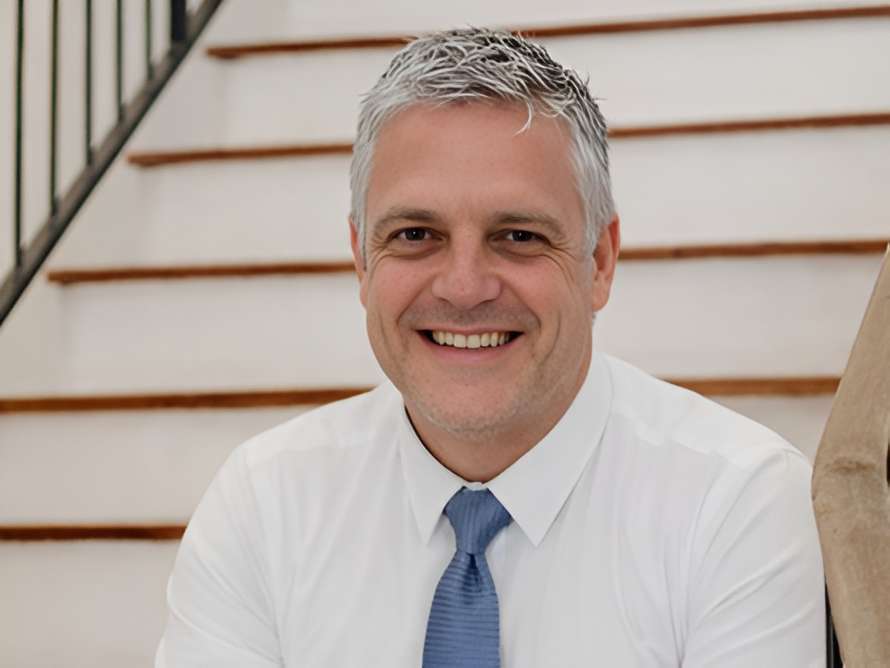
Around his 40th birthday, Patensie Citrus CFO Bennie Hancke found himself reflecting on his life’s work and journey. While he is professionally successful and settled, he realised that being comfortable can lead to complacency, replacing growth. This insight reignited his commitment to complete his chartered accountant qualification.
Shortly after turning 40, Patensie Citrus CFO Bennie Hancke found himself looking back on his life achievements. Despite hitting a sweet spot in his career and personal life, he felt haunted by an unfinished chapter in his academic life. This realisation left him determined to reopen that chapter and finish becoming a CA.
Many people assume that once you reach CFO level, the CA(SA) chapter is long behind you. Your story challenges that assumption. Take us back to the beginning – what happened as a young student?
In my early 20s, I juggled the idea of going into law (like my father) or going the CA route. I was unsuccessful at my attempt at CTA At the time, I told myself that an honours would have to suffice. I completed my articles at an auditing firm in the Klerksdorp/Potchefstroom area and moved on. Looking back now, I realise I wasn’t alone. Many people from my generation did the same. We quietly closed that door and carried on with our careers.
And how did your career progress after that?
Straight after articles, I was offered a financial manager position in Vryheid at a mining group that had just listed. I grew attached to the town and the company. I stayed for 15 years. I grew with the company – professionally and personally. I was fond of the people, the town, and the life we built. My wife, who is a doctor, was loved by the community and we loved them back. We bought a house and raised our three boys there.
It sounds like you made it work even though you did not finish your CA. When did you realise you wanted to give it another go?
Alongside my finance role, I became involved in community work and local politics as a DA ward councillor. It was demanding, but I never complained. The mining company grew steadily and was audited annually by Mazars. I always enjoyed interacting with the young audit clerks who came through. Almost every year someone would ask me, “Why didn’t you finish your CA?” and encourage me to try again, especially now that I had more practical experience. Those conversations stayed with me. It was something that quietly haunted me.
Leaders often face difficult decisions balancing career growth and family safety – how did you navigate that turning point?
Just before I turned 40, I was given the opportunity to move within the same group to Port Elizabeth to assist with the finances of another branch. The CFO and CEO gave me a huge gift by assisting me in studying my MBA. Leaving Vryheid was incredibly difficult. We deeply valued our life there, but the political environment became unstable. After an incident that threatened my family’s safety, my wife made the decision for us.
Many leaders hit a point where ambition outpaces balance, what did that high-pressure period teach you about limits and priorities?
When I was in PE, I worked hard to understand the finances of a different division within the same company. It was all new to me. At the same time, I completed my MBA and we built a house. Looking back, it was probably too much stress on my body and my family. Without realising it, I wasn’t giving my family (and my health) the care and attention they deserved. Shortly after turning 40, the house was finished, the MBA was done, and professionally things were going well, so I thought.
Take us through the catalyst that prompted the big changes in your life? What happened?
Around my 40th year, after completing my MBA and building our home, I reached a natural inflection point in my life and career. On paper, everything looked successful. But internally, I realised I had been operating at full throttle for years without truly evaluating whether my trajectory matched my long-term purpose.
It wasn’t one ah-ha moment, precisely. Rather it was an accumulation of pressure, responsibility and reflection that happens when one turns 40. I asked myself: Have I actually grown, or was I just keeping busy?
How did those moments of reflection lead you here?
It humbled me. It slowed me down. It forced me to take stock of where I was investing my time and energy. I realised that growth does not happen by accident, it is intentional. That season became the foundation for a more disciplined, focused and purpose-driven approach to both my family life and my career.
In the year that followed, I concentrated on rebuilding the personal and professional aspects of my life, making consciously healthy life choices and resolving to complete an unfinished chapter in my professional life. It was also very important to me that my family knew how much they mattered, and that my children saw me attempt my CA again and not leave it unfinished.
So what was it like essentially starting a qualification at 40?
After deciding that I wanted to finish this, I had Googled “How to become a CA online”. At that stage, my goal was to start small, just rebuild my knowledge and confidence. That’s when I discovered Milpark’s online CA route and decided to start.
The first year of PGDA was tough. The lecturers (Gareth and his team) were incredibly supportive. I liked the online classes and the flexibility, being able to email questions or rewatch lectures made a huge difference. Gareth has a way with words that makes you fall in love with the field all over again.
At the same time, I also realised something difficult about my career. Although I was fond of the company I was working for, after almost 15 years I had never been promoted. The company grew around me and without me. I realised that this was partly my own fault. I had never really shown what I was capable of.
That’s when I made the hard decision to redirect my professional career. I applied for a new role, initially as a senior financial manager at a citrus export company. My family had concerns. I was leaving a stable organisation for an industry under pressure from rising shipping costs, drought and cash-flow challenges.
But I remembered something my previous CEO once said: “Close your eyes and take the leap.” I also reflected on the idea that growth often happens where we feel most uncomfortable. I realised I had become too comfortable and too safe.
That leap of faith certainly paid off. Where are you on your journey now?
Today, I’m the CFO of Patensie Citru, and I genuinely cherish my role. Through a lot of hard work by the entire team, the industry and the company stabilised. My wife and I ran a 70km last year in Oudtshoorn, I swam the Midmar in Howick in February and I get to see my family more.
I once heard someone on the radio speak about the Japanese art of kintsugi which is repairing broken pottery with golden threads. Instead of hiding the cracks, the gold runs through them, making the piece more valuable because it was broken and restored. That image stayed with me.
In leadership and in life, we are often taught to hide our scars and pretend the fracture never happened. But sometimes the very places where we were tested are the places where strength is forged. We do not become powerful by covering our cracks, we become stronger by rebuilding and allowing the gold to show.
Five years after restarting this journey, I have received notification that I passed my final CA(SA) boards. Glory to God!