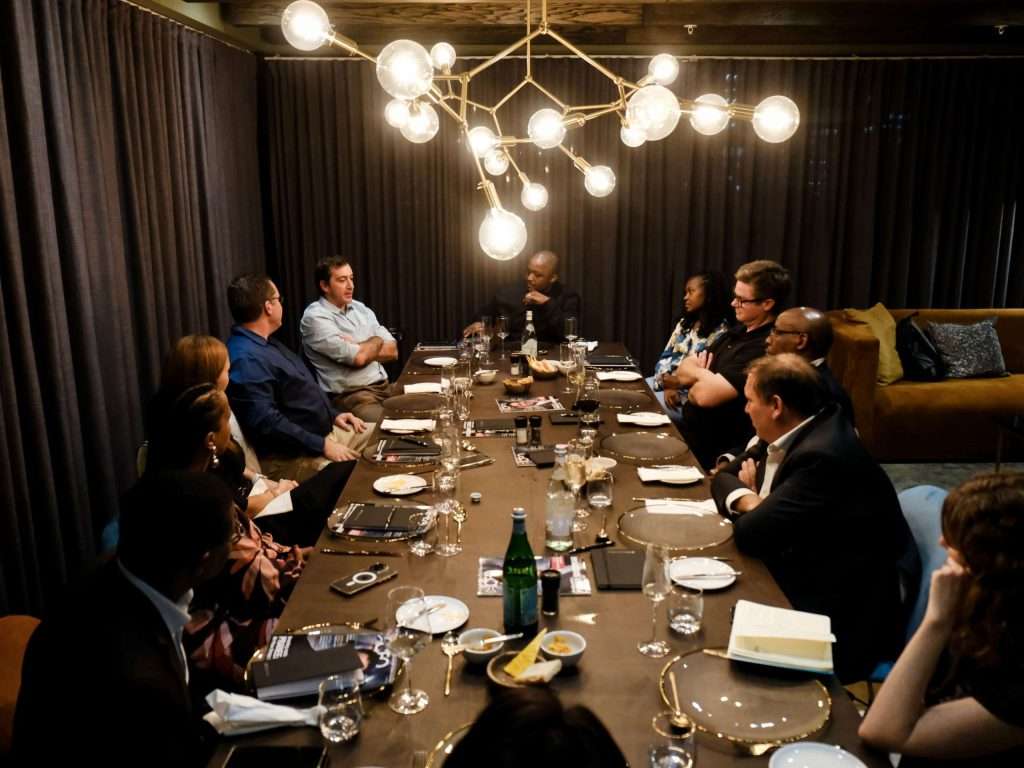
An engaging group of leading CFOs got together at a CFO Dinner, where they debated issues of growth and sustainability amid geopolitical uncertainty, and how to deal with a new generation of finance professionals.
How do we ensure sustainability amid market volatility, what impact is AI having on the accounting profession, what makes a truly strategic CFO and how do new recruits in the finance world measure up? These and other burning questions were discussed at a delicious CFO Dinner, hosted in partnership with OneStream Software. The setting? The exclusive Aurum Restaurant inside The Leonardo, towering above the Sandton skyline.
After the group broke the ice by sharing lesser-known facts about themselves unearthing a surprising number of those with hidden musical talents, as well as a few with impressive athletics accolades, it was full steam ahead. Discussing what it means to be a strategic CFO in these times, the guests spoke about how to navigate decisions under the leadership of different CEOs who may have different priorities.

It’s often about putting your point of view across in the face of a CEO's big ideas by focusing on the financial impact and what’s best for the business. One needs to maintain a realistic perspective and communicate this clearly. “Often when you’re trying to defer bad news, you just land up in a deeper hole,” one CFO said. “We need to report things as they are, not as we want them to be.”
While geopolitical tensions, like those created by the Russia-Ukraine war, can ironically have a positive impact on certain businesses and commodities, it’s about ensuring that the growth they create is sustainable outside of dramatic world events. Indeed, as prices go up, costs follow. Sustainability is key, everyone agreed, and this comes down to implementing strategies around cost management, looking after fixed costs, optimising growth and seeking ways to make businesses inflation-proof.
For businesses who hold and deal in foreign currencies, diversification is key, one CFO said. Amid controversial trade policies, the US Dollar remains strong considering its historical long-term resilience, yet businesses need to think ahead, she argued. For example, we need to monitor how economies like China respond to Trump’s actions, as the country’s steel production has a direct impact on South Africa.
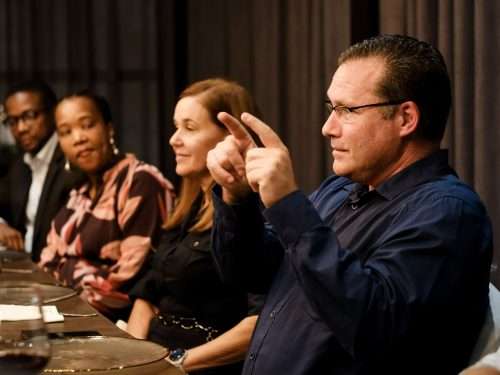
Closer to home, for private companies who work with government entities like Transnet, it’s about taking some degree of control and seeing such entities as an extension of their own business. “Our interests are aligned,” a participant explained. But this is bigger than Transnet, he continued. “We need to save SA Inc and so we need to shift gears.” So, it’s less about what is best for the parastatal – and more about what best serves the country as a whole.
Concurrently, many South African companies, the group reflected, are in fact market disruptors, yet they’re unaware of this. From Pick n Pay’s Raymond Ackerman whose retail business model served as inspiration for America’s Walmart, to newer local companies who have some of the most efficient systems in the world, we need to acknowledge our own value. As one participant said: “There’s still a strong brains trust in the country.”
Moving to enhancing workplace efficiency in the face of volatility, being an effective, adaptable and credible CFO, everyone agreed, is rooted in understanding every facet of the business. “We need to bring finance into different departments,” said one CFO. “As a finance professional, you add the most value when you understand the business.”
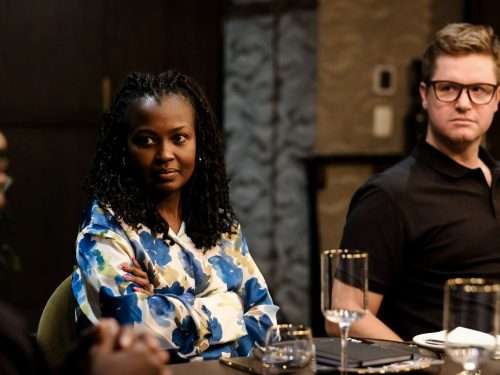
Everyone agreed but many argued that it’s difficult to get young chartered accountants (CAs) to understand that need to go into the trenches, to see what’s happening on the ground and support the operational aspect of the business. This understanding requires a mindset shift, especially from today’s graduates.
As the conversation moved to increasing automation in the accounting profession, and how this may impact job roles, others argued that becoming a CA is still a top qualification. “The accounting function will change, and we want to automate and improve,” said one attendee. Yet another argued that you still need the brains to make effective decisions with the information that AI can generate.
“SAICA therefore needs to look at its training,” another CFO suggested. We need to produce accountants who can think critically. “So, as a profession, we need to evolve as well. The profession needs to be reimagined to avoid becoming obsolete.” Different age groups approach the need to embrace technology differently, one participant added. “Embracing technology is something people do either because they say that it will make them better at what they do, or conversely because they feel like their jobs are being threatened.”
Reflecting on a shift in job roles, attendees discussed how often engineers land up in finance as the field has become more process orientated. In light of this trend, one CFO pointed out that in the United Kingdom, graduates don’t need an accounting degree to complete a CA certification but are accepted based on completing a myriad of other degrees. “This produces a lot more well-rounded CAs,” he said. In South Africa having to have an accounting degree in this context is too prescriptive and produces a narrow-minded cohort of CAs, he argued.
Today’s accounting trainees are very different, another attendee added, largely due to the Covid-19 pandemic, which has made them more difficult to absorb into the workplace. Speaking of the increasingly prevalent desire, especially among this age group, to work remotely, the group bemoaned this way of thinking. “You lose that workplace culture,” one attendee said. “How do you learn if you’re not there?” she asked.
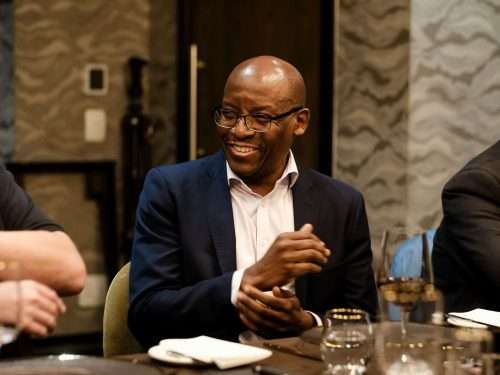
“Being in the office is actually becoming a competitive advantage,” another participant added. “You can solve problems better if you’re together. The number one learning,” he said, “is to be in the same room. A lot of miscommunications can be avoided this way.” Decisions are taking a lot longer to be finalised, another participant continued, because so much happens online, where many of us tend to switch off.
Ultimately, attendees agreed that local organisations and their CFOs are trying to do good. “We have really good people,” one attendee said, “who are trying to make the country better.”
Those in attendance were:
- Bothwell Mazarura, CFO, Kumba
- Daniel McWilliam, enterprise account executive, OneStream Software
- Jacqui Maphala, executive communities content producer, CFO South Africa
- Jubilant Speckman, CFO, Foskor
- Mandy Leonard, account director, OneStream Software
- Riaan Davel, CFO, DRDGold
- Risto Ketola, CFO, MMH
- Scholtz Fourie, CFO, Tourvest Group
- Shoki Ralebepa, CFO, SA Reserve Bank
- Sungula Nkabinde, head of communities, CFO South Africa
- Tiisetso Tsiki, CFO, Platinum Health