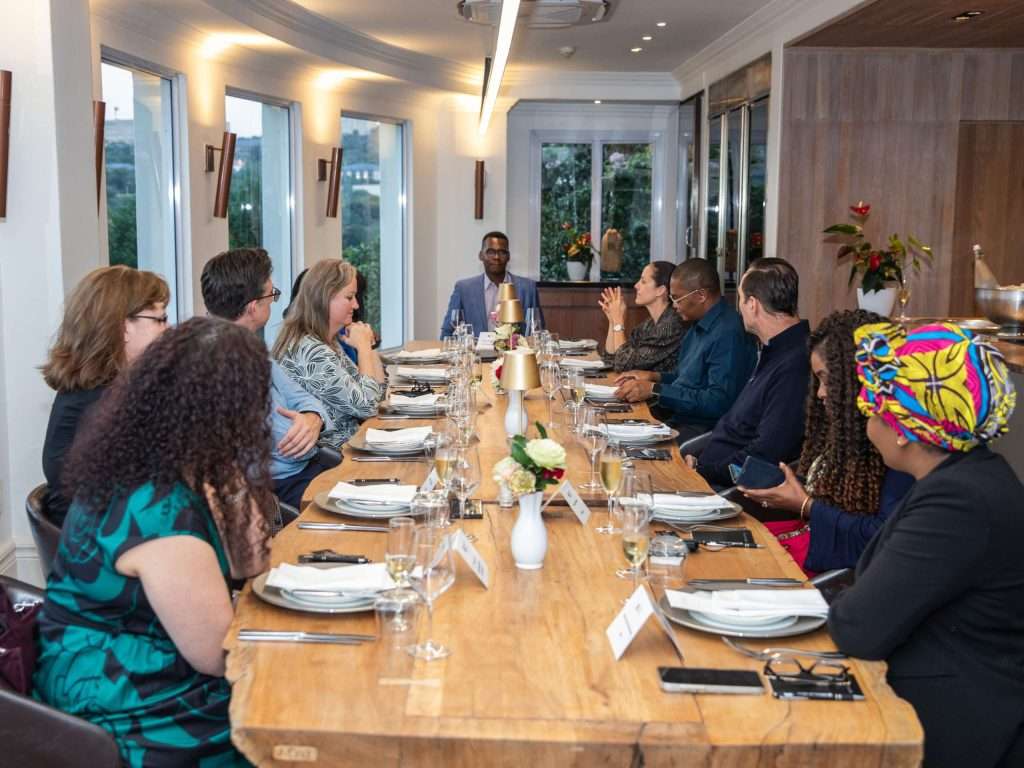
On 19 March, CFO South Africa hosted an exclusive dinner at The Westcliff’s Cellar Door in Johannesburg, bringing together finance leaders for lively discussions on recognising when growth begins to stagger, resetting capital allocation according to scale, building systems and teams that grow sustainably, and protecting value while pursuing ambition.
At least 12 of Johannesburg’s top finance leaders gathered at The Westcliff’s Cellar Door to exchange lessons, tips and tricks on how their companies are growing in a rapidly changing world and a constantly constrained South Africa.
The dinner, sponsored by Marsh, gave CFOs an opportunity to share their experiences openly over a delicious three-course dinner.
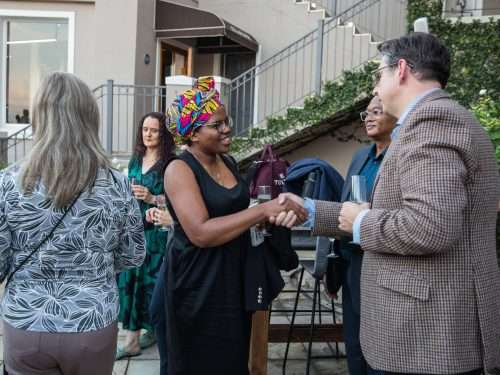
As finance leaders arrived at the venue, tucked away in Johannesburg’s leafy Westcliff suburb, they began the evening by networking over champagne, group selfies and new introductions.
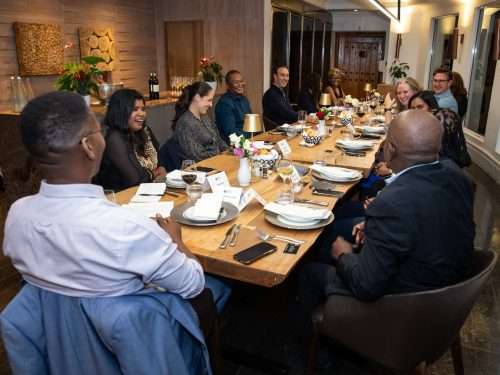
They were then led to a private and intimate dining hall, furnished with heavy oak tables, beautifully set out for what promised to be an evening of insight and laughter.
The dinner kicked off with ice-breaker questions and freshly baked bread rolls, served with butter. As CFOs broke bread and answered questions about their first jobs and embarrassing Zoom moments, everyone appeared well greased and ready to move onto more serious topics of discussion.
Leading the dinner table conversation, one attendee explained how his company had embarked on a number of acquisitions, the fruit of which would only be realised within the three-to-four years. “We said to ourselves that if we get it wrong we can strip it and return value to shareholders that way,” he explained.
Analysis paralysis
The conversation then shifted with several CFOs explaining how a rapidly changing world is forcing them to evolve with the times.
Many agreed that finance leaders must now be more agile in their decision making processes.
“As CFOs we always want to analyse everything and make sure we have all the facts before changing our position, which can slow down the ability to be agile and move forward with a decision,” a guest said.
Staying on the topic of what they jokingly dubbed “analysis paralysis,” another guest said that understanding what shouldn’t be done is also helpful in making decisions.
“Bad decisions and bad ideas are easy to say no to. The challenge is having lots of good ideas and having to figure out which ones are better and more suitable,” said the attendee.
Also, being able to identify when a mistake has been made and having the will to fix it was highlighted as key. “We had an issue with ERP implementation which almost brought the business to a standstill. If you surrender, it is going to be a problem, but if you roll up your sleeves, get in there and fix it, it will make a difference,” explained another CFO.
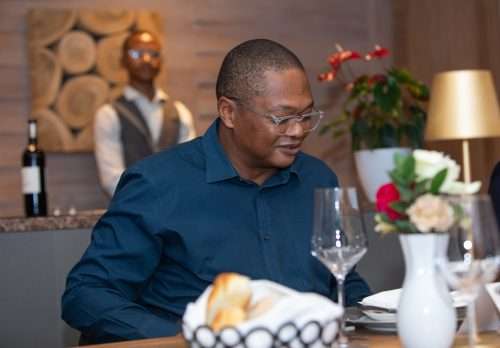
‘Give that team a Bells’
While the first course of tempura prawns and springbok carpaccio were being served, the conversation moved to work culture and its impact on the business. The consensus was unanimous: Culture beats strategy anyday.
When employees feel valued and seen, it will always help firms maintain operations, even in tough times. For one CFO, sharing the profits with all employees is a good way to show teams that they play a valuable role in keeping the business going.
The guests also shared ways in which their various companies facilitate staff team building exercises and events to ensure that employees get opportunities to collaborate and socialise outside of work.
“It can be anything that gives the staff an opportunity to interact. It could be activities like braai’s or paddle competitions. We do five-side soccer, and it's for everyone. It really helps bring people together and out of their shells. You get to see who is really competitive and who are the ones who are happy to just have fun,” he explained.
While some companies engage in friendly in-house sport competitions, others take staff out to engage in creative activities such as ceramic painting.
It’s also important to recognise wins, no matter how small.

“We have a physical bell in the office, and anyone can ring it when they have done something or achieved something,” one attendee said.
The bell method, turned out to be popular with another CFO saying her company had a massive gong bell that was used mainly by the sales team.
Another guest spoke about the demoralisation among staff when the company’s budget cuts led to celebratory lunches being removed.
“The cost of that was very tiny, but the company said no. Within a week, HR had five people asking for salary increases. We don’t know where that came from, because all the time they were happy,” the guest explained, adding that she had decided to pay personally for the celebratory lunches, because it made a difference to the mood in the office.
But incentivising good performance, whether through small vouchers or incremental increases, is king when trying to get buy-in from staff.
“You can get more out of people when they feel like they matter and they are being taken care of,” she said.
As attendees began to clear their plates of the main courses consisting of a choice between, beef fillets, fish and roasted cauliflower, the conversation shifted gears to the glaring changes in the motor industry.
According to one attendee, 70 percent of cars on the road now are manufactured in China and India. One of the attendees explained that there were hopes that demand for Chinese cars would fade away, but that proved futile.
“It’s difficult to pick the ones that are good because there are 18 Chinese brands in the market now, and eight more coming by the end of the year,” the guest said.
The sentiment is that European-manufactured vehicles will remain in the market, but brands like Mercedes and VW have to adjust their pricing models to remain relevant. Some of the higher-end car manufacturers will still find buyers, but those consumers may likely become a highly niched market.
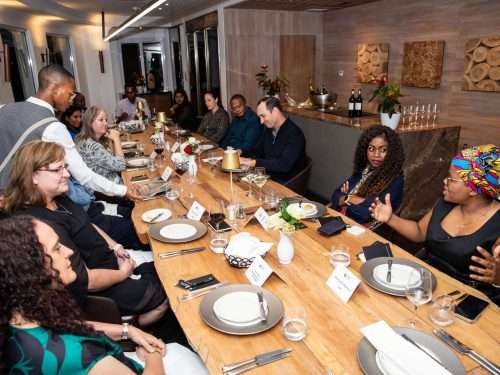
Those in attendance were:
Daniel Smith, group CFO, Lesaka Technologies
Marlene Urquhart, industry leader, Marsh
Mmamodiane Nkadimeng, CFO, ARC
Mpume Zulu, industry leader, Marsh
Narissa Delport, senior writer, CFO South Africa
Nilisha Padayachee, CFO, Bidvest McCarthy
Nokuthula Shiba, CFO, Beyond InfraDev
Rebecca Pole, VP: Finance, NTT Data Southern Africa
Richard McDonald, CFO, Digby Wells Environmental
Roselyn Madiba, CFO and controller, Citibank
Sandi de Souza, CFO, SAP: South Africa
Tafadzwa Mika, CFO, Vunani
Thekiso Anthony Lefifi, community manager, CFO South Africa
Yvonne Dias, group CFO, Mint Management Technologies