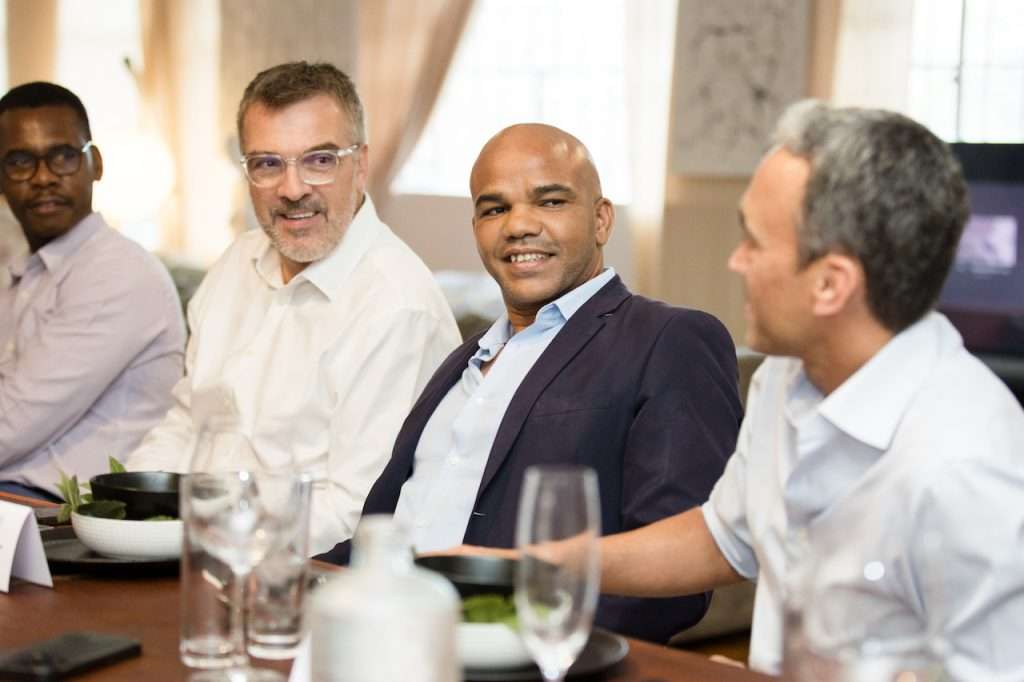
On 25 February, CFO South Africa hosted an exclusive dinner at The Chef’stable Cape Town, bringing together finance leaders for lively discussions on how discourse in global geopolitics is increasingly shaping local financial outcomes.
Finance leaders from several industries gathered to explore how global geopolitical parley and business operations are intersecting. The dinner created a forum for candid discussion on the realities of rapidly shifting political alliances and its impact on business.
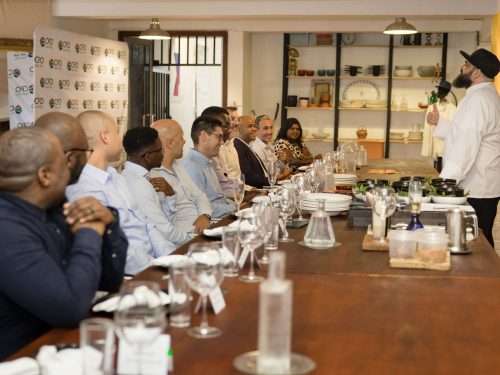
As CFOs arrived at the venue, they began the evening by networking over champagne and cold drinks. Then, the discussions began in earnest over the first of a seven-course meal, prepared by chef Santi Louzan.
To get the evening going, CFOs took part in an icebreaker session. They were asked various questions including who they would trade roles with in their company. One CFO said he would trade places with the professors in his office because he would get more holiday time, be able to do extra consulting work and his job would have the least risk.
Another question was what career would they be in, if it was not finance. Two attendees quipped that they would be professional athletes. “I could play in the IPL and be sorted financially for life,” he said jokingly, and laughter rippled across the table.
Then, attendees got down to business as the first course was served. Finance leaders were asked to share learning experiences and compare notes and experiences during geopolitical shifts globally and its impact on local soil.
Keeping an eye on the rand
One CFO remarked that US President Donald Trump cutting funding to South Africa had impacted their business as 60-70 percent of their research costs came from donor contributions. “We had to look to other regions in the Middle East and Asia at large. It also showed us that over reliance on international funding is not sustainable,” he said.
Another attendee, whose company does business with Texas and Mexico, said they had not yet felt any shift in their operations, but noticed that European-based companies were holding back capital.
On rand volatility, one of the finance executives said despite their products being manufactured internationally, his company decided to keep prices consistent and hold extra stock during the rocky periods. “It paid off because now when the rand is stronger we can give back some value to shareholders and the consumer by keeping the prices as low as possible,” he said.
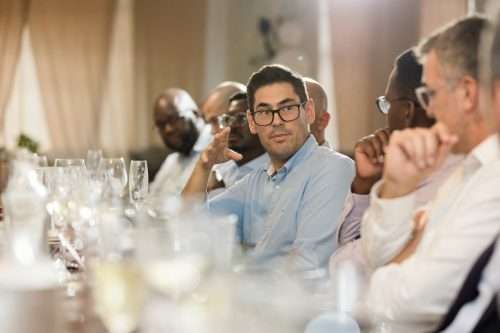
The conversation then shifted to geopolitics affecting South Africa’s real estate market, particularly in Cape Town. “We saw it during Covid-19. Suddenly no one wanted to invest in property. When the lockdown was announced, you saw every fund in South Africa move as many funds as possible out of the country which dried up our capital,” an attendee noted.
There was a general sentiment that the Democratic Alliance in South Africa seemed to be emulating the US democratic political model, of over taxing the rich to fund the poor. “You see the intensive rates they are placing on the valuation of property. It’s almost like the policy of the US democrats being cloned in Cape Town where the property rates and taxes become comparable to some of the largest economies in the world, like New York, Sydney and Tokyo,” he explained.
All about real estate
CFOs around the dinner table nodded in agreement. “People are losing their homes because of rates and taxes and it is starting to show,” he added. “Policy from the US and richer countries of taxing the rich is starting to come here, not just national government, but local government and that is starting to affect businesses.”
While Chinese and American nationals seem to be buying fewer properties than they did in the past, he noted there is an increase in French and German buyers. “They are starting to like South Africa,” he said, adding that higher property taxes were making real estate ownership nearly impossible for locals. “So the policies are working in terms of attracting money, but it is kicking the locals out of their own province,” he said.
CFOs were unanimous on this point, with another finance leader pointing out that no one could afford to live in New York anymore. “The younger guys just getting into the economy can’t afford to rent a place, they have to stay far away from the city. Now the same is happening in Cape Town.”
There was also consensus that Airbnb’s were also devastating the local property market. “Cape Town has the second highest number of Airbnb’s in the world after Sydney,” said one attendee, explaining that Cape Town’s local government had proposed a 123 percent additional rates and taxes on people running Airbnb's.
Another finance leader pointed out that many people bought properties as part of an investment. But that increased rates and taxes meant that bond holders would ultimately shoulder this cost increase.
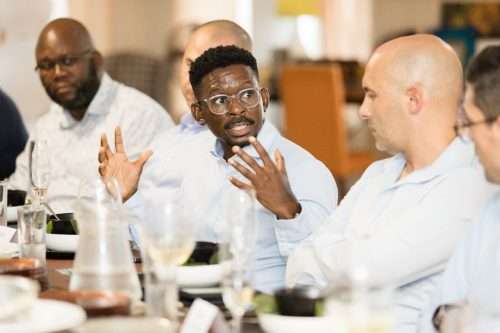
Finding solutions
“As a tourist destination it's counter productive,” another attendee noted in agreement.
Another guest noted that Airbnb’s were devastating the property market because there is not enough land or development to accommodate local tourists, adding that Airbnb’s remain vacant for a number of months at a time. “We do need to somehow de-incentivise, to some degree, the buying of properties for Airbnb’s,” he told his peers.
Despite state initiatives to offer lower-cost housing options, there was push back about the inner city becoming too densely populated. “You will never find a solution that will make everyone happy,” he said.
CFOs also touched on Gauteng’s ongoing water crisis and crumbling infrastructure, saying the province needs to improve.
“We always like to look down upon Gauteng in Cape Town, but in all seriousness we need a functioning and thriving Gauteng for our economy.”
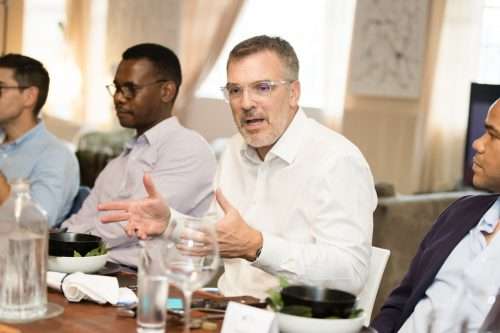
A resilient South Africa
One widely agreed upon sentiment among attendees is that South Africa is a highly resilient country with innovative people, regardless of what happens internationally.
They were adamant that finance is a long game. “We can’t have knee jerk reactions to the noise and political showdowns. This is not like T20 cricket,” one executive quipped, causing a round of laughter again.
In fact, there was even confidence that American political upheaval would eventually be curbed by one of its three vestiges of power: The Supreme Court, Capitol Hill or the presidency. “That remains intact. What's the signal here is that power rests in three different parts and the president can’t wield it in the way he sees fit,” explained one CFO.”
The sentiment about America sparked comparisons to South Africa’s constitution, reinforcing faith in the country’s legal system when politics is turbulent. “In the short term it creates massive volatility and political theatre, but in the long term there is still that piece of democracy that remains reliable,” he added.
Another attendee noted that there’s been a remarkable improvement in South Africa in the past three years. Previously, the country had been on its knees and the government had taken business into its confidence, which has led to better functioning at SOEs with historic legacy challenges. “I am confident that that is the catalyst to get more policy certainty on a national level,” he told dinner guests.
CFOs remain confident that South Africa is the place to be regardless of what's happening internationally. “I’ve been travelling extensively for the past 10 years of my life and there’s no better place than South Africa in the world,” one guest said firmly.
The big WFH debate
He added that international companies are always looking for South African talent because its people know how to solve problems when things go pear-shaped.
He recalled a story of a friend who now resides in the Netherlands who once visited a bank in that country. “The ticket machine for queries was broken and everyone was gathered around the broken machine wondering what to do next. My friend just walked up to the teller who was available and got himself sorted out,” he explained. “It’s a simple example, but that’s how South Africans are, we always maak a plan,” he added, prompting more laughter from his peers.
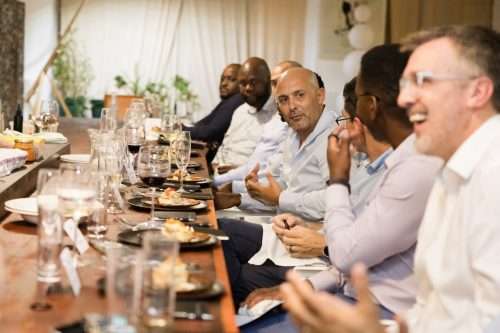
The evening concluded with desserts and closing sentiments on how to plan in uncertainty and keep the company going. The discussion inevitably led to the work from home versus office days debate. The majority of the CFOs favoured an in-office environment, saying human contact is crucial, now more than ever due to digitalisation, automation and AI.
Most companies opted for a hybrid model to bridge the gap and increase human interaction, but others say they remained onsite full time, even during Covid-19.
While opinions on remote work remain divided, more CFOs are leaning towards increasing human interaction in the future. As for the planning in uncertainty: the sentiment was unanimous, finance is a long-term game, forecasting for the future requires training young people, staying informed on regulation and embracing technology as it continues to change the way people work.
Those in attendance were:
Burtie September, CFO, Curro Holdings
Christiaan Barnard, CFO, Spear Reit
Dale Taylor, CFO, Cosmetix
Jurgens Myburgh, group CFO, Mediclinic Group
Morne van Tonder, CFO, Pragma
Narissa Delport, senior writer, CFO South Africa
Sandiso Gcwabe, CFO, Wesgro
Sungula Nkabinde, head of communities, CFO South Africa
Thekiso Lefifi, community manager, CFO South Africa
Tommie Koeries, CFO, Much Asphalt
Vincent Motholo, CFO, University of Cape Town