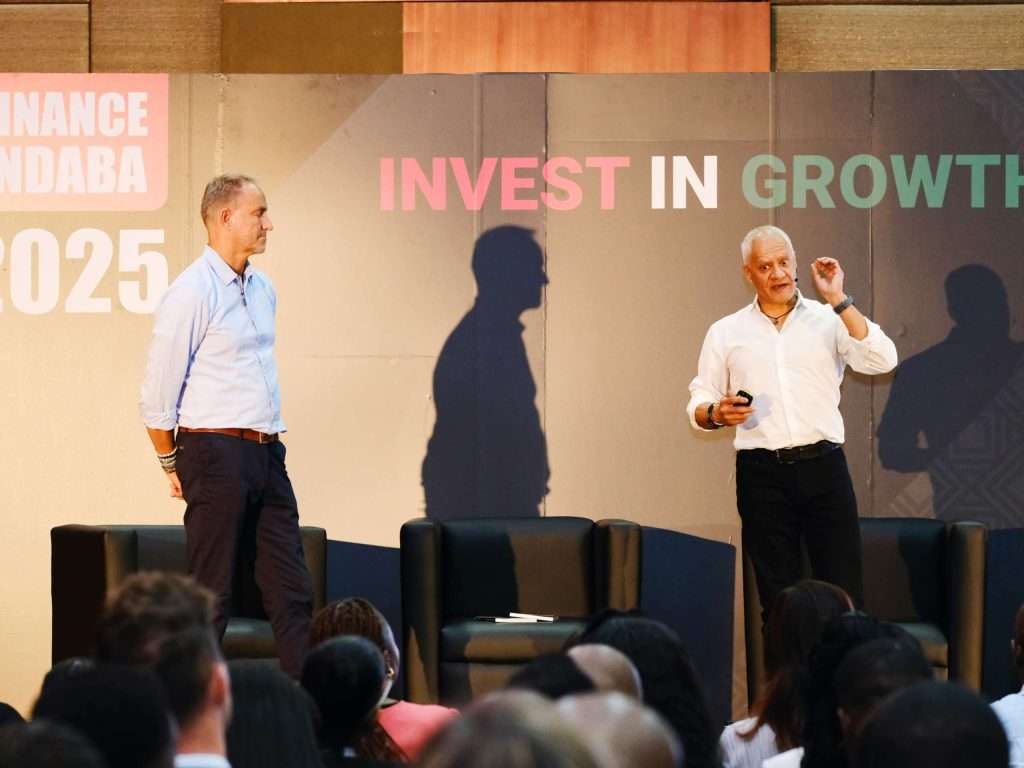
Industry experts Ashley Francis and Rob van den Wijngaard unpacked how leaders can transform complexity into clarity by using data as a compass, while keeping people and culture at the centre of digital transformation.
In a compelling panel discussion titled Data as a Compass: Translating complexity into clear and actionable insights, panellists at the recent 2025 Finance Indaba delved into the challenges of working with messy data sets, collaborating effectively with analytics teams and turning technical information into powerful business narratives.
Ashley Francis, a strategic entrepreneur and former CFO of the V&A Waterfront and the University of Cape Town, reflected on his own experiences leading data-driven transformation. “When I joined the V&A Waterfront, the finance system wasn’t really working,” he said. “I had to start from the ground up, reshape the finance system and aim for data.”
Ashley shared how data guided the Waterfront’s success long before advanced analytics tools existed. He explained that he and his team tracked everything, from the number of feet through the gates to how long people stayed and discovered that to thrive, they had to build the Waterfront around locals, not just tourists. That was a key insight drawn from data.
Yet, he emphasised that beyond numbers and systems, data-driven leadership is about understanding and storytelling. “There’s a narrative that flows through the success of every CFO, you have to tell a story of finance. When you want to digitally transform your organisation, you must ask: do you get it, do you want it, and do you have the capacity and tenacity to drive it?” he said.
Transitioning from corporate finance to academia, Ashley recalled the cultural challenges he faced as CFO at UCT. “Universities are fascinating. They preach change, but the pace of transformation is incredibly slow. You have to create your space as a CFO among academics who all think they’re gods.” His message to finance leaders was clear: to truly use data as a compass, organisations need not only the right systems, but also the right mindset.
Understanding to mature
Meanwhile, Rob van den Wijngaard, founder of ImproveNow, echoed these sentiments, urging leaders to understand their organisation’s maturity before embarking on a data-driven journey. “A lot of organisations have the ambition to become data-driven,” he said, “but they often skip the first step, understanding where they stand right now.”
Rob introduced the Cloveleaf model, a framework that helps organisations map out their complexity by examining processes, leadership style, and people. “IT is important, but human beings are way more important. Too many companies start their journey focused solely on technology, and they fail because they leave people behind,” he said.
Ashley then warned that artificial intelligence, while transformative, should not overshadow the human element. “Please don’t be fooled, if you put technology ahead of people, you are destined for failure,” he said. “People first, culture right up there. Always.”
Both panellists agreed that becoming a truly data-driven organisation starts with self-awareness, strong foundations, and an investment in people. As Ashley concluded, “Once you can confidently answer that you understand, want, and have the capacity to be data-driven, you can start using data as your compass.”