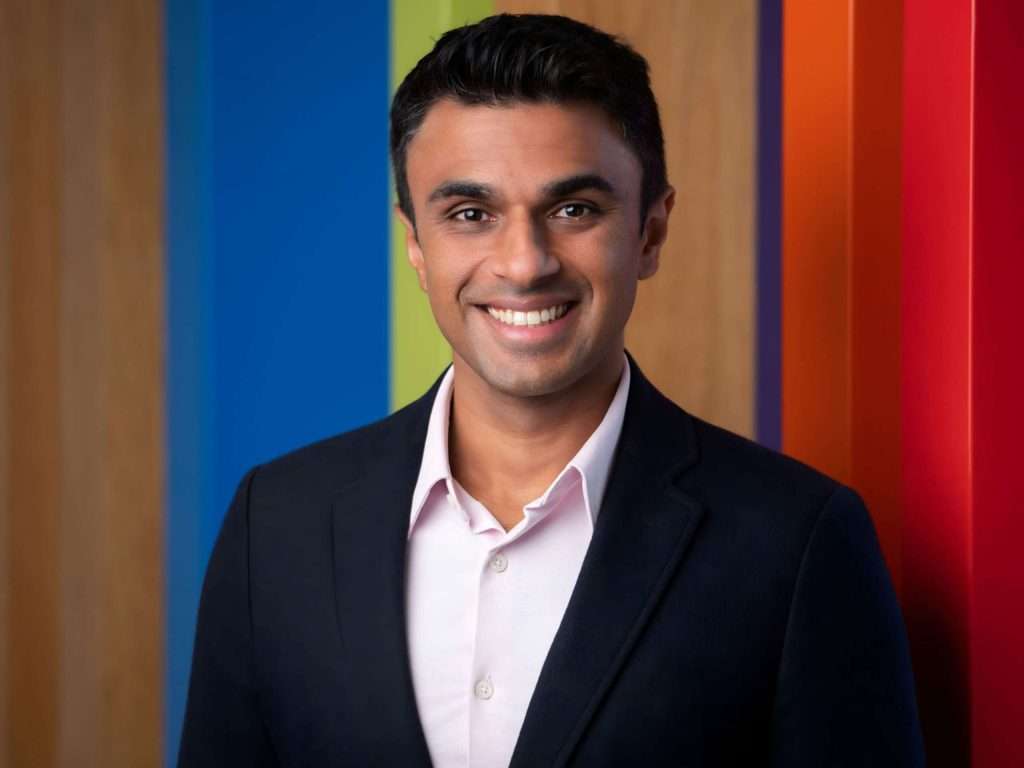
After climbing Mount Kilimanjaro, Vinayak Sasitharan fell in love with Africa. Now, he's using the skills he learned from working all over the world to help Mondelez grow in Sub-Saharan Africa, where he's the CFO. He wants to tap into the region's potential and make the most of it.
For Vinnie, or Vinayak Sasitharan, getting to the top of Mount Kilimanjaro was something he'd never forget. It took him seven days to climb the mountain. When he finally reached the top, the sun was coming up over Africa and he was standing above the clouds. It was really cold - minus 25 degrees - and his water bottle had even frozen. He was also feeling sick from the high altitude, which made him move really slowly, taking just one step every few seconds. But the view from the top made all the hard work worth it.
“Basically, I wouldn't be where I am now if it wasn't for that,” he says, it's pretty simple. He's doing what he loves and that's what matters.
Vinnie currently works as the CFO of Sub-Saharan Africa for Mondelez International, a job he started in April 2026. This is just one part of his interesting career, which has taken him to many countries including Australia, Indonesia, Malaysia, and Japan, before finally moving to Johannesburg.
His link to Africa started way before he got the job at Mondelez. Climbing Kilimanjaro in 2013 was a big deal for him - it was his first real taste of the continent. This trip really made them think about making another big move abroad.
He has a partner in all his adventures - his wife, Vikisha (Viki). She has stood by him through all the big moves to new countries and the changes that came with them. Viki is always up for trying new things, even if it means putting her own work plans on the back burner. This really helped him get to where he is today, in South Africa. She's been with him every step of the way, and that's made all the difference.
A journey beyond Australia
Vinnie grew up in Sydney, Australia, where he finished school and university. He started working in investment banking, but something had caught his eye earlier. During his university days, he did an internship in the consumer goods sector, which moved really fast - this experience stuck with him and later changed the path he took in his career.
He liked that the industry was hands-on and that he could see how the choices made by businesses turned into real products people could buy at the store. This was pretty appealing to him because he wanted to understand how things worked from start to finish.
“Just look around, you'll notice it, and you can even make up your mind right now, then walk into Woolworths or Shoprite and see the result of that decision for yourself,” he says.
He switched back to the consumer goods industry after working in investment banking. This move made sense to him because it allowed him to understand what people want and how businesses make money. He liked that it was more about the people buying the products and the decisions that affect a company's success.
He worked in Australia's consumer goods industry for eight years before his previous employer gave him a chance to be the finance chief in Indonesia. This was a big change for his family, but they chose to go for it.
The company had a factory and ran its own operations. When he moved to Jakarta, he had to figure out how to get by in a place where people spoke differently and had different customs.
In meetings where they planned business together, the sales, marketing, and operations teams would talk in Bahasa Indonesia, then translate what they said into English for him. He figured out that if he learned the language, especially the numbers, he could join in and really be a part of it.
“Bahasa is a language I'm familiar with, but numbers are really my thing,” he says, remembering how this skill helped him catch on when teams were using one set of numbers behind the scenes, only to show him a different set later on.
The family left Indonesia after five years and moved to Malaysia when the business was bought by a private equity firm KKR. Vinnie got a new role as the chief financial officer for the whole of Asia, which meant he was in charge of ten different markets from an office in Malaysia.
He was in charge of helping Arnott's, a well-known Australian biscuit company that makes popular treats like Tim Tams, grow in areas where they weren't as big yet. This meant he had to find ways to make their products more popular in these markets.
He later gained more experience outside of finance when he became the general manager of the Japanese part of the business, all while still working as the CFO for the whole Asia operation.
He had to get inside the minds of Japanese shoppers and work hand in hand with the sales and marketing people. This was a big change for him, as the way business was done here was really different from what he was used to. He needed to figure out how things worked in this new culture.
He went to many places in Japan to see how people liked to shop and what they liked to buy in different areas. This trip really changed his approach to making business choices.
“Being a CEO means you have to make tough calls that aren't always clear-cut. While numbers can help with financial decisions, managing a company is about more than just that. You have to think about the bigger picture and consider all the possibilities, even if the numbers don't necessarily add up. This means looking at things from different angles before making a decision, which is something he learned from his experience.”
Finding opportunity in South Africa
Vinnie was ready for a change, so the job at Mondelez was perfect timing. He had already gained a lot of experience working in Asia and was looking to try something new in a different part of the world.
He started working at the company in April 2026. Since then, he's been going back and forth between his old home and Johannesburg, getting ready to move there for good. Meanwhile, his wife and two kids stayed in Malaysia until everything was settled.
He has had a really good experience so far, the people in South Africa have been friendly and he's been able to adjust to the local way of life without any trouble.
“People from South Africa are really nice, they make you feel all warm inside and welcome you with open arms,” he says.
He notices that Australia and South Africa have a lot in common, like how much people in both places love playing sports, spending time outside and having barbecues.
He's worked in a lot of different markets, and that's taught him a big lesson: just because you're familiar with something doesn't mean you really understand it. Take sub-Saharan Africa, for example - he thinks each country or region is unique and needs its own special approach, you can't just use the same strategy everywhere.
“Things that worked for me in Indonesia didn't work in Malaysia, and what worked in Malaysia didn't work in Japan,” he says.
He wants to really get the South African business, so he's making it a top priority. To do this, he's been on trade visits, checked out products in stores, and hung out with consumers to see how they buy things, what they eat, and how they make choices when shopping.
He's been to all sorts of stores, like small spaza shops and big shopping centres, to see how people buy things and what they can afford. This helps him understand how different places affect what people purchase and how much they spend.
For Vinnie, what he's found out is really important when it comes to money. If people like a product, but it's too expensive for them to buy, the company will have a hard time doing well. The price has to be something people can afford, or the business won't do as well as it wants to.
He thinks the finance team should be deeply involved in understanding the business side of things, not just reviewing decisions after they're already made. This way, they can really get what's going on and help make informed choices from the start.
He likes to hear what local teams and customers have to say, and then he uses his own experience to come up with new ideas. The business can then try out these new ideas without taking big risks that might not pay off.
“Failing quickly is something I think is really important, and I believe companies should be okay with making decisions even when they don't have all the facts. If you wait until you're 100 percent sure, you might miss out on some great opportunities while others are moving forward. So, when something works out, the company can put more into it; and when it doesn't, they should be ready to take a step back and learn from it,” he says.
Unlocking Africa's growth potential
Vinnie thinks sub-Saharan Africa is a big chance for Mondelez to grow. They want to make the business twice as big in the next few years. This will make it a major part of the company's growth.
As the CFO, his job is to help the company reach its goals by finding good investments and getting rid of things that might slow it down. He needs to make sure the business can keep growing by taking care of these two important tasks.
He's really excited about what sub-Saharan Africa has to offer. This area is home to around 1.3 billion people, spread across 49 countries. But Mondelez is only a big player in a few of these countries. There's a lot of room for growth, and that's what makes it so interesting.
The company's products are used by about 300 million people in the area right now. That's a lot, but there are still many more people they can reach with their brands.
“Lots of people - around a billion - don't eat anything made by Mondelez, and that's a chance for us to create a business that will be around for a long time in many countries. But we can't grow if it means losing money or not being smart about how we manage our finances,” he says.
He wants the finance team to be seen as a team that helps the business, not just a group that says no to new ideas. His job is to make sure the company has the money and resources it needs to try new things, while also keeping a close eye on spending to make sure the business stays safe in the long run. He needs to find a balance between letting the company take risks and keeping it financially stable.
Staying on the right side of the law is really important to him, especially since Mondelez does business in so many countries. To keep everything in check, they need good people on the ground, simple rules to follow, and a workplace where employees feel comfortable speaking up when something doesn't seem right.
“Basically, if a company doesn't follow the rules, it's not worth much. That's why I think people in charge of money have a big job to do. They need to make sure investors can trust them with their money,” says Vinnie.
He leads by trusting his team members to make their own decisions, but still keeps a close eye on things to stay informed about what's going on in the company. His teams have the freedom to work independently, and he's always ready to dive in and take a closer look if something doesn't add up.
He wants his teams to focus on what really matters, instead of getting bogged down by too many things at once. This way, they can make a real difference.
The importance of family and perspective
Vinnie has a tough job overseeing finance for a big area, but he always tries to keep things in perspective. He believes in a simple idea: work should not take over your life, so you forget what's really important.
“Let's keep things in perspective - we're not saving lives here. If I can go home at the end of the day knowing I haven't hurt anyone, that's a good day. Remembering what's really important helps me deal with tough days. And if things don't go as planned, it's not a disaster as long as we're staying true to our values and working towards what's best for the business in the long run.”
Taking care of his body is a big deal for him. He needs to exercise and get enough rest so he can do his best, and making time for his family helps him keep things in check.
His wife works as a lawyer for a Fintech company and has done a great job of building her own career, even when the family has had to move to different countries.
When she moved to Indonesia, she had to leave her job in Australia because she wasn't allowed to work as a lawyer there. She then met new people in her industry and landed a job , where she was only the 20th person to be hired. Today, the company has grown to over 1,000 employees in several countries, and she's now the head lawyer, or general counsel.
She did the same thing when her family moved to Malaysia and she's still helping them get used to their new life in South Africa.
Their relationship is all about being open to new things and tackling the tough parts that come with them. They're willing to take on challenges and work through the hard stuff together.
“If she wasn't like that, and was a little scared instead, we wouldn't be moving forward at all,” he says.
“Now we have an opportunity to start afresh in South Africa, settle into their new home and build a new life together. It is a chance for the whole family to find happiness and success in a new environment.”
“Climbing Mount Kilimanjaro was a significant achievement for me, and it remains something I reflect on. The mountain tested my patience, strength and determination, challenging me to keep going even when the climb became difficult,” he says.