The Chartered Institute of Management Accountants (CIMA) has unveiled a redesigned Chartered Global Management Accountant (CGMA) syllabus to equip finance professionals with the skills needed for a fast-changing, technology-driven and sustainability-focused economy. The overhaul reflects shifting global labour trends, the growing impact of AI and the urgent need for strategic, analytical and human-centred finance leadership.
The finance profession is in the midst of a paradigm shift. Emerging technologies, sustainability imperatives and evolving societal expectations are transforming what it means to be an effective finance professional. In response, the Chartered Global Management Accountant (CGMA) syllabus offered by The Chartered Institute of Management Accountants (CIMA), the world’s leading and largest professional body of management accountants, has been upgraded to prepare future finance leaders for a more complex, value-driven global economy.
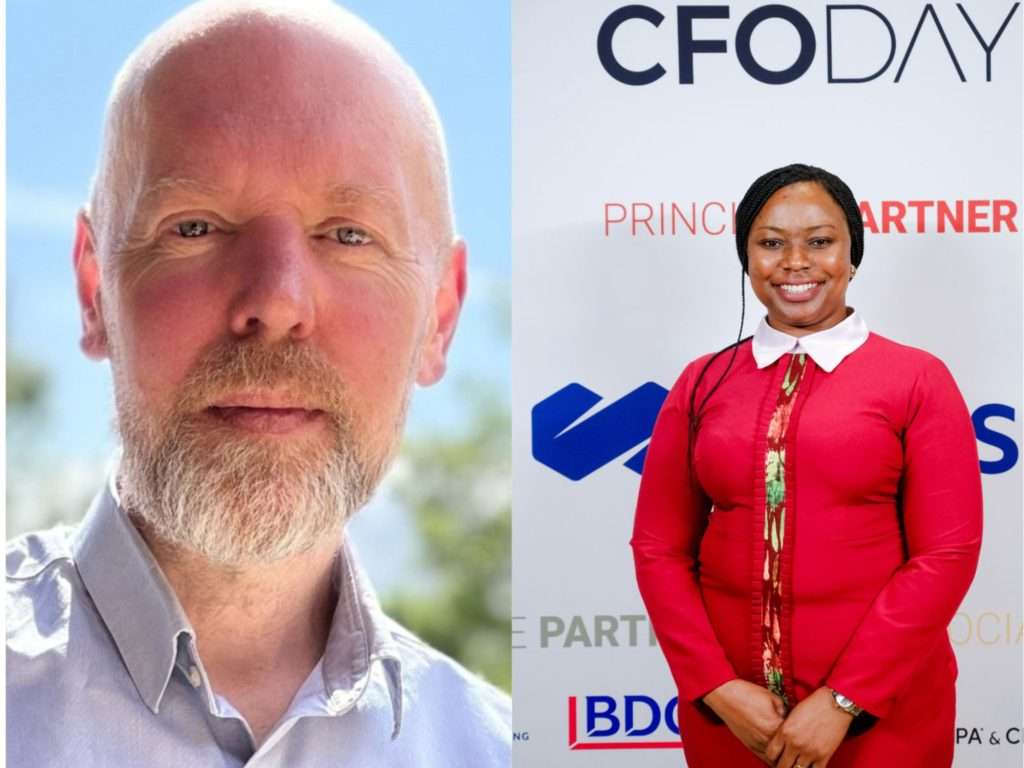
At the forefront of the CGMA qualification overhaul is Stephen Flatman, M.Ed. vice president of education and professional qualifications, management accounting at the Association of International Certified Professional Accountants, the global alliance formed by AICPA and CIMA. He has overseen a comprehensive curriculum update aimed at ensuring professionals remain employable and impactful in a shifting labour landscape.
“We’ve recently launched the updated CGMA professional qualification. It’s very much focused on the finance skills required for the new knowledge economy. The CGMA professional qualification is the future of finance, and this is a big statement,” he says.
“The redesign was grounded in global research,” Stephen explains.
“We started with interviews with CFOs around the world, followed by roundtables across different industries and sectors. We then conducted broad surveys with organisation members to validate our findings. All of that underpins the update.”
Domain expertise
This research revealed significant changes in the job market and Stephen described the labour market as divided into three broad categories: low-wage roles that persist because they cannot be automated, high-skill, high-wage roles driven by technology, AI, data and sustainability, and a declining middle tier of roles most susceptible to automation.
“Those entry-level roles that existed when I joined the workforce, maybe five, 10, 20 years ago, no longer exist. This creates a really challenging environment for anyone looking to enter the workplace,” he says.
He adds that the finance sector mirrors these trends. Roles such as admin assistants, bookkeepers, and reporting staff are disappearing, while demand for strategic, analytical, and finance business partnering skills is increasing.
“Five years ago, we were having conversations about the end of the professions. But what we see with Gen AI is that to be a power user, you need domain expertise,” he says.
He explains that while professional knowledge is still critical, how it is applied has evolved. Finance professionals must now possess foundational knowledge and also the ability to apply it creatively and strategically.
“You need advanced thinking skills, critical thinking, systems thinking and strategic thinking. There’s a real emphasis now on professional scepticism, big-picture analysis, problem solving, and decision support.”
A good foundation for the future
According to Stephen, this evolution aligns with global trends towards sustainability, long-term value creation and inclusive stakeholder engagement.
“We’re not just thinking about investors or shareholders anymore. We’re thinking about our staff, our communities, society and the environment,” he said.
He believes this shift makes the CGMA professional qualification more appealing to future talent, and added that the kind of jobs qualified professionals are doing are genuinely interesting and that is why they’re involved in sustainability, complex problem solving and making a positive impact.
Traditionally, according to Stephen, finance career paths resembled a pyramid: many entered through low-level jobs, gradually moving up. But this model no longer fits the times.
“We now see a diamond-shaped finance function. Entry-level roles are being replaced by automation. People are entering the profession at a higher level and must be equipped to do analytical work from day one,” he says.
This required a redesign of the CGMA professional qualification’s syllabus.
Building critical thinking
Stephen explained that employers are saying they need critical thinking skills in year one, and throughout the qualification. The updated qualification uses a “spiral curriculum”, introducing critical thinking early and reinforcing it at increasingly complex levels.
“Rather than building towards critical thinking in the final year, we start with it and then elevate those skills as candidates progress,” he says.
He explained that the traditional 3-4-5 model (basic to advanced) has been replaced with a more robust 5-5-5 model, challenging students at every level. The syllabus also integrates AI, including generative AI and sustainability throughout.
Each stage concludes with a business simulation case study that mirrors real-world scenarios. Candidates must produce workplace artefacts such as reports and presentations.
“We assess them by asking: Would we give this person a job?” says Stephen.
A note for the candidates
He says to succeed, candidates must demonstrate ethics, technical expertise and higher-order thinking, and added that knowledge helps one explain, predict and create alternatives.
But one, he says, also needs scepticism, communication, and problem-solving, and all of that builds towards impactful finance business partnering.
One major philosophical shift is the move from passive reporting to active leadership.
“Reporting is what we delegate to others. We’re focused on leading businesses to sustainable success. That’s where CGMA sits. We want professionals who go beyond compliance and ask: What’s the purpose of this organisation? Are we staying true to that purpose as we adapt?” he says.
Ultimately, the redesigned CGMA professional qualification, according to Stephen, is about future-proofing careers.
He outlined four key capabilities it instils, namely, expert thinking, critical thinking, systems thinking and strategic thinking.
“These are high-order thinking skills,” he says. “Combined with a solid technical foundation, they are what will enable the CGMA designation holders not just to adapt to change, but to lead it.”
A vital qualification
For Africa, this evolution is especially urgent and Tariro Mutizwa, ACMA, CGMA, vice president for Africa at the Association of International Certified Professional Accountants (AICPA & CIMA), emphasised the CGMA professional qualification isn’t about conforming to global trends, it’s about enabling African finance professionals to compete, lead and thrive in a globalised economy on their own terms.
“The future is here and the CGMA professional qualification is how we prepare for it,” she says.
Tariro believes the CGMA professional qualification is a vital qualification for future-ready finance talent, especially in the African context.
"The CGMA is the future of finance because it does not just address technological advancement or disruption but also addresses specific sustainability realities facing businesses. Within the African context, it’s also about understanding our current situation and influencing our trajectory,” Tariro says.
She highlighted that job creation, particularly at entry levels, remains a key priority in African economies where unemployment rates are high. This focus, often encouraged by political and social contexts, can influence the pace of automation and AI adoption, making it more gradual than in other regions.
However, she notes that this presents a unique opportunity to use technology to enhance human potential rather than replace it. At the same time, finance skills continue to be in strong demand, as organisations seek professionals who can navigate increasingly complex, tech-enabled financial landscapes.
"Considering technology and all the personal factors involved in understanding our current environment, as well as where we’re headed, we need a proper mix of finance professionals that serve,” she says.
She further emphasised the ongoing need for human interaction in finance, stating, “Sometimes we can all choose to go automated, but we still have customers and stakeholders around us who want that human in the loop.”
The impact of the CGMA professional qualification
For her, this dual reality underscores the need for a qualification like CGMA professional qualification that develops high-level capabilities from the onset.
She emphasises that the future talent of CGMA professional qualification will be professionals starting at a higher skills entry level which augment technology , which she views as very important for global competitiveness and robust support for organisations.
The demand for these skilled professionals, capable of integrating technology with human insight, leads Tariro to assert that CFOs must now think of their teams as portfolios of skills.
“You have to look at your team as a portfolio, where each serves a distinct purpose. However, to navigate where we’re headed, we need a team that understands both our current dual reality and the future, that is the urgent focus now,” she says.
She advised young people aspiring to enter the finance profession to choose a qualification that grows with them, keeps them relevant, and aligns with where the world is going, adding that it’s up to them to decide which one.
Tariro shared examples of CGMA designation holding professionals who have moved into roles far beyond traditional accounting, showcasing the qualification’s inherent agility. “We featured one CIMA member who was in HR analytics, telling stories from HR data and aiding decision-making. The CGMA qualification empowers professionals to adapt as their career preferences evolve, ensuring individuals remain engaged and satisfied in their roles rather than becoming frustrated,” she says.