At the recent 2025 Finance Indaba, DRDGold’s finance leaders revealed how their Workiva modernisation project turned reporting chaos into clarity – saving days of work, enhancing accuracy and turning accountants into strategic business partners.
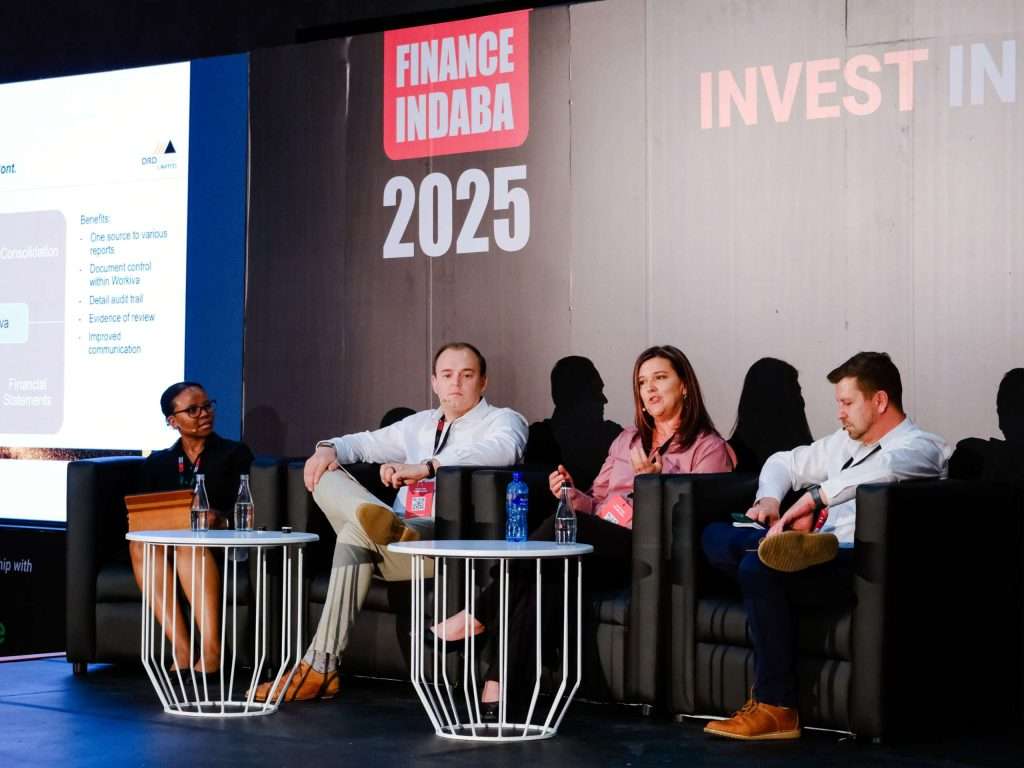
During a session titled Sustainability Reporting Secrets – The project that unlocked the DRDGold finance team's business acumen, DRDGold’s finance leaders shared their story.
The session, led by Mpho Mashatola, group financial manager at DRDGold, featured Ryno Bornman, finance manager at Ergo Mining; Henriette Hooijer, financial director at Far West Gold Refinery; and Lihan Laas, finance manager at Far West Gold Recoveries. Together, they unpacked how the mining company’s Workiva reporting modernisation initiative transformed the way DRDGold handles its financial and sustainability data.
Founded in 1895, DRDGold is one of South Africa’s oldest gold producers, listed on both the JSE and NYSE. Its operations focus on reclaiming and processing old mine tailings – those sandy heaps visible across Johannesburg – extracting gold while simultaneously addressing environmental hazards such as dust pollution and water contamination.
“ESG isn’t a new conversation for us,” Mpho said. “Our CEO likes to say it’s baked into our DNA. By cleaning up the environment and reclaiming land, we’re creating value for both shareholders and nature itself.”
However, until recently, the finance team was stuck in what one panellist described as “Excel purgatory”. Their reporting packs dated back to 2002 and required days of manual consolidation across multiple entities. “It took the poor finance teams three days to complete the reporting pack,” recalled Lihan. “There was no consistency between subsidiaries, and the audit process was painful. Our systems were outdated, inefficient and error-prone.”
Recognising the urgent need for change, DRDGold embarked on a modernisation journey in late 2022. Partnering with Deloitte, the finance and operations teams implemented Workiva, a cloud-based, data-driven reporting platform, integrated directly with their SQL database. Within months, the company moved from manual Excel-based packs to an automated, centralised reporting system.
A bottom-up approach
“The turnaround was remarkable,” said Henriette. “What used to take us a week can now be finalised in a single day. By linking financial and sustainability data into one platform, we’ve achieved accuracy, consistency and real-time insights.”
A critical factor in the project’s success, she explained, was involving the operations teams from the start. “We followed a bottom-up approach. Our operations people helped identify pain points and define the structure of our general ledger and reporting needs. We also made sure to invest in change management – training, communication and building trust were essential.”
Ryno noted that the project didn’t just improve efficiency; it changed the finance culture. “This journey has freed up valuable time for our teams to focus on analysis rather than admin,” he said. “We’re now able to make better decisions faster – and that’s what performance management is all about.”
Beyond finance, the DRDGold team is now tackling the next frontier: integrating non-financial and sustainability data into the same system. “The challenge lies in the vast amount of data across different operations and formats,” said Ryno. “We’re building controls at the source, cleaning and standardising data before it enters the reporting process. It’s not just about compliance – it’s about making better operational decisions.”
Looking ahead, DRDGold plans to align its reporting framework with global sustainability standards such as IFRS S1 and S2, ensuring data assurance and audit readiness. “Our goal is one version of the truth – financial and non-financial data pulled from a single source,” Mpho concluded. “That’s what transparency, trust and good governance look like.”