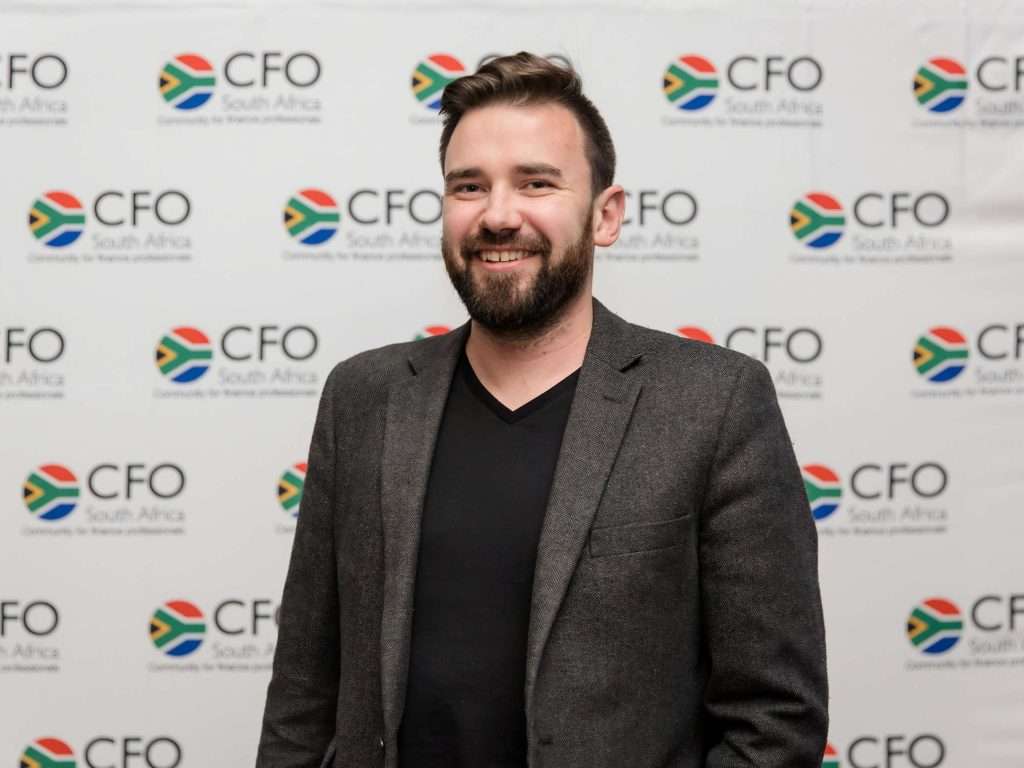
From overcoming academic setbacks to leading transformation at one of South Africa’s leading payment businesses, Derick Truscott has built a career defined by resilience and momentum. The Hyphen CFO reflects on early lessons in perseverance, the realities of modern finance leadership, and why growth often comes from staying the course when the road gets tough.
Derick Truscott, CFO at Hyphen Technology, traces his career back to a single moment when he was between 11 and 12 years old. He was in the car with his father, a petrol head and engineer, when a Porsche drove past.
“I wanted to be able to afford a car like that one day. And I think I asked my dad what does that guy do to have a car like that? My dad replied that the car owner was probably a chartered accountant,” he says.
That father-son conversation during a childhood car ride set the course. Derick pushed through a degree, his postgrad, and articles. “There were times that it was tough and I felt like maybe I’m not cut out for this thing, maybe I should pivot into another kind of BCom or management accounting or something like that. But I’ve just always stayed the path and I accepted this was a means to an end. I consoled myself by saying I wasn’t going to be an accountant for the rest of my life, but this is the hurdle I need to get through that’s going to set me up.”
The toughest stretch came in 2015, during his final year of honours at Stellenbosch University. “I had girlfriend troubles during my final year of studies as well. Although I failed my academic year, the investment in the relationship paid off as she’s now my wife and we are expecting our first child this year,” says Derick proudly.
Despite failing his final year honours at Stellenbosch, Derick was determined to see his goal through. He decided to start his articles and finish the final year of honours through Unisa.
All about commitment
After completing his articles Derick bought his first Porsche at the end of 2018. “It was the oldest, crappiest one you could possibly find. It was by no means an aspirational one but was extremely important to me. It was an old 944 from 1990.”
He kept the Porsche for a while before selling. “Those things aren’t the end goal. Those are just things that indicate to you that you’ve done something right and you’ve committed down a path and gotten it right. That’s more rewarding than the car at the end of the day,” says Derick.
By 2020, he had stepped into his first CFO role at Snapscan, then owned by Standard Bank. He was just 27-years-old. “The SnapScan CEO at the time, Chris Zietsman, and the team were comfortable for me to become the CFO. The trust and faith the team had in me at the time despite me being quite young meant a lot and pushed me even further to grow and take up the responsibility”.
Derick notes that working with a small team of about 30 people, which later scaled to 80, and later joining the board offered invaluable exposure. Being owned by Standard Bank provided a unique balance of corporate experience within a fintech environment. He considers this a major highlight that laid a strong foundation for his executive career.
Today, as CFO at Hyphen – also bank-owned – he spends his days differently than the job title suggests. “My role is officially CFO, but I spend probably half my day, if not more, on the product and commercial side of things. From a board perspective, you put your CFO hat on, but in the day-to-day stuff you’re in the trenches with the product team and with the commercial pieces and you’re helping get this thing traction and getting stuff aligned to go to market. At the end of the day you need to be able to zoom in and out, being hands-on while maintaining the strategic lens.”
Continuing traditions
As with any business, the current market, environment and timing is of the essence, he says. Hyphen is three years into a five-year modernisation and growth plan. Derick joined towards the tail end. “I’m coming in at the business end of this transformation project. I came in pretty fresh and had to play a lot of catch up, joining hands with the teams on the ground to help push this project through the final stages.” He explains that after a long period of conceptualising and developing, the business must now shift its focus towards taking its new products to market. Building internal confidence and actively promoting their work are essential next steps.
Away from the spreadsheets and product roadmaps, Derick competes in car racing events, including the Cape Town Speed Classic and Simola Hillclimb. He is also competing in his first full race season at Killarney this year. “My dad used to race classics when I grew up as a kid and I’m continuing that tradition and passion as well.”
He also keeps an old Nissan 350Z, a road car modified for track use. “It’s a very drift-friendly car, so you can get it nice and sideways. It’s very Tokyo Drift-esque,” he says jokingly.
Derick is, unsurprisingly, a Fast and Furious movie franchise fan. “The original, early movies like Tokyo Drift and the first one are my two favorite ones.”
He says Linkin Park's Hybrid Theory, purchased at age 12, sparked a lifelong love affair with alternative rock music and he was a big metalhead growing up in high school. Nowadays, when he is not racing or working, Derick plays guitar. He learnt on acoustic guitar and spent about 10 years on electric guitar at his local church.
Staying grounded
Despite working in the spreadsheets, he also builds apps in his spare time, using AI to code. “I’ve got a Claude Pro subscription and like any AI enthusiast I’ve been using it to vibe code on the side and even built a small mobile app.”
The app, called PIP, aligns with his passion for financial education and is a financial wallet for children aged five to 11. “It’s that missing gap between before kids are old enough to get their own cellphone and their own bank account. How do you do financial education up until that point? You install the app on the parent’s phone, and you add your kids on there and then you can put your allowances on there. You can set little savings goals for kids there. It’s got like a little tree that grows as the balance grows.”
On leadership, Derick keeps it grounded. “One of the most important ways for you to be an effective leader is to stay grounded. It’s less about whether you’re competent enough or whether you’ve got access to the right resources – this is assumed by virtue of being in the role. But to be and remain effective, you need to understand the real context and impact of the problems and people we solve for and tap into your faith to make wise decisions when the right answer is not always obvious.”
He sees work and life as intertwined, not balanced. “You can have it all, but you can’t have it all at once. There are seasons in life when you’re focusing on certain things more than others,” he reflects.
“Early to late 20s, early 30s, it’s your graft period. Learning is more important than earning. You get to really focus on building a career and it sets you up for some comfort later in life. But regardless of the season, work takes way too much time and energy from your life for it just to be this by-the-side thing.”