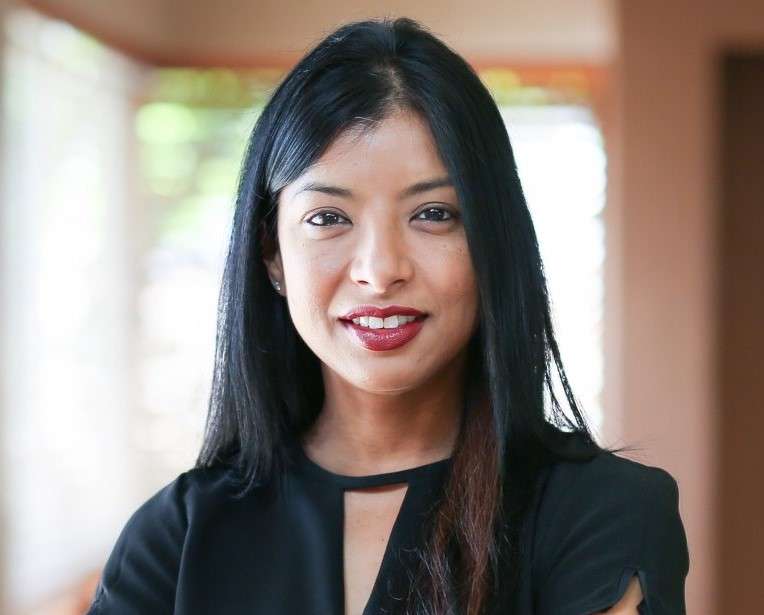
TransUnion Africa CFO Sharon Naidoo delves into the future of business leadership where inclusivity, not just equality or equity, is the driving force.
Living today is hard work. Engaging with one another often feels like navigating a labyrinth of dos and don’ts, where feedback and coaching have become buzzwords, unconscious bias fuels hypersensitivity, and political correctness overshadows genuine connection. And perhaps my greatest frustration: labelling.
Corporate dynamics have evolved so drastically that individuality and choice often feel lost in the noise of personality profiling and leadership frameworks. Our awareness has become a relentless cycle of self-correction and over-correction, occupying every corner of the calendar with “awareness days” and campaigns. It’s like we’re trapped in a constant game of ping-pong between equality and equity.
As the poster child of many of these labels – I am a single mom, of Indian decent, who is female and at the age of 46 I could pass for a teenager – I’ve experienced how the concepts of equality and equity fall short of delivering meaningful connection, mindfulness and intent to understand as opposed to judgement based on preconceived biases.
Equality means fair treatment for all, with no exceptions. In an ideal world, this would erase hierarchies and classifications entirely, undoing centuries of societal and political conditioning designed to enforce inequality. But the reality is that today’s structures still thrive on inequality, and while we create awareness days and campaigns to mask it, these gestures do little to undo deeply ingrained biases.
Equity evolved from equality as an attempt to address its shortcomings. It adjusts for the disadvantages of the discriminated, introducing incentives and frameworks to force the hand of change. Laws and policies move the needle, but far too slowly for a world where everything happens instantly. Millennials and Gen Z, accustomed to immediacy, are unlikely to wait for these frameworks to yield results. Equity acknowledges the problem and offers a solution, but it doesn’t address the root problem.
Having a seat at the table is one thing, but does everyone at the table truly feel they belong?
From equality to inclusivity: The future of leadership
My tribe has a combination of Baby Boomers to Gen X to the Gen Z, and all conversations around the braai often circle back to the same challenge: how do we dismantle a system built on inequality while still living within its rules?
Raised by baby boomers in a tangible, physical world, my partner and I (proud Gen Xers) have metamorphosed into adults navigating an intangible, virtual reality. Though the teenagers – especially mine – feel like I’m not listening, I am constantly pondering their frustrations: unmet needs, a world that feels inconsiderate, and a yearning for connection without the rulebook. And I always come back to inclusivity.
It goes beyond fairness and adjustments to create a real sense of belonging. It ensures everyone, regardless of background, feels like an essential part of the conversation.
As a CFO in a traditionally male-dominated space, I’ve watched how inclusivity can shape the future of leadership, innovation, and collaboration. But truly embracing it means letting go of legacy systems and starting fresh in both corporate and personal spheres.
How can we lead inclusively?
Here are a few foundational principles I’ve found essential in my own leadership journey:
- Be present and create room for every voice: When you’re truly present without distractions, you give individuals the space to share their thoughts, particularly those who may feel less comfortable speaking up. Inclusivity starts with ensuring everyone is heard.
- Listen to understand, not to respond: True leadership means listening beyond words to fully understand the unique perspectives of every individual within a team. Inclusivity requires us to be attuned to what’s being said, as well as what isn’t being said – body language, hesitation, and tone. By tuning into these subtleties, particularly in a digital or hybrid workplace, you create opportunities for underrepresented voices to be acknowledged and understood.
- Create ‘headroom’ and ‘heartroom’ for diverse contributions: Inclusivity thrives on diverse thinking. Leaders must create both mental space (headroom) for strategic conversations that invite differing views, and emotional space (heartroom) to build real connections that allow people to feel appreciated.
- Celebrate individuality and honour diverse journeys: One of the core tenets of inclusive leadership is allowing every individual to be their authentic self. Diversity of thought is the backbone of inclusivity, and encouraging individuals to embrace their stories adds value to the collective vision.
The future of business leadership is one where inclusivity, not just equality or equity, is the driving force. We don’t need another framework or checklist to follow; we need connection, empathy, and understanding. As leaders, it’s our duty to create spaces where every voice is heard, and every story is valued. Inclusivity isn’t a checklist. Rather, it’s a commitment to seeing the people beyond the roles and hearing the voices behind the titles.