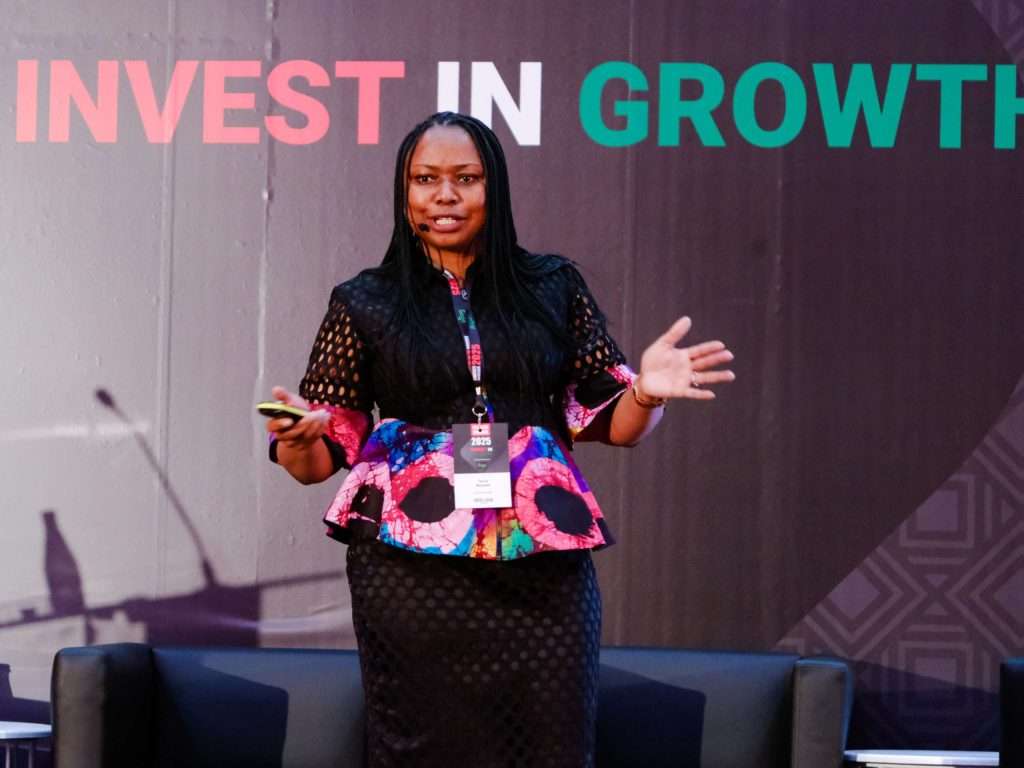
Regional vice president for Africa at AICPA & CIMA, Tariro Mutizwa, led a session at the 2025 Finance Indaba that challenged finance professionals to rethink what it truly means to be a business partner.
During the session FBP mindset masterclass: exploring the critical trait for success in finance, Tariro urged CFOs to move beyond traditional finance roles and embrace a mindset that combines technical skill with influence, curiosity and adaptability.
“As an organisation, we chose to talk about finance business partnering because it’s such a critical requirement in finance, but also because it’s often misunderstood,” she said.
Tariro structured her session around three key ideas – understanding what finance business partnering (FBP) is, recognising the misconceptions that surround it and exploring the mindset that makes it successful. She drew on two AICPA & CIMA research reports Business Partnering (2019) and The Future of Finance (2023) which, she said, continue to shape how finance roles are evolving globally.
“These studies might be years apart, but what we predicted back in 2019 is playing out today,” she observed.
Tariro traced the origins of finance business partnering to the 1990s, when the concept first emerged in human resources before spreading to other functions. In the decades before that, finance teams were largely administrative, focusing on cost control and reporting.
“It started when HR realised it couldn’t sit outside the business. It had to understand the organisation and work alongside it. The same principle later applied to finance,” she explained.
Tariro noted that by the early 2000s, the idea had become institutionalised and finance professionals were expected not just to record performance, but to analyse it and advise on business direction. However, Tariro noted the definition has expanded again in the digital era.
“Today, it’s no longer just about numbers. It’s about partnering in areas like IT, procurement and ESG. Finance can’t sit in a corner anymore. It must be embedded across functions,” she said.
She noted that in organisations effectively practising business partnering, finance professionals are placed directly within departments rather than operating from a centralised finance office.
“At CIMA, for example, we have finance business partners in HR, in regions and in operations. You’ll find a finance person in production, in IT, everywhere. That’s how real partnership happens,” she stressed.