A 2024 Finance Indaba masterclass educated participants on the art of effective non-verbal communication.
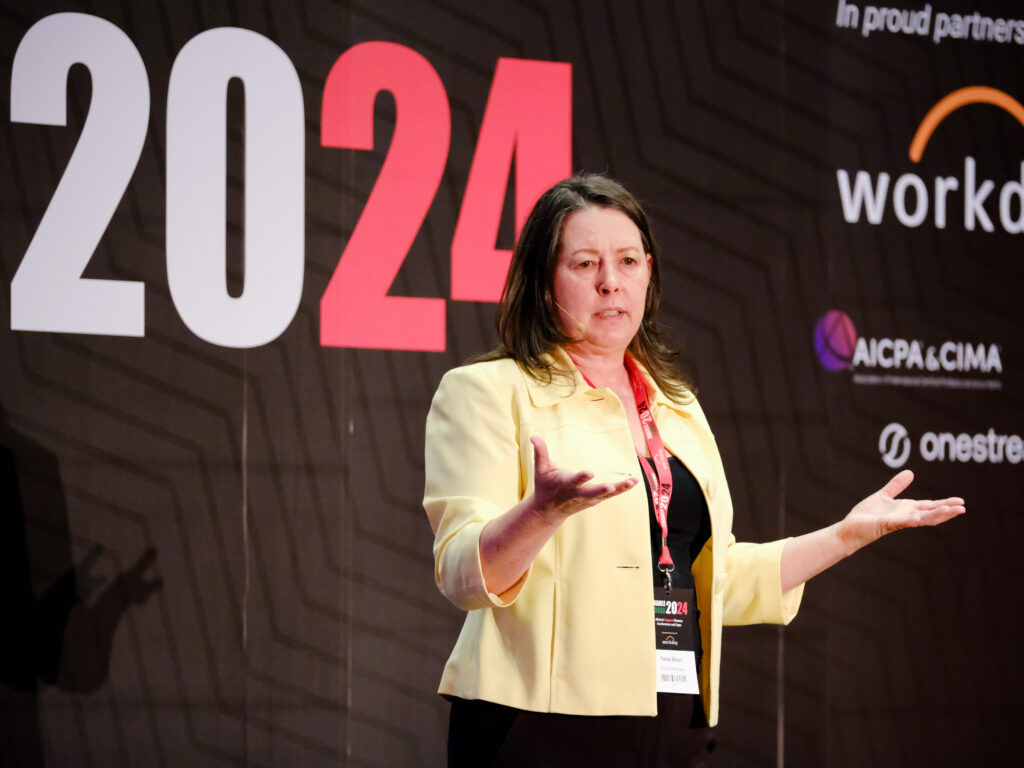
Tania Steyn, CEO of The Art of People, revealed the silent power of non-verbal communication at Finance Indaba 2024, equipping finance professionals with essential tools for effective communication and influence.
Tania said non-verbal communication, often referred to as body language, plays a crucial role in our interactions. She said that it's a universal form of communication, accounting for anywhere from 60 percent to 93 percent of our communication, highlighting its importance in conveying meaning.
Tania shared that contrary to popular belief, the first thing people often notice when meeting someone is their hands, not their face or eyes. She explained that hiding hands can trigger fear receptors in the brain, making others feel uncomfortable and less likely to trust.
Handshakes, on the other hand, are crucial for building trust and rapport, releasing oxytocin, a feel-good hormone. Different handshake styles, such as domineering or submissive, can convey different levels of dominance.
She explained, “A proper handshake should be firm but not too tight, aiming for a feel-good firmness like a peach. The ‘death grip’ handshake, where someone squeezes too hard, can signal insecurity or aggression. Conversely, the ‘dead fish’ handshake, where the hand is limp, is seen as a sign of timidity and lack of seriousness. Proper handshakes leave a positive impression and help in building trust and rapport.”
Tania demonstrated how different hand positions can influence how people perceive and respond to us. She shared that research shows that presenters with palms up are perceived as more friendly and engaging, while those pointing are seen as pushy. Understanding and using appropriate body language can make communication more effective, even in professional settings.
She shared the phenomenon of ‘fronting’ – a technique where the entire body is pointed towards the person we are speaking to, showing respect and attentiveness. Tania shared personal experiences of practising fronting in various situations, emphasising its effectiveness in making people feel heard and understood.
Another important aspect of communication that she shared was eye contact, which is crucial in communication. However, she cautioned against overdoing it, because it can be intimidating, while avoiding it completely can signal disinterest or dishonesty.
The impact of technology on communication
An audience question prompted a conversation about the impact of technology on connecting effectively with others. Tania acknowledged that cell phones are a huge distraction from effective communication and that the presence of phones can signal that the person is not fully engaged or respectful of the conversation, resulting in the unintended effect of making people feel less important.
Tania advises putting phones away during meetings to focus on the conversation and avoid distractions. Answering a question on virtual meetings, Tania suggested looking at the camera during online meetings to make the other person feel heard and engaged.
Her masterclass drew to an end with her saying that while body language is universal, different cultures have varying norms regarding non-verbal communication, such as eye contact and physical touch. She advised understanding and respecting these cultural differences to avoid misunderstandings.