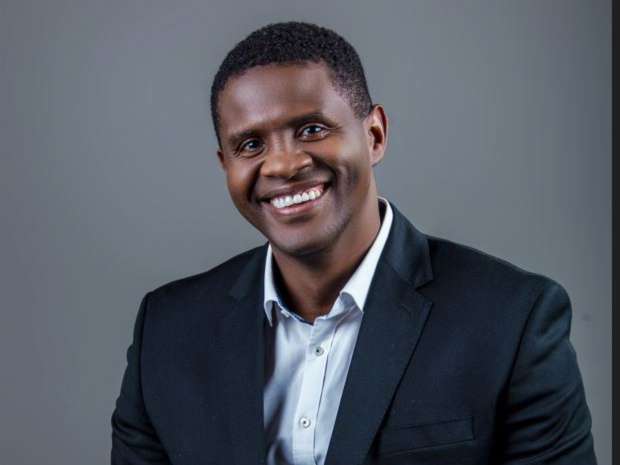
After stints at Deloitte and Standard Bank in Namibia, Pupkewitz Motors group CFO Peter Hiwilepo has built his career around using the tools he has – staying close to the work and making a difference where he is.
Peter Hiwilepo does not describe his career as a straightforward climb to the very top of industry. He speaks about it more as a process of working out where he could contribute most meaningfully, then backing that choice to the hilt.
Today, as CFO of Pupkewitz Motors group, he sits inside one of Namibia’s oldest and best-known business groups, a diversified company with roots stretching back about a century and interests across several sectors.
But when Peter tells the story of how he got there, it doesn’t begin with trying on new suits, but rather study, discipline, and a growing sense that qualification is a milestone (never the finish line), and earning a title has never been the point, instead growth into it is more fulfilling.
His route into the finance realm began at the University of Namibia, where he completed a BCom degree before enlisting with local firm Saunderson & Co for 18 months. He then decided to target the chartered accountant designation, which took him across the border to Nelson Mandela University in Gqeberha and into a training contract with Deloitte Namibia.
After completing his articles, Peter was seconded to Europe. He spent time in Luxembourg and worked across the UK, France, Italy and Germany. A permanent opportunity beckoned, but he found himself yearning for home.
“I was longing to come back to Namibia to give back my skill and really make an impact locally as opposed to continuing in Europe,” he says.
Back in Namibia, he returned to Deloitte, moving through the ranks from assistant manager to manager and then senior manager. But over time, he realised that auditing itself was not where he wanted to remain.
“I decided auditing was not really my passion. So, I decided to say I’m going to look for an opportunity that speaks to my aspiration.”
That opportunity came at Standard Bank Namibia, where he served as head of product and business manager for personal and business banking. After five and a half years there, he left to head up the finance function at Pupkewitz Motors group.
The right fit
According to Peter, the rise into management does not start with ambition or title, but working with the tools you have.
“The profession and the academics give you the tools. All you need to do is put those tools to good use to make an impact, influence others, and make a difference. And you can do it in so many ways.”
It is a view that underpins how he talks about work. He believes people do better when they understand what genuinely interests them and align themselves to opportunities that fit, rather than chasing an impressive-looking path.
“You need to find what makes you tick and then try to align your interest to opportunities. I found what I’m enjoying currently and it helped me also to make a difference, from organisational, people and communal perspectives. That’s what gives me satisfaction.”
That same humility shapes how he defines success. Personally, he says, it means being the best father, husband, sibling and son he can be. Professionally, it means doing work that is meaningful and useful and doing it in a way that leaves something behind for others.
He has little appetite for abstract career language or grand positioning. Again and again, Peter returns to usefulness, contribution and impact.
Hands-on leadership
Peter prefers a management style which is practical and direct. For him, leadership starts with being close enough to the work to know what needs to change. “I was young in terms of experience managing within a multinational structure with a wide geographic reach. This tested my resilience in ways I did not quite expect, nonetheless it also served as a great learning opportunity and revealed lessons I carry with me to this day for instance the value of having a currency sponsor.”
“What stayed with me is the realisation and knowing the need to hold steady when under pressure rather than retreat or react from it. I always had this motto that you do not quit when you are at your lowest. You must be able to withstand the pressure. I would rather leave after having done my best.”
He is equally clear that pressure at work does not end in the office. Home feels it too, and he says support from both his MD, team, colleagues, and his family continuously helps him through those periods.
‘Everybody has 24 hours’
Outside the office, Peter’s story is rooted in family and the north of Namibia, where he grew up as one of nine siblings, splitting his time between shepherding and his village primary school.
Today, much of his life beyond work revolves around his wife and their three children. He makes a point of doing the school drop-off each day, valuing the small but regular conversations that come with it.
“Every single day I drop off the children at school. That gives me 10 to 15 minutes to have a conversation with them. And if you multiply that per week, per month, per year, you will realise that you have spent a couple of days, months and perhaps a year just talking about going to school.”
That same practicality shapes the advice he would give younger professionals. Looking back, he says he would have benefited from understanding his own interests and aspirations earlier, but he no longer sees the less direct parts of his own path as wasted time.
“I used to say I have lost so much time and my peers have already done this and done that. But when I look back now, it looks like I have not wasted any time at all. Everybody has 24 hours. The difference is what do you do in the 24 hours. That really separates us from each other,” Peter concludes.