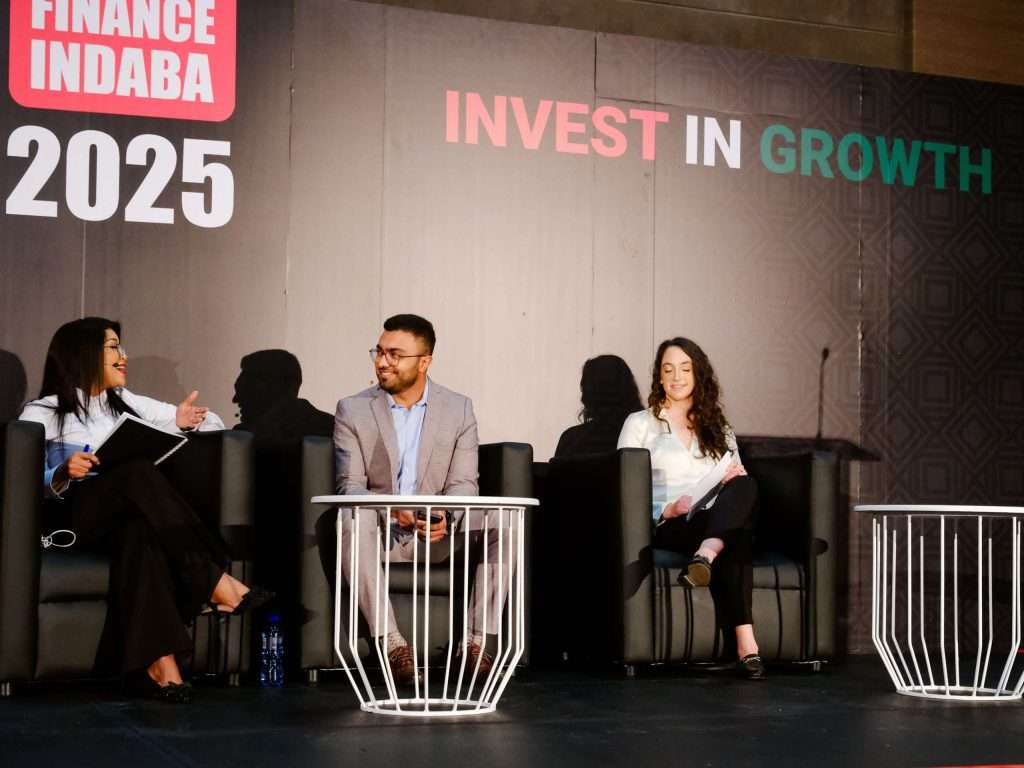
At the 2025 Finance Indaba, finance executives from iOCO revealed that they are making progress and rebuilding trust, as part of their turnaround strategy, following a particularly challenging period.
The company, which recently rebranded from EOH, outlined the steps it has taken to rebuild confidence among employees and stakeholders.
Speaking on the rebrand, iOCO’s finance director Faheem Sarwan said, “The name change is not just a makeover, but it reflects a real change within the organisation. It reflects our leadership’s commitment and messaging, which is that we will always do the right thing.”
According to Faheem and iOCO’s group finance executive Alicia Edelstein, the turnaround began with leadership. “Rebuilding trust for us started at the top with our board. We had to develop a clear and transparent strategy that prioritised corporate governance and filter it down to the rest of the organisation,” Alicia said.
A key factor in the success of the strategy has been consistent communication with both employees and external stakeholders. “We have also been intentional about sharing the performance of our strategy with our stakeholders to ensure that we are rebuilding trust not just with our words but with our actions,” Alicia added.
The company’s progress is already visible, with iOCO’s share price increasing by more than 200 percent in a short period.
Finance’s playbook for a turnaround
Faheem explained that the turnaround began with cash rationalisation. The finance team focused on reducing overheads, managing working capital and improving efficiency.
“The first step in our turnaround strategy was cash rationalisation. The organisation had to cut costs and simplify its corporate structure. This was a difficult but necessary process that helped stabilise cash flow and ensure sustainability,” he said.
The second phase of the strategy, described by Alicia as “radical autonomy”, involved empowering business leaders to make operational decisions while maintaining centralised financial oversight.
“The finance team’s role is to give businesses and leaders accurate and timely information so they can make quick decisions, thereby adding value from a finance perspective. I also believe that it is essential to find the right balance between maintaining independence as a finance team and adding value,” Alicia said.
With stability now achieved, iOCO is focused on profitable growth, revenue expansion and cash generation.
Lessons from the journey
One of the key lessons from iOCO’s recovery has been the evolution of the finance team’s role from transactional to strategic.
“The finance team’s role had to evolve quite rapidly and we had to move from doing repetitive tasks to creating value. We focused on cash flow management, working capital efficiency and profitability translation into cash. We also started using AI and automation to enhance insights and reduce manual work,” Faheem said.
Rebuilding employee trust and morale was another priority, with the leadership team placing emphasis on transparency and genuine care.
“The first step in increasing morale, productivity and collaboration was to bring the finance teams back to the office. The leadership team focused on transparency and showing genuine empathy and care for people which helped with creating a safe, collaborative environment. Although it was initially challenging, the transition back to office was managed with flexibility and understanding, balancing collaboration with employee needs,” Faheem said.
The transformation from EOH to iOCO demonstrates how a finance-led recovery, grounded in governance, transparency, cost discipline and cultural renewal, can turn a crisis into a comeback.