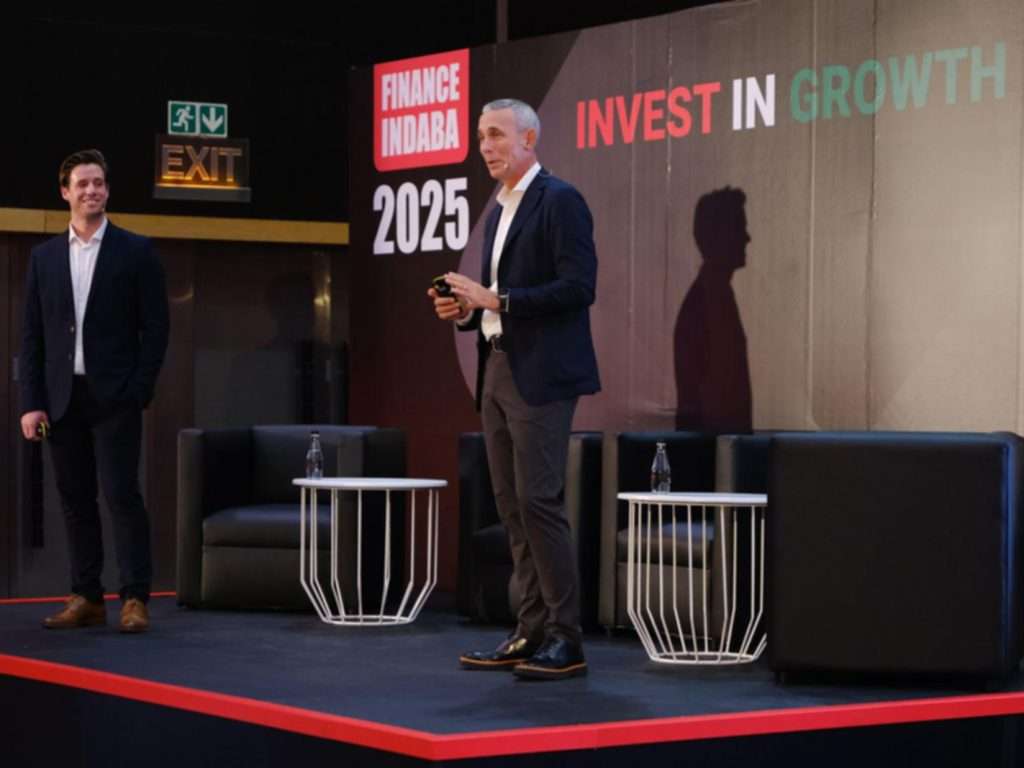
A session themed Connected planning at the 2025 Finance Indaba highlighted the struggle of endless spreadsheets, disconnected teams and the constant scramble to align numbers across departments that finance leaders face.
During this session, Dayne Turbitt, managing director for EMEA at Anaplan, and Byron Williams, senior manager for finance and performance at Deloitte, explained that there’s a better way to make planning simpler through connected planning.
Explaining this, Dayne started by outlining the benefits of a connected finance system noting how finance is uniquely positioned to influence the broader enterprise
“When connected, each controller can update their budgets, and it’s immediately aggregated at group level. You can then use these for allocations and work from a single source of truth. Many of our clients ask how to get to a single source of truth. It’s true for connected finance, but also for the rest of your organisation as you move towards a connected enterprise.” he mentioned.
“Finance is in a unique position in an enterprise because you have purview over sales, supply chain and HR, ultimately owning the annual operating plan or modern range plan. Getting production forecasts, sales forecasts and headcount forecasts, and planning for multiple scenarios, is what we aim to enable.”
Byron built on this, highlighting the importance of functional expertise in executing connected planning successfully at Deloitte.
Trapped in spreadsheet hell
“The Deloitte difference when it comes to collaboration with the Anaplan alliance is that there’s a lot of functional knowledge you need. For example, if it’s a supply chain project, you need supply chain experts. You need individuals from human capital teams, finance experts and experts in other functions. Bringing that expertise together and partnering with a tool and a platform like Anaplan has allowed us to be a differentiator in the market,” he said.
“What is great from a Deloitte point of view is that we leverage the skills where we need them. If we need individuals who have done something before in the mining sector or the energy sector, we can leverage those skills to ensure that our customers and clients have the best expertise and the best tools to bring to the market.”
Many organisations are still trapped in what Dayne and Byron jokingly call spreadsheet hell. Dayne highlighted how the concept of connected planning was designed precisely to solve this problem.
“Spreadsheets are a great tool, but in such dynamic markets, many different scenarios require the ability to react to the market. We coined the phrase to first connect all departments of finance,” he said.
“What we see even in today’s market is disconnected finance. Typically, as a finance practitioner, CFO, or controller, your job is to focus on revenue planning, opex, capital allocations, and cash flow forecasting. It’s not your job to be the bridge between business units and to unpick the Excel spreadsheets that usually communicate between you and corporate finance. Our job is to remove that messy middle, eliminate spreadsheet hell, and give you a centralised platform that directly connects to each business unit,” Dayne concluded.