When routine safety checks shut down one of the world's most remote airports, a four-day birding trip became a two-week lesson in resilience, community and finding opportunity in the unexpected.
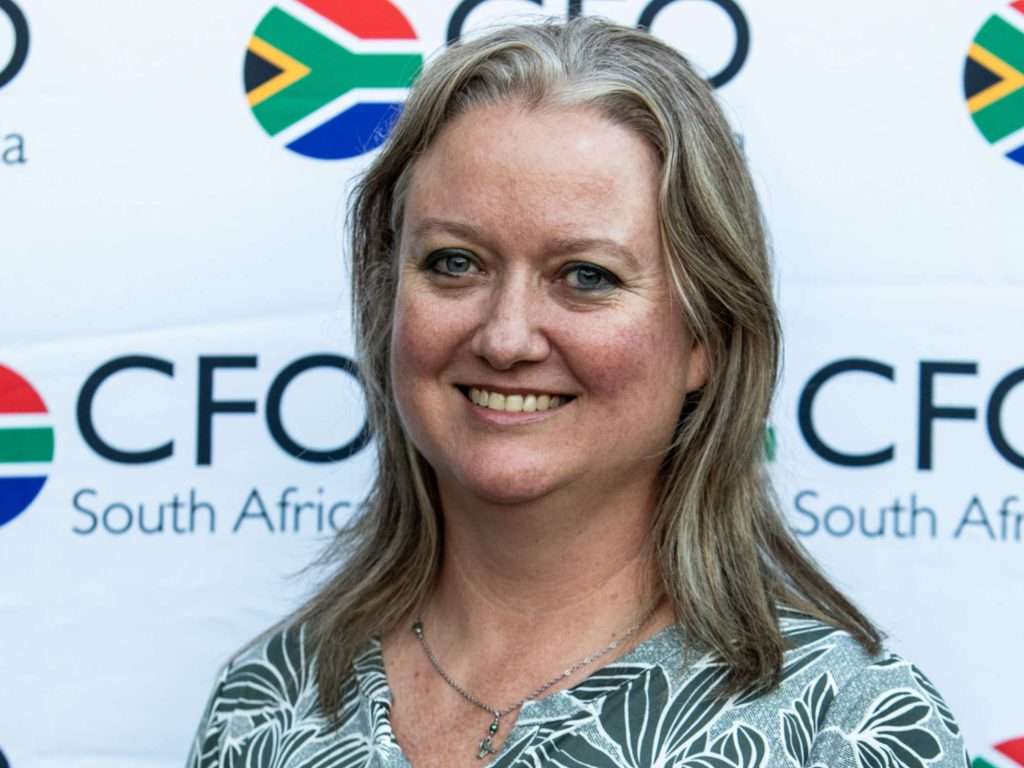
Sandi de Souza had been waiting months for this trip. As CFO of SAP Africa, her days are filled with quarterly forecasts, customer challenges, and navigating the complexities of cross-border business operations. But for four precious days in February, she planned to switch her spreadsheets for binoculars and chase a single bird species across the volcanic slopes of St Helena.
The wirebird, St Helena's last endemic species, found nowhere else on Earth, had drawn birders from across South Africa to this tiny island. Sandi was finally one of them.
What she couldn't have forecasted was that her four-day holiday would stretch into 17 days, or that she'd spend her "stranded" time clearing invasive species with the National Trust, hiking the island's steep terrain, and discovering what it truly means to lead through uncertainty.
The shutdown
The morning of February 6th, 2026, began with a joke. "We were actually joking about how wonderful it would be if the weather played up and flights couldn't land," Sandi recalls. St Helena's airport is notorious for delays with crosswinds making landing treacherous, and only specialised Embraer aircraft operated by Airlink can attempt it.
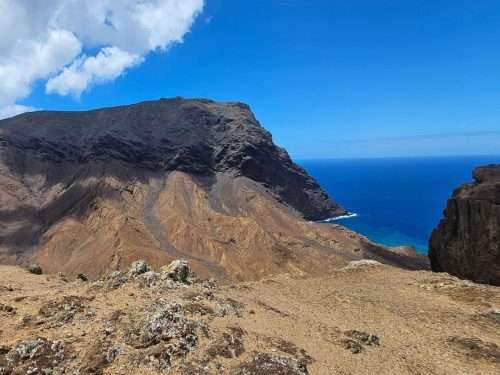
Hours later, nobody was laughing. Routine safety checks on the airport's three fire tenders - all critical for handling jet fuel emergencies - revealed that identical parts had failed on all three units. The airport closed immediately and no commercial flights were allowed in or out. The island, already 2,000 kilometers from the west coast of Africa, was sealed. "It's too far for helicopters to fly from any landmass. Even small planes weren't able to fly. We were literally stranded," Sandi says.
The initial uncertainty was the hardest part. "Before they reclassified the airport, they were talking about worst-case scenarios, shipping an entire fire tender from scratch. That's months, not weeks." For Sandi's group of 16 birdwatchers, brought together by BirdLife South Africa and representing probably the largest tour group the island had ever hosted, the news was stark: "They told us, 'You're here until at least February 20th.' An extra two weeks!"
Sandi, who had left her laptop at home, discovered a newfound appreciation for her phone. "I really learned the benefits of my mobile phone," she says. "I could do compensation reviews, customer calls, approve leave and quotes, sign contracts, and attend to emails. Even in a senior position, it didn't fall over because I could keep stuff going."
For Sandi's friend Colleen, an anaesthetist with no paid leave, the stakes were immediate: no work meant no pay, and she had patients scheduled for surgery. In those first fraught days, Colleen scrambled to reschedule surgeries and arrange care for her pets back home. Sandi, by contrast, could simply be present — because her husband was already holding down the fort. "He was feeding the cat, checking on our elderly mothers," she says. "While my friend was stressing, I could just... be there."
The pivot
What Sandi credits most is the response of the St Helena government. "They're not a wealthy island, 4,000 people, no natural resources, and tourism is just starting," Sandi notes. "But they pulled out all the stops."
St Helena's government covered their additional accommodation expenses, provided daily food vouchers, offered extra activities, transport and regular updates. "They even organised marine trips looking for whale sharks, tours of coffee plantations and hikes."
For Colleen and Sandi both, the island's activities became a welcome shift from crisis management to adventure - especially the hiking. "My friend and I are planning to go to Machu Picchu in September, so we needed to get fitter. St Helena's terrain is either very steep up or very steep down, no flat whatsoever. It was perfect training."
The island's "Post Box Walks" became their mission. They had bought two books of hikes from the tourism office, completed each route, and stamped their books at the endpoint post box. "Colleen and I went on a mission to collect as many stamps as we possibly could," Sandi says.
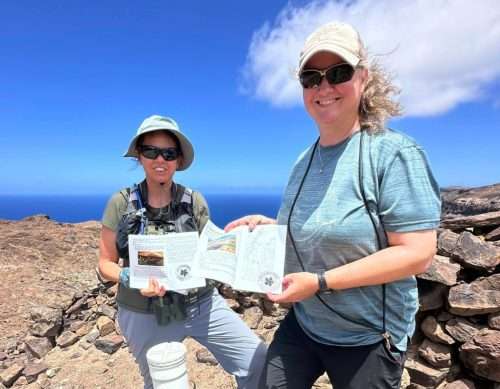
But the experience transcended tourism. Working with the St Helena National Trust, Sandi's group helped clear invasive species from wirebird breeding habitats. "Knowing that our small effort could contribute to protecting such a unique species made it even more meaningful," she reflects. "Seeing a nesting wirebird afterwards, and the views from Cox Battery lookout - that was the reward."
Once one of 10 or 12 native species, the wirebird is now the island's sole endemic survivor - found nowhere else on Earth. "I think there were 350 birds, and now there's up to 600," says Sandi. "What's being done to preserve its habitat is clearly working."
The patient husband
Every birding adventure, Sandi notes, requires one critical resource: "A patient husband. Absolutely."
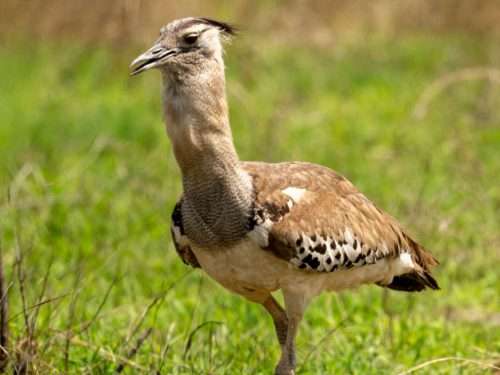
Her husband, who according to Sandi, enjoys birds and being in nature, proved his patience during a Kruger National Park drive. Sandi had spotted her first-ever Kori bustard - the world's largest flying bird. "I kept saying, 'Go forward, go back, go forward, go back,' because I wanted to get the right photo."
When another vehicle stopped to ask what they were hunting - her husband didn’t miss a beat, "Some bastard," he had replied.
Girls just wanna have fun
Sandi came home with a fully stamped book, wirebird photos, and her Machu Picchu fitness sorted. She's already planning the next girls' trip - six friends, Peru and Brazil, this September. The detour, it turned out, was the destination.