At the 2025 Finance Indaba, senior finance leaders shared their insights on how to build agile, innovative teams that embrace change. From hiring for emotional intelligence to fostering psychological safety and modernising systems, CFOs unpacked what it truly takes to future-proof the finance function.
Africa’s largest finance conference and expo, the 2025 Finance Indaba, brought together thousands of finance professionals at the Sandton Convention Centre on 16 October.
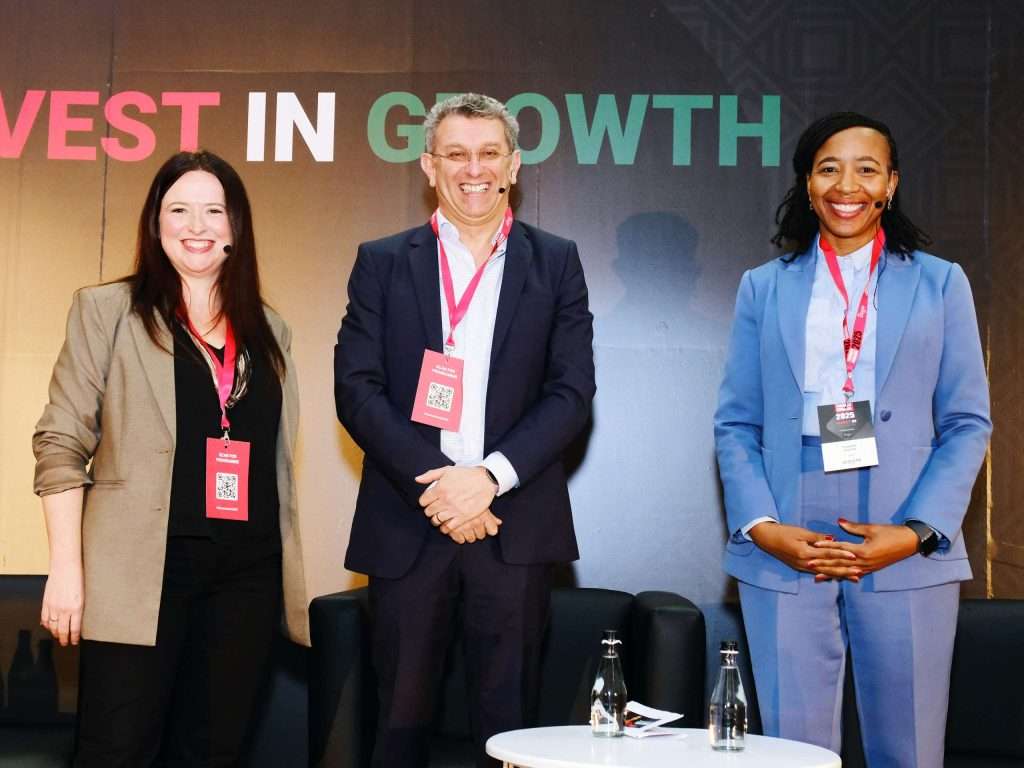
During a panel discussion titled Finance fundis: the secret to creating agile finance teams that embrace change and drive innovation, Oceana group CFO Zaf Mahomed, Zeda Limited CFO, Thobeka Ntshiza and Investec Life head of finance, Roxane Leita explored how to create teams that are driven and do not fear innovation.
Zaf opened the discussion by explaining that technical skills are a must-have in a finance team, however only hiring for just technical skill is not enough, hiring for high EQ skills is more important.
“Diversity of thought is very important which is why I prefer to hire for high EQ and look specifically for people who are problem-solvers because that is what the world needs,” he said.
He highlighted the importance of looking for the right people in a finance team.
“I think it’s very important to understand your people as a leader. If you do not understand the new generation you are hiring, which thinks differently from you, then you’re not a good leader. There is a great need for leaders to be able to work across all generations,” he said.
The need for good finance teams
Thobeka expanded on these sentiments by adding that the demand for finance teams to produce insights in a speedy manner has increased massively. She said in order to build an agile team, leaders need to focus on people, process and systems.
“While modernisation of systems is taking place and is happening, I can then just focus on the people and the processes. We need people who can help us see what we can do better as leaders,” she said.
She also explained that psychological safety within the team is very important and leaders need to make sure that new employees that are being hired are protected, as well as internal teams that are already hired.
“Team members can now come with different qualifications and one can wonder if they are relevant, seeing as how skills and qualifications differ. We as leaders need to protect that in order to make sure that the organisation goes forward.”
Prioritising psychological safety
Roxane added that it is important that leaders need to remember that the finance function has been in existence for a long time, proving to be resilient and agile. She added that in her perspective, people within the finance function are innovative and smart and vital in supporting the growth of the business.
“Since the finance department has been existing for such a long time, it’s easy to say that we’re innovative, otherwise there would be no accounting and finance,” she said.
And because of this, she added, finance leaders and team members should be confident in their abilities and existence and avoid the risk of thinking the opposite, risking psychological safety.
“Leaders need to come out, make use of their day in a very intentional way, which will eventually filter down to their teams. As the finance functions we are already agile and resilient and we need to make sure that everyone always remembers that,” she said.