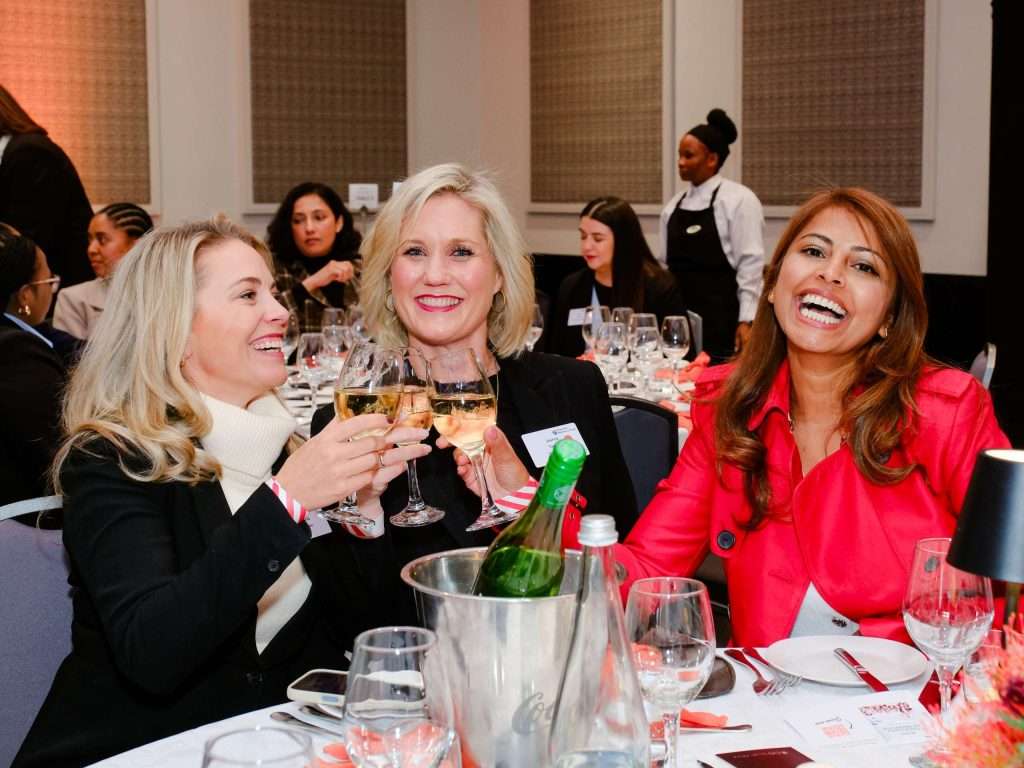
More than 250 women executives gathered in Sandton for the 11th Annual Executive Communities Women’s Dinner, where leaders reflected on authenticity, visibility and the importance of being fully present in the workplace.
Centred on the theme The Power of Presence, the 11th Annual Executive Communities Women’s Dinner created a space for women executives to connect, share experiences and reflect on what it means to lead with confidence and authenticity.
More than 250 of South Africa’s leading women CFOs, CHROs, CIOs and emerging leaders gathered at the NH Hotel in Sandton, Johannesburg, on 13 August for the event.
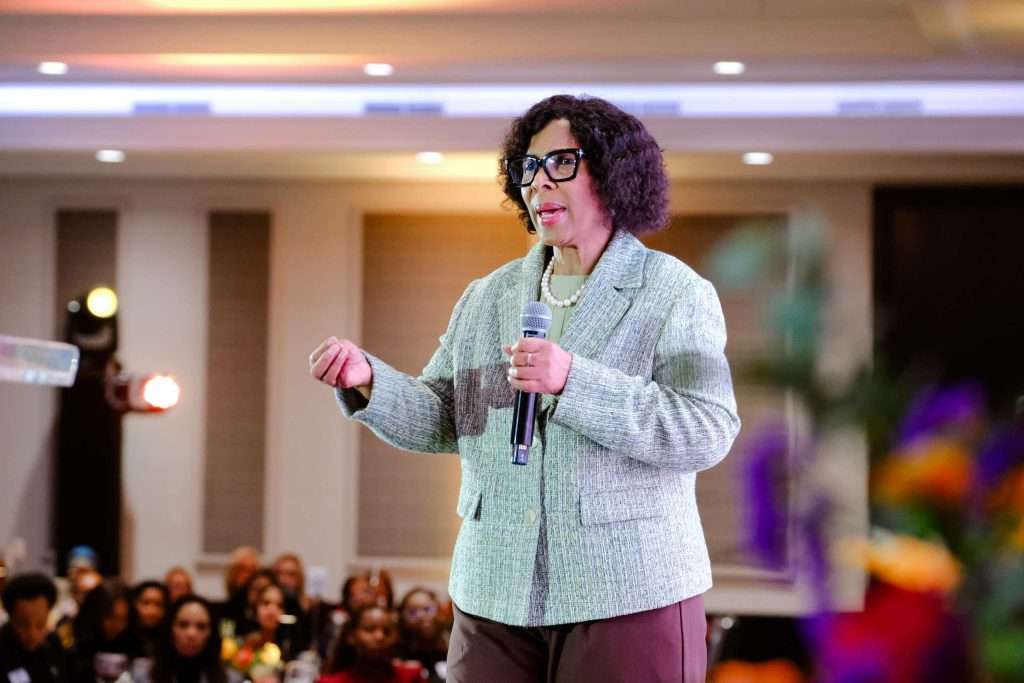
Keynote speaker Nonkululeko Gobodo, business leader, Chancellor and author, reflected on her own journey as a pioneering woman in South African business.
She recalled entering professional spaces where there were few women to look up to, often finding herself as the first woman in the room. Rather than allowing those circumstances to define her, she said she developed a strong sense of self and learnt to trust her abilities.
“I had no consciousness of the fact that I'm different because I'm a woman,” Nonkululeko said. “It had never occurred to me that there are things that I can't do because I'm a woman.”
Her confidence, she explained, was strengthened through early experiences in the workplace, including moments when she had to assert her identity and demand to be treated with respect.
As she progressed in her career, Nonkululeko said she recognised that many women enter workplaces designed around standards that were not created with them in mind. This can lead women to feel they need to adapt, fit in or adopt behaviours traditionally associated with male leadership.
She urged women to resist allowing these environments to define who they are. “Your opinions of me do not define who I am and that is why it is important to have self-affirmation and develop a strong sense of identity,” she noted.
Nonkululeko also encouraged emerging leaders not to be discouraged by where they begin their careers. Every challenge, she said, can become an opportunity to discover new strengths and build confidence. She urged women to use every opportunity to find themselves and to remain visible, deliver quality work, build relationships and seek mentors and sponsors as they progress.
The strength of stillness
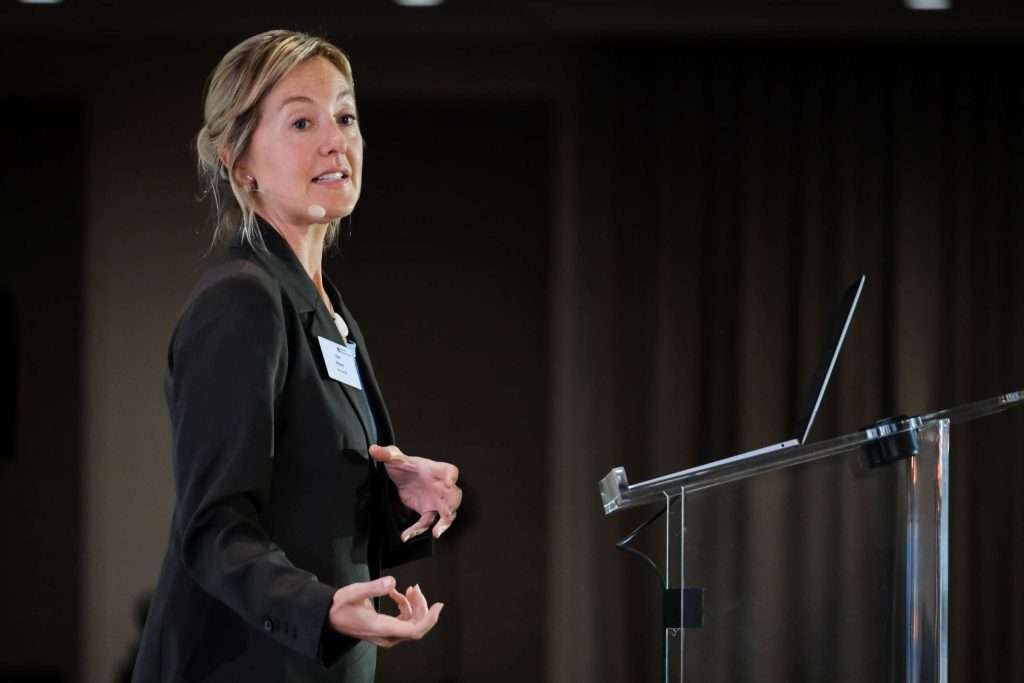
The evening also explored a quieter dimension of leadership presence during an interactive session led by Kate Weaver, the CEO of Are You Ok?.
She challenged the idea that leadership presence is simply about confidence, charisma or being the person who commands attention in a room.
Instead, she described presence as the quality of attention a leader brings to the moment. “Presence is not only the ability to be noticed, but it’s to notice,” she said, highlighting stillness as an often-overlooked leadership strength.
In an increasingly connected workplace, she argued that being constantly available does not necessarily mean being present. Emails, WhatsApps, meetings and digital devices can leave leaders distracted and exhausted, making it difficult to give people their full attention. “Availability is not presence. For leaders, meaningful presence is an intentional choice: deciding what deserves the best quality of attention in each moment,” she said.
This is particularly important for women leaders, many of whom carry both the visible responsibilities of leadership, targets, deadlines and decisions, and the invisible work of managing relationships, conflict, culture and the emotional temperature of an organisation.
“People are priceless and leadership begins when we pay those people attention,” she said.
Understanding different challenges
The theme of presence continued during the Ask a Man panel discussion, where Mikaeel Tayob, CFO of Bridgestone, reflected on the different expectations placed on men and women in the workplace.
Mikaeel argued that organisations need to better understand the circumstances employees face rather than making assumptions based on gender.
He pointed to the expectation that women should excel simultaneously as professionals, mothers, wives or partners, an expectation that is not always applied equally to men. “Stop apologising for being a woman. And stop apologising to a man for being a man,” Mikaeel said.
He argued that greater understanding could help organisations address the unique challenges faced by employees and create more equitable workplaces.

He also acknowledged the impact of perceptions on women’s progression into senior leadership, noting that assumptions about their priorities can influence how they are viewed professionally.
The evening ultimately returned to the central message of presence: leadership is not only about occupying a position or commanding a room. It is about knowing who you are, recognising the people around you and bringing intention to every interaction.
As the evening drew to a close, conversations continued among executives, with leaders exchanging experiences, building connections and taking inspiration from one another, reinforcing the value of creating spaces where women can learn, lead and grow together.
The event was made possible by Principal partners: Cassava Technologies, Entelect, iOCO Technology Group, MakwaIT, Old Mutual Corporate, Regenysys Corporate Education; and Executive partners: BDO, Discovery, Gordon Institute of Business Science, HCLTech, ITR Technology, ManageEngine, jem, Kaspersky, Marsh, Stanlib Asset Management and Workday.