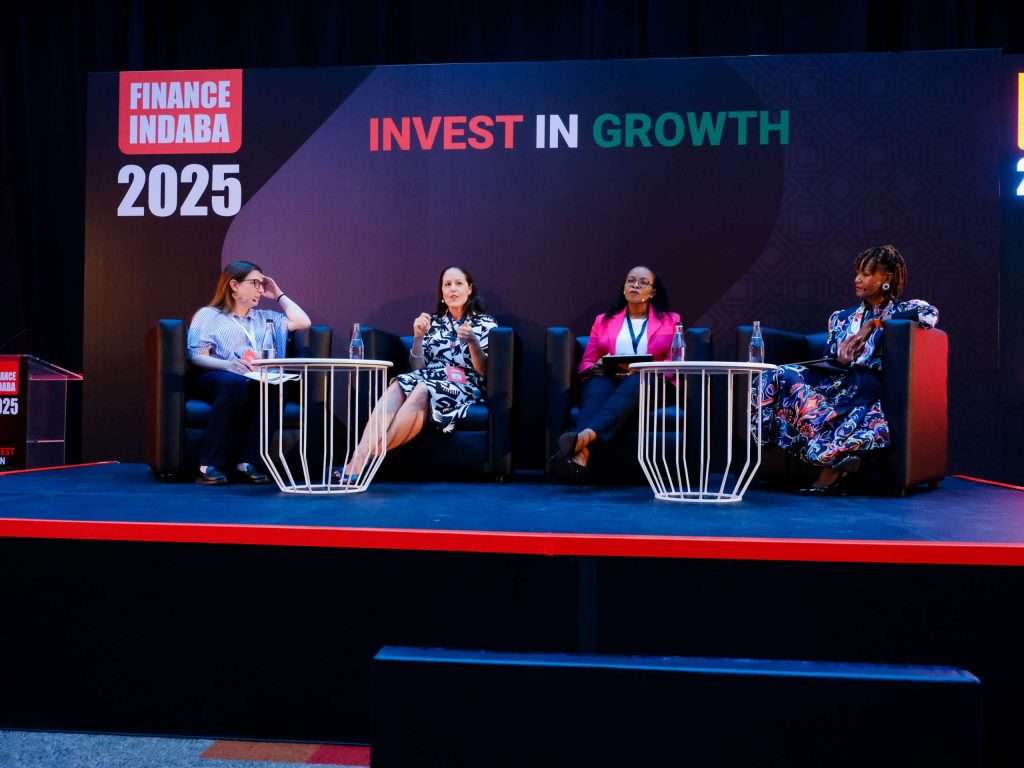
A panel of senior finance leaders discussed the challenges women face in reaching executive positions and strategies for success at the recent 2025 Finance Indaba during a session titled Beyond the glass ceiling: Tales from Women CFOs who broke the mould.
Bongi Ngoma, head of audit at the Auditor-General of South Africa, kicked off by saying, “It's not only the women who break ceilings. So, thank you so much to the men that are here as well.”
Bongi reflected on personal growth and internal barriers. “We don’t just break the corporate ceilings or the professional ceilings, but we start by breaking our own ceilings. We start by meaning ourselves, by believing that we can do it.”
Reflecting on early obstacles, Bongi said that the environment in which she grew up didn’t support her dreams. “We grow up in villages. We grow up surrounded by people who doubt ourselves, who doubt our visions. So those are the limits that we first have to break as you grow up along the way.”
Bongi said it was important to exceed standards and wage war against mediocrity. “To excel actually is a warfare against mediocrity, especially in the public sector. We’ve got that duty to war against mediocrity.”
The challenge of authority without power
Tinyiko Sihlangu, FD of Royal Bafokeng Holdings, explored the challenge of leadership roles without real power.
“Many women are given titles or authority without real power, but they’re expected to fix broken systems, deliver results in environments that don’t always support them,” Tinyiko said.
“And power without authority is one of the leadership risks that you take mostly as women that creates the imposter syndrome. You are sitting there with the title but then you cannot do what the title actually enables you.”
Tinyiko said influence matters more than titles when it comes to leaving a legacy. “When you are given a position and you’ve broken that glass ceiling, just remember that the title means nothing. But understanding your influence and the impact that actually you have in that, it grounds you in terms of who you are, and it outlasts any title that you actually have as an individual.”
Mentors versus sponsors
Rebecca Pole, CFO of NTT Data, drew a distinction between mentors and sponsors. “Your mentors are Google Maps. Your sponsors, however, are the keys to the corporate car.”
Rebecca explained that mentors provide advice and career guidance, often from outside the organisation, whereas sponsors are advocates “talking about you in the rooms where you may not be currently present, opening the doors, giving you the opportunities to step forth and to do those things that are perhaps not in your initial line of sight”.
On developing sponsorship relationships, Pole emphasised the importance of performance and trust. “You must consistently be excellent. Because a sponsorship relationship is not a gift. It’s an investment. You’re asking someone to put their name on the line and to trust in your ability to deliver when they give you the opportunities.”
Rebecca said those seeking mentorship and sponsorship must be proactive. “Mentors and sponsors will put their hands up to guide and to advocate for you, but you have to do your part in terms of building that relationship, being bold and speaking up about what it is that you want so that you can get that guidance around how to get there.”
There is also a need for clarity, Rebecca said. “People cannot read your mind. You have to be clear.”
Rebecca stressed the value of building broad relationships within an organisation, especially in finance. “You have to have people advocating for you across the organisation. You can’t be sitting behind the finance team umbrella. You have to be putting your hand up for opportunities that are outside of the finance realm. Sales and finance typically like water and oil but please make sure you build those relationships.”
Cross-functional collaboration is critical, said Rebecca. “Without sales, the organisation doesn't have cash flow. Put those relationships and those debits and credits that we all understand from our days of studies together and go where do I need to be building those relationships and then use those relationships to ensure that you’re building advocacy.”
Rebecca said successful leaders need to help others. “Once you make it, you have to pay it forward. Once you’re at the wheel, be sure to open the door for someone else and give them the keys.”
Leaders should also ensure opportunities are made easier for those coming after them, Rebecca said.