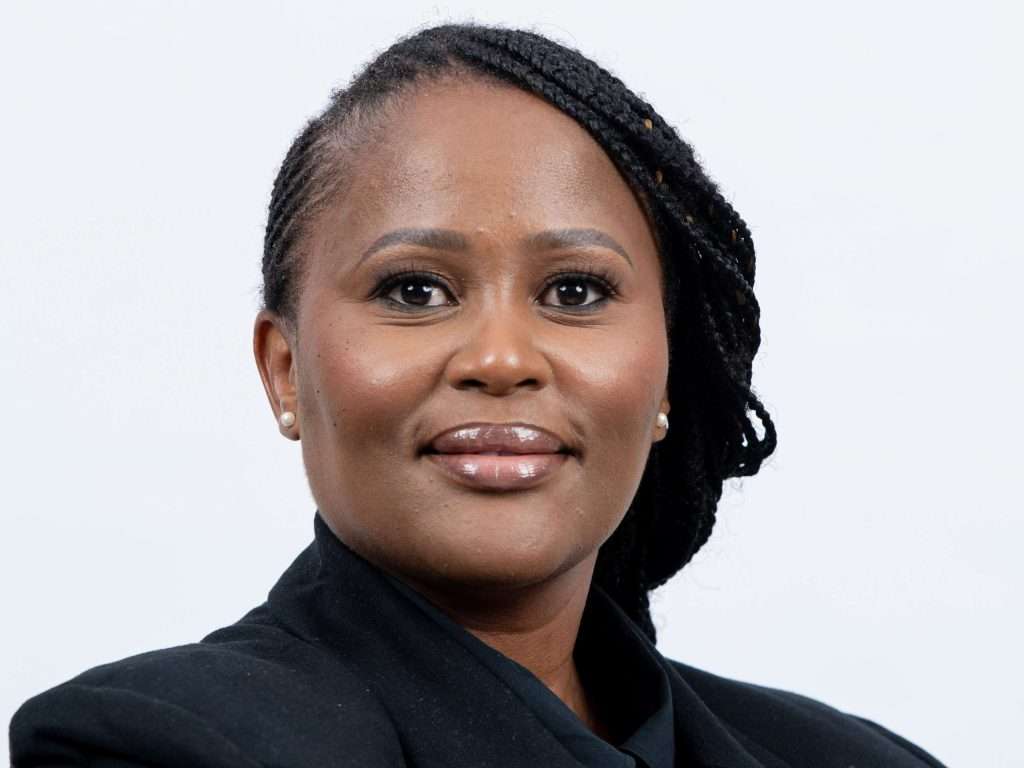
“Leave a place better than you found it.” This simple mantra drives CFO Ratang Icho-Molebatsi’s approach to her role. Whether she is advocating for a stronger community of CFOs in Botswana or investing in professional coaching, her focus remains on building systems and people that thrive long after her tenure.
There are moments in a career that remind you how much responsibility really sits on your shoulders. Serving as CFO at a time when the organisation was going through a change with a major shareholder was one of those moments for Ratang Icho-Molebatsi. It was not just about transactions, approvals, or governance frameworks – it was about stability, confidence and trust.
Ratang was CFO of BancABC Botswana when Access Bank acquired a majority stake in 2021. She continues to serve as finance chief of Access Bank Botswana following the rebranding of the entity while double hatting as the Southern Africa regional chief financial officer.
For her, the acquisition of BancABC marked one of the high points of her career, not because it was easy, but because it demanded maturity and conviction. Navigating a major shareholder change forced her to step fully into the role of steward, balancing technical competence with providing leadership and ensuring a smooth transition. It was a reminder that leadership is often tested during transitions.
Over the past 20 years, she has worked for the financial services industry with particular focus on banking. She is a qualified chartered accountant (ACCA) with a masters in science-strategic management from the University of Derby via Botswana Accountancy College partnership.
“I was always strong in science at school and for a long time that seemed like the obvious path,” Ratang recalls. “But accounting pulled me in because I could see how pivotal it is to the economy, especially in financial services. Money is the bloodstream of any economy, and finance professionals have a responsibility to ensure it flows responsibly. I wanted to be part of that system – to understand it, influence it and help shape it in a way that supports growth rather than short-term gain.”
A critical role
Botswana is going through a difficult economic period, largely because of concentration risk around diamonds. Ratang sees this as an exciting time. Pressure forces change. It pushes us to rethink how we diversify, how we innovate and how we build resilience. Mindsets have to shift and finance professionals have a critical role to play in that transition.
“This is a time for financial prudence. Having briefly worked in the insurance industry, I understand the structural challenges firsthand – low uptake, limited awareness and the difficulty of operating in a non-mandatory environment. These experiences inform my thinking on policy, education and financial inclusion,” she explains.
Ratang believes when the economy is tough, CFOs need a strong community of fellow CFOs to share perspective, challenge thinking and learn from each other’s experiences, because complex decisions are better navigated together than in isolation.
“While organisations like BICA and ACCA have done well in bringing professionals together, and there is a finance community through the Bankers Association, there is more that can still be done. There are critical topics we need to engage on together – IFRS 17 in the insurance sector is a good example, where many are struggling with implementation. CFOs need spaces where they can speak openly, learn from each other and collectively raise the standard of the profession,” she says, welcoming the idea of Executive Communities setting up a community for CFOs in Botswana.
Some of the lessons Ratang could share with fellow CFOs is her simple work philosophy: leave a place better than you found it, and make sure it does not collapse after you leave. That is the true measure of success.
Trusted perspectives
“I find real fulfillment in growing people, building capacity and creating systems that can stand on their own. Titles come and go, but impact lasts. If the people you worked with are stronger, more confident and more capable because you were there, then you have done something meaningful,” she says.
Ratang speaks openly about the value of having a coach – someone who acts as a sounding board, challenges assumptions and helps navigate complexity. In senior roles, isolation is real and having trusted perspectives can make the difference between reaction and reflection. Coaching, for her, has been an investment rather than a luxury.
“Books have played a big role in how I think about leadership,” Ratang says. “How to win friends and influence people stands out for me because it reminds you that leadership is ultimately about people. Beyond that, I’m drawn to books that explore the connection between biblical principles and business. They reinforce the idea that ethics, humility and service are not weaknesses in leadership – they are strengths.”
Principles that Ratang does not compromise on are honesty and integrity.
Ratang’s worldview is unapologetically values-driven. She does not separate faith from leadership; instead, she weaves it deliberately into how she lives and leads. Sundays are reserved for church – a non-negotiable rhythm that anchors her week and recentres her priorities. For Ratang, God is not a peripheral influence in her life; He is the constant reference point that guides her decisions.
Away from work and church, she pours herself into family, having a supportive life partner can never be underplayed, finding balance in moments that are grounding. Camping trips with her husband and three young children, all under the age of 11, riding quad bikes and taking on the ridges of the Kgalagadi sand dunes offer a different kind of reset. There are the occasional falls, she admits with a smile, but nothing more than minor injuries and shared laughter.