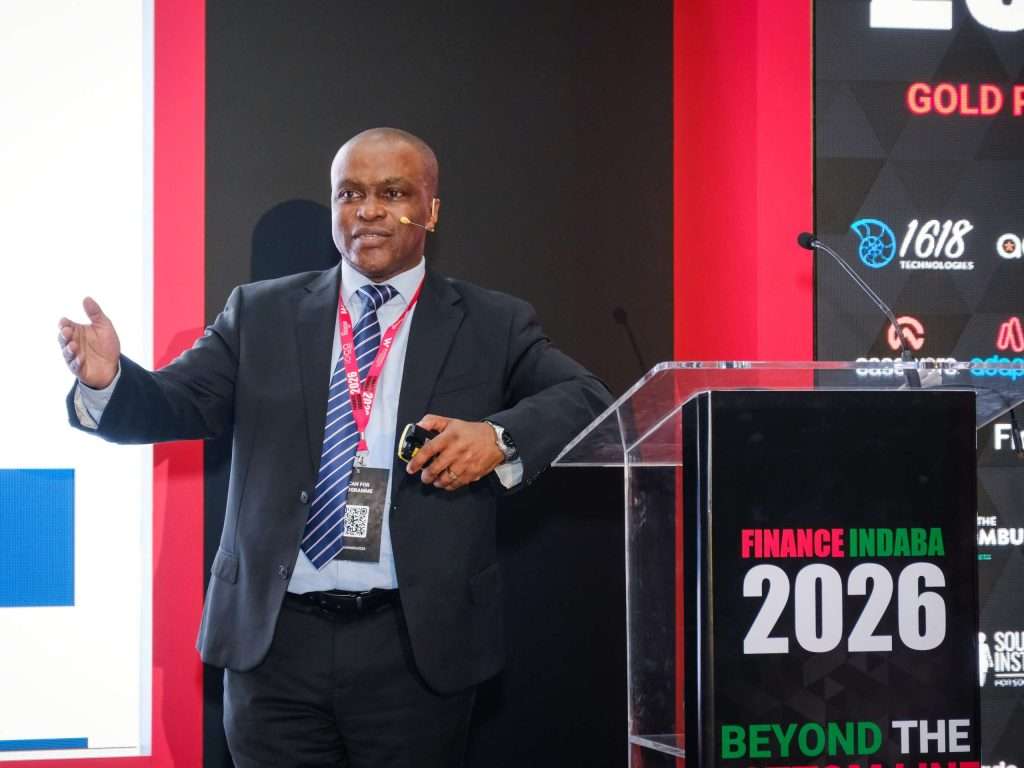
During the 2026 Finance Indaba attended by thousands of finance professionals, Teddy Mosomothane, chief executive and principal officer at Bankmed Medical Scheme, drew on the scheme’s 112-year history to explore how workplace healthcare partnerships can support finance professionals and their organisations.
Speaking at the 2026 Finance Indaba, Teddy Mosomothane, chief executive and principal officer at Bankmed Medical Scheme, explored how workplace healthcare partnerships can help organisations support their employees while meeting business objectives. Drawing on Bankmed’s 112-year history, he called on finance leaders to view workforce health as a strategic priority and highlighted the value of collaboration in developing sustainable healthcare solutions.
“The financial services sector, together with related industries, contributes approximately 20 percent to 22 percent of South Africa’s gross domestic product (GDP), making it one of the pillars of the economy. This places a responsibility on industry leaders to respond to the country’s economic challenges,” he shared.
“South Africa needs its business leaders to rise to the occasion. However, for the financial services sector to fulfil its role, it needs a healthy workforce. This is where Bankmed comes in,” Teddy added.
Good health is a numbers game
Reflecting on the healthcare scheme’s history, he highlighted how Bankmed’s own story began with a small group of banking employees seeking a shared solution to their healthcare needs.
“Bankmed was originally created by bankers for bankers. However, the financial services industry has changed considerably since 1914. The nature of banking and the range of businesses operating in financial services today are different from what they were more than a century ago. This was central to the argument for expanding the scheme’s membership eligibility,” he shared. “The expansion also created an opportunity to strengthen collaboration across the broader industry. The aim is to ensure that organisations and their employees can benefit from partnerships that support their healthcare needs.”
Teddy then shared that Bankmed's approach focuses on turning health awareness into meaningful action. “Health and wellness are central to Bankmed’s strategy. We position ourselves as a partner in health and wellness because awareness alone does not create meaningful change. Wellness starts to make an impact when it moves beyond awareness to action.”
“In the finance industry, professionals are encouraged to know their numbers. The same principle applies to healthcare. We encourage our members to understand their health status through an end-to-end wellness cycle that includes screening campaigns and a range of health assessments,” he added.
He also shared that by the end of September 2026, Bankmed had recorded 31,089 personal health assessment screenings and 22,628 HIV counselling and testing screenings.
“The purpose is to identify risks early, rather than intervene only when someone is already on the way to hospital. We want members to work with us to understand their health and take appropriate action to improve their quality of life,” he said.
The bottom line is better health
According to him, this preventative approach also raises questions about how healthcare investment is measured.
“For the financial services industry, where managing costs is a central concern, the question must move beyond what healthcare costs to what a healthy workforce generates for the business,” said Teddy.
“We need to embrace this shift because organisations depend on their people to deliver on strategic objectives. Employees must be present and able to perform their roles effectively, but this is not solely about organisational performance. It is also about the quality of employees’ lives. Bankmed therefore places significant importance on the overall health and wellbeing of its members.”
Teddy concluded the session by outlining five lessons for organisations and their healthcare partners.
“Treat workforce health as an investment in organisational performance. Collaboration can create value that no participant can generate alone. Prevention and early intervention are essential cost management. Data matters most when it changes behaviour. We have also learnt over the years that purpose-led partnerships can evolve without losing their core,” he shared.
“These lessons matter because healthy people contribute to thriving workplaces and a stronger financial services industry. Given the sector’s contribution to South Africa’s economy, its leaders have an important role to play in supporting the health and wellbeing of their workforces,” he said.