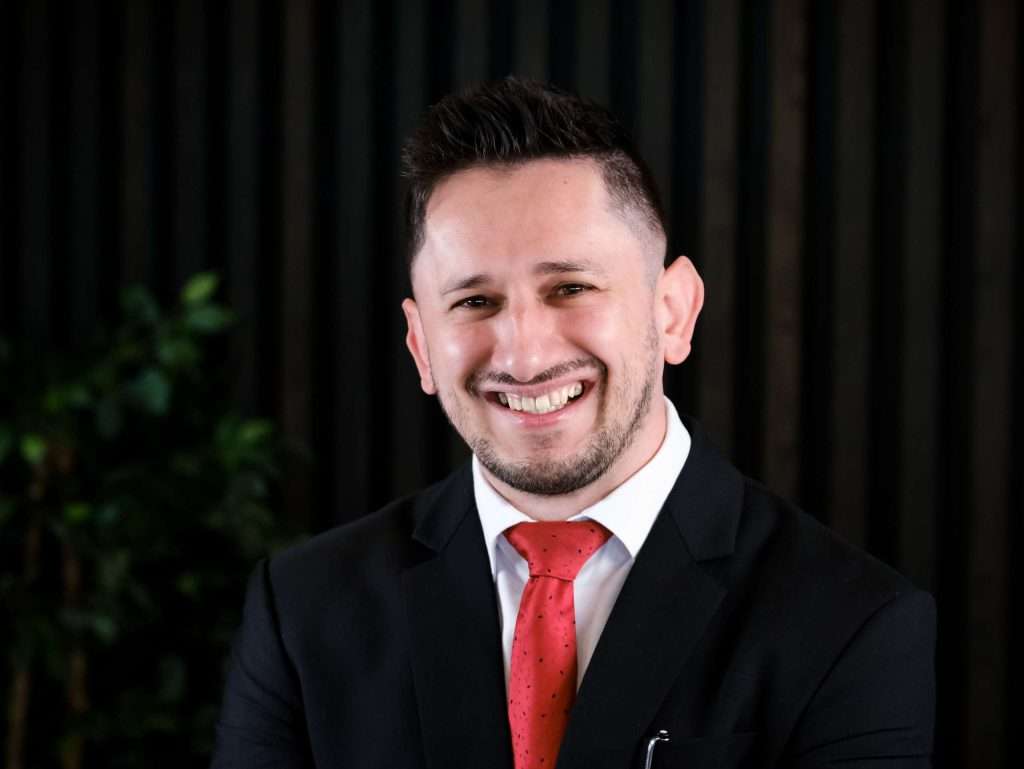
Bridgestone CFO Mikaeel Tayob challenged leaders to move beyond gender stereotypes, listen to employees’ needs and create workplaces where people can perform at their best.
Bridgestone CFO Mikaeel Tayob has called on business leaders to challenge the expectations and stereotypes that can hold women back in the workplace, arguing that organisations need to focus on people’s capabilities rather than their gender or personal circumstances.
Speaking at the 11th Annual Executive Communities Women’s Dinner on 13 August, Mikaeel said both men and women face unique challenges, but that these should be understood rather than used to make assumptions about their ability to lead.
“For me, the first thing that came to my mind was: stop apologising for being a woman,” he said. “And stop apologising to a man for being a man.”
He said women are often expected to excel simultaneously as professionals, mothers, wives and partners, while men are not necessarily subjected to the same expectations.
Mikaeel argued that these perceptions can contribute to a stigma around women progressing into senior leadership roles, particularly the assumption that they have competing priorities that could affect their commitment to work.
From effort to impact
Mikaeel said organisations should instead assess leaders on their impact and performance rather than the number of hours they work.
“It’s not about the effort or the long hours. It’s the impact and the performance,” he said, highlighting clarity, influence and the courage to use that influence as important qualities for leaders.
He also encouraged women leaders to be more willing to take risks rather than waiting until they feel completely prepared.
“My challenge to women is to take a risk. Don’t be so prepared. Just deliver something. Take a chance and see what happens,” he said.
He added that this advice applies to leaders more broadly, encouraging people to be bold enough to make rational decisions and act.
Listening before creating policies
For Mikaeel, creating a more inclusive workplace is not simply about introducing policies. It requires leaders to understand the real challenges employees face and take practical action.
At Bridgestone, he said leaders spoke directly to employees about what they disliked about their working environment. These conversations revealed challenges including the pressures faced by single mothers balancing demanding working hours with responsibilities at home.
The company responded by addressing some of the practical barriers employees identified, including providing subsidised accommodation for employees who needed it.
“The answer is the right person, regardless of what they have in their pants,” Mikaeel said, emphasising that career opportunities should be based on capability rather than gender.
The same approach informed the creation of a dedicated mothers’ room at the company. Mikaeel said the space was designed with employees’ privacy and comfort in mind, reinforcing his belief that inclusion starts with listening.
“It was actually done from an employee lens,” he said. “It was just very specific about hearing people’s issues and solving those, so that when they come to work, they can be comfortable to be the best version of themselves.”
Building empathy
Mikaeel also urged men to play a more active role in creating more empathetic workplaces, arguing that equality does not mean losing the qualities that can make relationships and workplaces stronger.
He said he regularly speaks to men he mentors about empathy and learning from the nurturing qualities that are not always traditionally encouraged in men.
For Mikaeel, creating greater equality ultimately requires a shift in how organisations and individuals understand one another.
“Life balance. Not work-life balance. The message, is to see balance as part of life as a whole rather than treating work and personal life as competing priorities,”
“By listening to employees, challenging outdated assumptions and giving people the freedom to succeed on their own merits, believes leaders can create workplaces where both men and women have a genuine opportunity to thrive,” he said.