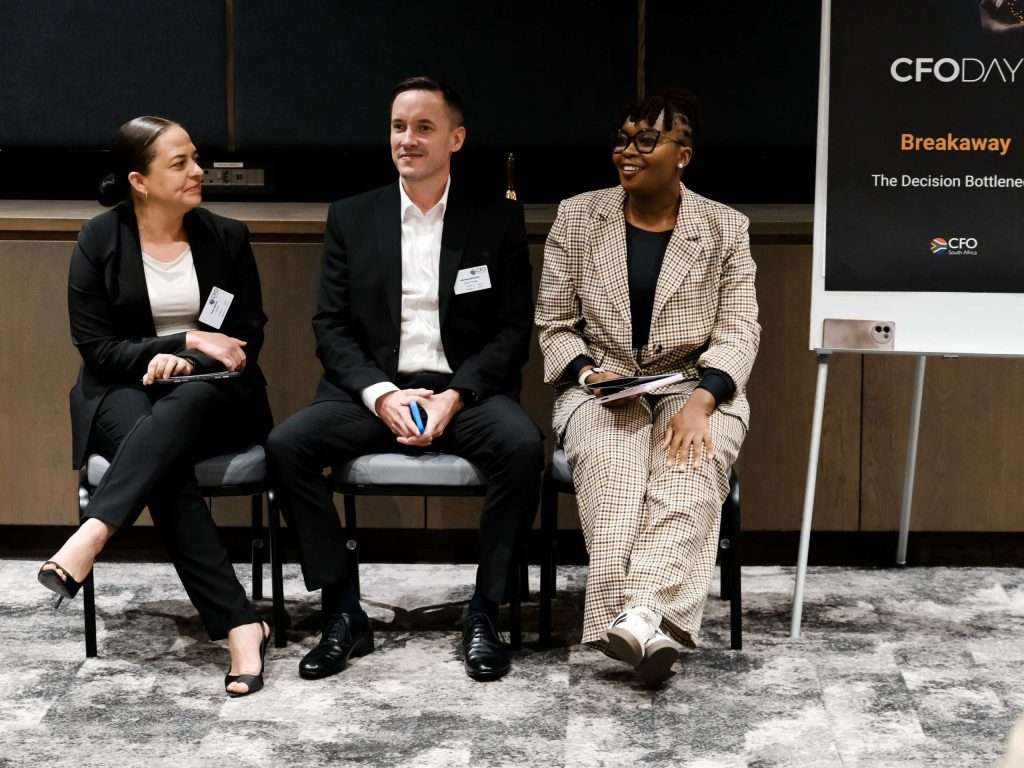
Minerals Council South Africa CFO Tima Norkie has highlighted the evolving role of CFOs as strategic enablers of growth, stressing the importance of balancing governance, risk management and business agility, at the 2026 CFO Day in Johannesburg.
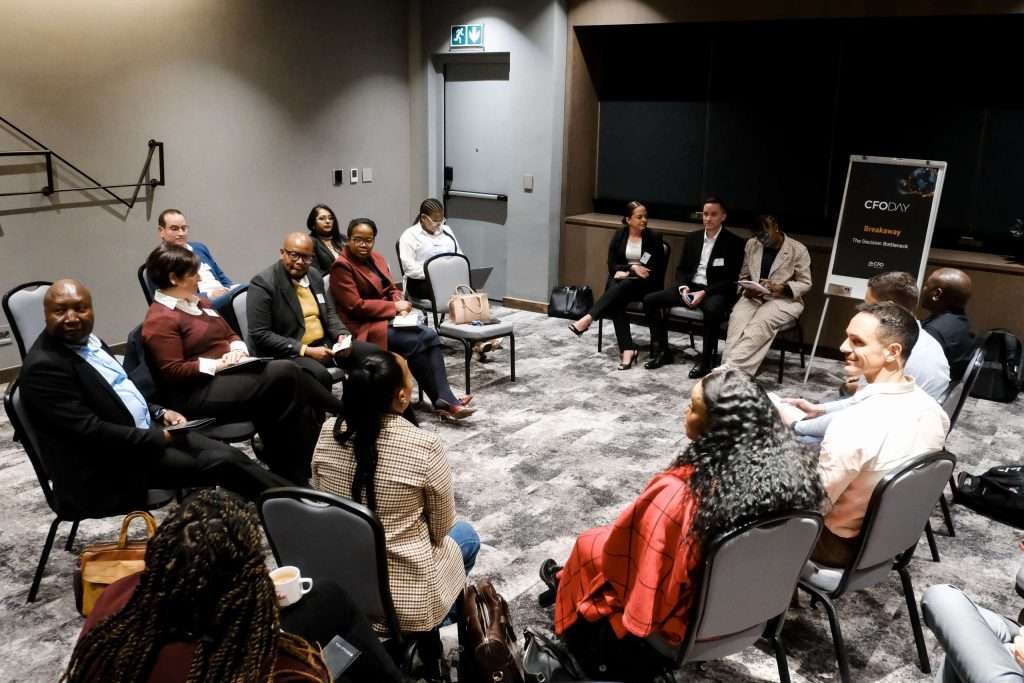
Tima joined some of South Africa’s leading finance and technology executives who unpacked whether the finance function is slowing businesses down through excessive oversight and decision bottlenecks during one of the breakaway sessions at the event, held at the Marriott Hotel Melrose Arch.
The session explored the increasingly complex role of CFOs in balancing governance, compliance, innovation and growth in an environment where organisations are under pressure to move faster while maintaining accountability.
“I think for the CFO, the CFO definitely wants to see themselves as an enabler for growth,” said Tima, while noting that, at the same time, compliance obligations often created significant hurdles.
Tima explained that finance leaders operate across different stages of organisational maturity, beginning with compliance and risk management before moving into performance management and ultimately value creation.
“We can’t ignore compliance and I think that’s where it is frowned upon, the compliance function that we carry, which is so important because it truly is the bedrock of everything we do. If we don’t get the compliance right, then truly how can we grow?” she added.
According to Tima, CFOs must first ensure organisations have strong controls, accurate reporting and a clear understanding of risk before they can effectively support strategic growth initiatives.
Operating differences
She added that many finance leaders preferred operating within the “performance lens”, where they could provide business insight and support operational decision-making, but said the ultimate goal was to become strategic partners driving long-term value creation.
“Ideally, that’s where the CFO needs to get to, that’s where you drive optimisation, that’s where you’re the strategic partner,” she said.
She acknowledged that finance executives were often required to ask difficult questions and challenge proposals, but argued that governance should not unnecessarily delay decision-making.
“Yes, there’s a process you need to get through and yes, you have to ask those awkward questions and yes, you can’t say yes to everything because that’s just not what governance is about,” she said.
She noted that CFOs occupied a unique position within organisations because of their broad visibility across different business functions. “It’s how do you put all of that together, how do you bring insights to the business and how do you add long-term value,” she said.
Addressing the relationship between risk management and growth enablement, Norkie argued that the two could not be separated. “When an organisation is growing, it carries risk, so you can’t separate it. It’s definitely intertwined,” she said.
She cautioned against finance teams becoming overly risk-averse, saying growth strategies inherently involve uncertainty and require organisations to understand their risk tolerance levels. Tima also noted that transparency and open conversations remained critical to balancing opportunity and accountability.
The discussion also focused on the fine line between necessary oversight and excessive bureaucracy.
The CTO’s role in the balance
MagicOrange CTO Michael Brennan weighed in on the discussion, saying governance remained essential, particularly when organisations were accountable to boards, investors and markets.
Michael explained that in the enterprise software sector, investor expectations around metrics such as gross margin percentages required strong collaboration between technology and finance teams.
“If the governance is just a process that doesn’t really add value, and potentially it was born from prior periods where there was a higher risk, and now it needs to be re-evaluated as to whether it’s really necessary, those are the things that [we] obviously need to get rid of,” he said.
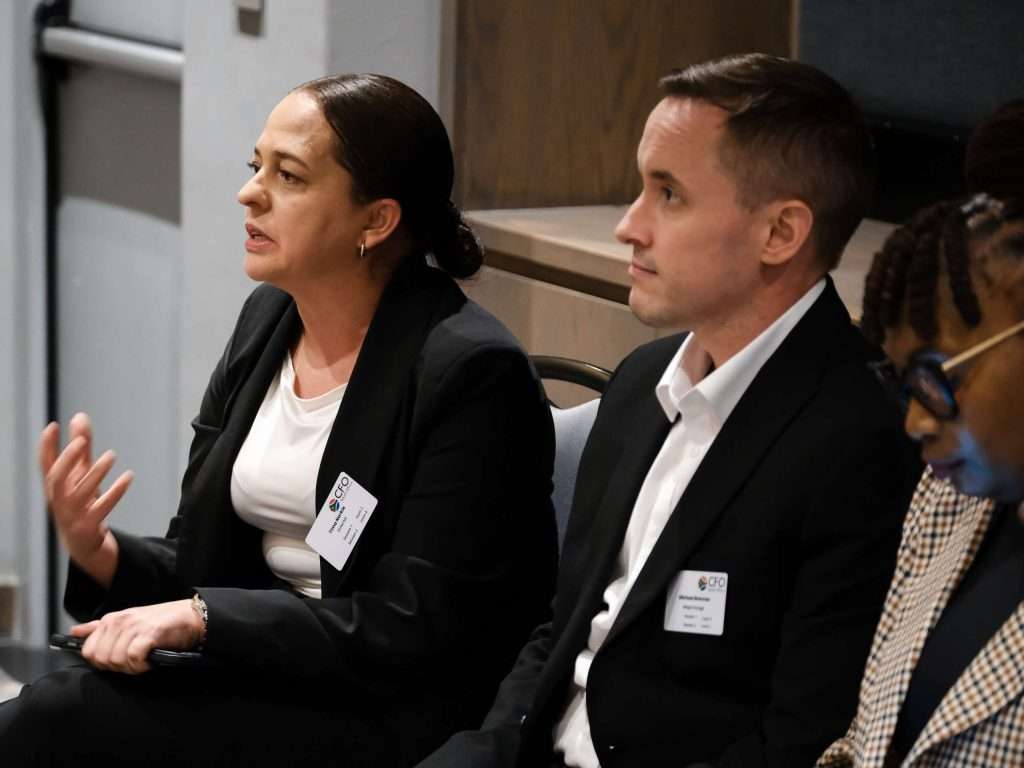
He described governance as a partnership between operational and finance leadership, particularly as businesses increase investments into emerging technologies such as artificial intelligence.
Michael said organisations needed flexibility within budgets to experiment and innovate, especially as boards increasingly prioritised AI transformation strategies. “We need to build room into the budget to be able to experiment and play,” he said.
However, he warned that governance becomes problematic when approval processes materially slow organisations down. “It’s when it goes beyond supporting what we’re trying to do to reach a business objective and it’s materially slowing us down,” he said.
Discussing how finance teams could move away from being perceived as gatekeepers, Michael said collaborative conversations and transparency were essential.
He said outright rejection of business proposals often created frustration, whereas open engagement around options and trade-offs fostered stronger alignment between departments. “As long as I can provide enough transparency on why and what, I really appreciate the ability to have a flexible conversation about options,” he explained.
Michael also emphasised the importance of finance leaders understanding operational and technical realities to improve collaboration and decision-making. “I depend on my CFO to give me that feedback and potentially contribute to where it could be made into a better business case or a better argument.”