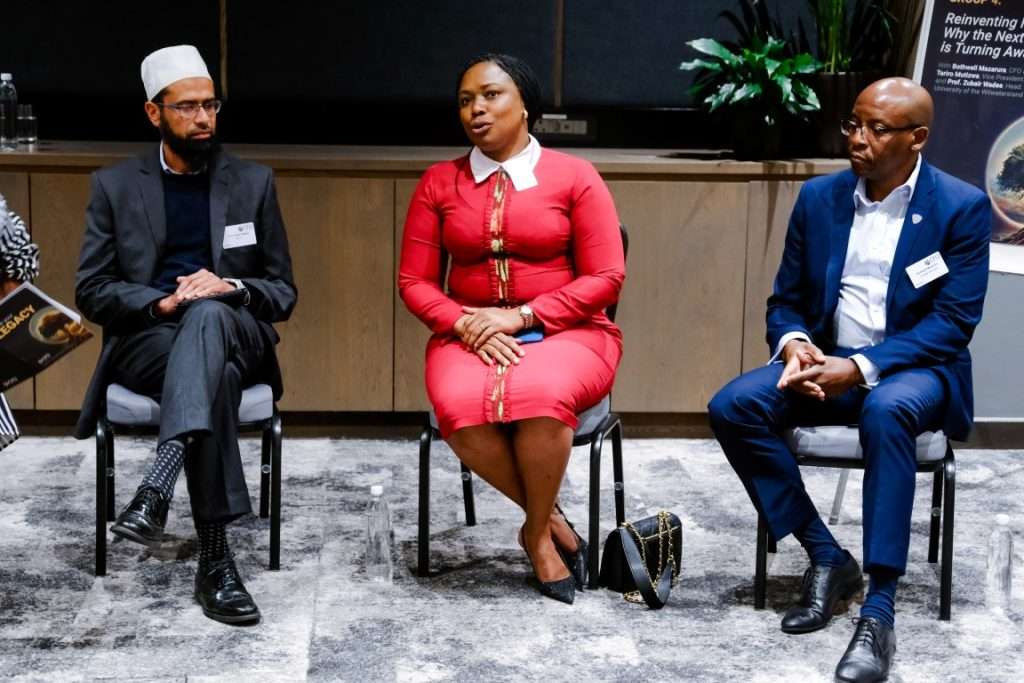
Panellists at the recent CFO Day held in Johannesburg debated the waning appeal of accounting among youth, and what the profession must do to stay relevant.
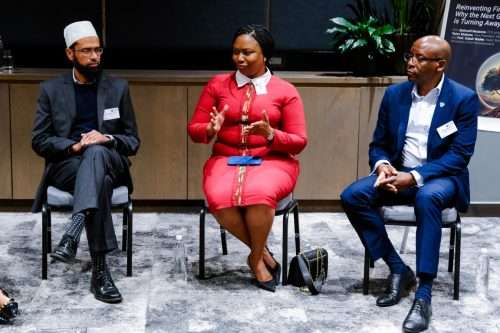
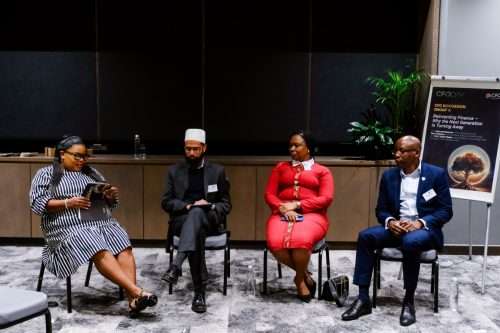
With an industry facing a global decline in accounting graduates and a shifting career landscape, senior finance professionals, educators, and industry leaders gathered to unpack the challenges and opportunities ahead. Panellists Tariro Mutizwa, the vice president of AICPA & CIMA Africa, Professor Zubair Wadee, head of the school of accounting at Wits University and Bothwell Mazarura, CFO at Kumba Iron Ore, tackled a critical question: Is the finance profession losing its allure – and does it matter?
Tariro was quick to lay out the dilemma. She pointed to the US, where accounting enrolments are in steep decline and public accounting firms are struggling to attract graduates.
“When we did deep research, the first thing we found was that entry-level salaries just weren’t competitive. We had to lobby accounting firms to raise them. But that leads to a knock-on effect. Do we cut senior executive salaries, raise client fees, or continue underpaying trainees?” said Tariro.
This financial tug-of-war, she noted, is only part of the problem. The way accounting is introduced to students, especially at high school, is equally to blame. “It’s taught as an abstract, outdated subject. My own daughter dropped it in Grade 9. She couldn’t relate to the concepts, picking slips, cheques, things she’s never seen,” she said.
Tariro said that employers, professional bodies, and educators must collaborate to modernise accounting education and make it relatable. “There is still strong interest in finance broadly, but we risk losing students if we don’t reframe how we introduce accounting,” she added.
SA stable, but shifting
Professor Zubair Wadee offered a more measured view. While acknowledging the global trend, he said South Africa is not experiencing the same level of attrition.
“If you look at board exam numbers over the past decade, they’ve remained quite stable,” he explained. “Even during the #FeesMustFall era, we saw a spike. Right now, we’re pretty much back to our 10-year average.”
He said the real shift is in where accounting graduates are heading. “A decade ago, most students were signing up with audit firms. That’s no longer the norm. Many now choose to work in commerce, banks, large corporations and other sectors offering structured training programmes.”
He credits this shift to the broader skill set that SAICA-trained professionals possess. “They’re well-rounded – finance, costing, audit, strategy – all in one package. But the industry must adapt to where students are gravitating and ensure those paths are equally robust.”
Not cool enough
For Bothwell, the accounting talent challenge hits close to home, literally.
“I have daughters and when they were in high school, I encouraged them to consider becoming chartered accountants. They both said no. Not because of the curriculum, but because accounting isn’t cool,” he said.
He said young people view the profession as boring, data-heavy and lacking people engagement. “It takes long. The articles, the exams, it’s a grind. And the compensation, at least early on, doesn’t make it attractive.”
Bothwell added that the profession suffers from poor marketing. “We’re not telling the right stories. The global mobility, the leadership opportunities, the impact – you can do so much as a CA. But that message isn’t getting to them in time.”
He also took issue with the rigidity of traditional accounting education, contrasting it with his time in the UK where one could become a CA with any undergraduate degree. “I worked with people who studied art, law, even nuclear physics. That diversity of thought is what we need in today’s finance function.”
The evolving finance professional
Bothwell argued that the needs of business have evolved, and so must the profile of the finance professional.
“We don’t need people who just think like accountants. We’ve got tech to crunch numbers and do predictive analytics. What we need is judgement, creativity and big-picture thinking.”
He challenged the profession to close the gap between training and the demands of modern commerce. “Are we preparing them to be that kind of professional? Or are we still building accountants for a world that no longer exists?”
All three panellists agreed that reform is urgent, and possible. From modernising high school curriculums to raising entry-level pay, from diversifying pathways to building soft skills into professional training, the solutions are on the table.
And, crucially, they all agreed that perception matters.
“If we don’t make accounting cool again, we’re going to continue losing bright minds to tech, law and other fields. But if we get it right, if we tell the story of what a finance career can be, there’s huge potential for the next generation to fall in love with it,” said Bothwell.