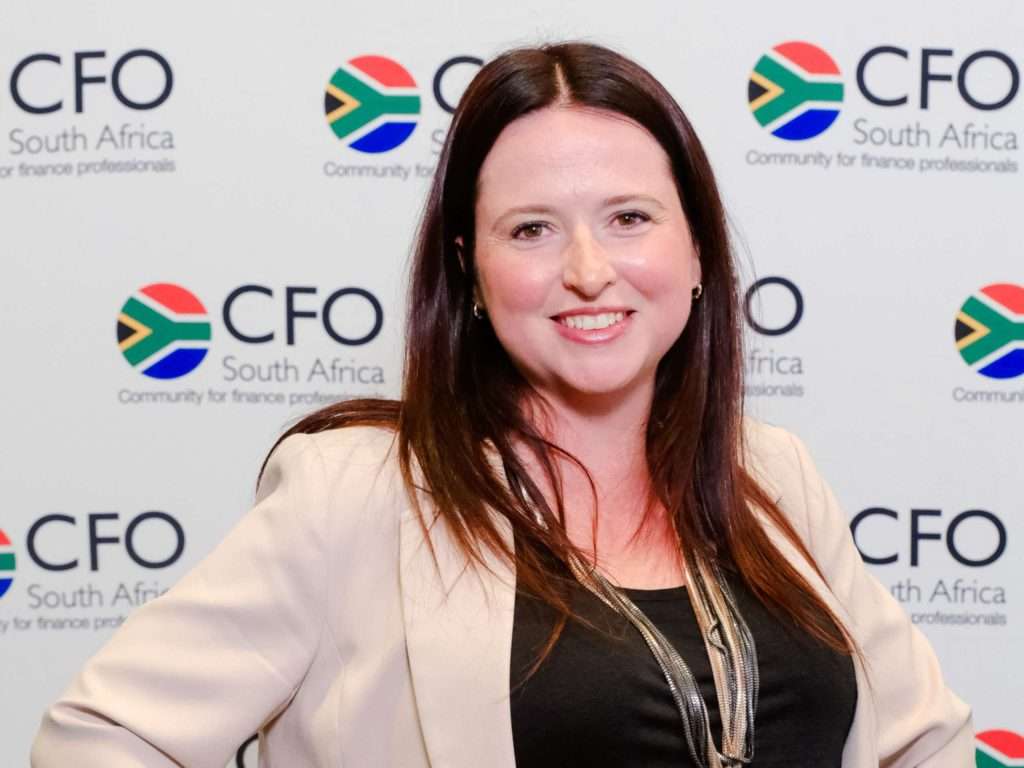
As head of finance at Investec Life, Roxane Leita has spent nearly a decade shaping the finance function from the ground up. Her journey is one of precision, resilience, and innovation, balancing the centuries-old foundations of accounting with the dynamic possibilities of digital transformation.
When Investec Life opened its doors nine years ago, it was a blank slate. For Roxane Leita, who joined at the very start, it was a rare opportunity to build something entirely new, not just a finance department, but an agile, data-driven and forward-looking team at the heart of a modern insurance business.
“I’ve been at Investec for nine years, heading up the finance department. The Investec Life company started nine years ago, so I had the opportunity of actually starting Greenfield in an insurance company, creating the finance function, building it up and seeing how the company’s actually growing,” Roxanne says.
That ground-up perspective shaped her view of what the finance function can and should be. For Roxane, finance is not merely about the numbers, it’s about building resilient systems, fostering psychological safety and enabling innovation in a profession that, as she points out, has been evolving for thousands of years.
“The finance function is often characterised by the pursuit of precision and perfection. But accounting has been around for thousands of years. The basic debits and credits haven’t changed, and we’ve always been reporting to stakeholders. Because the profession has been around for so long, inherently, finance people are innovative and resilient. Otherwise, the profession wouldn’t have lasted this long,” she says.
That innate resilience, Roxane believes, is what allows finance leaders to drive innovation even in a world of accelerating technological change. “If we come in with the base that we are all innovative and agile, it’s just about how we apply this now in the context of the changing demands of our stakeholders, who need faster information,” she says.
Creating psychological safety for innovation
Roxane’s leadership philosophy centres on creating a culture where experimentation and learning is encouraged, even in an environment that values precision. And for her it’s about the psychological safety that she and her team are able to create. “The diversity of thought gives us more resources to pull together. It’s about being intentional, using those resources, creating the space to do business as usual and then setting aside time to look at where systems and processes need to be improved.”
For Roxane, the key lies in being deliberate about innovation, not leaving it to chance or the occasional brainstorming session. “Leaders need to carve out that time day-to-day,” she says. “To say to the teams, ‘How are we actually innovating specifically?’ Put aside the day-to-day and create that time, then report back. When you’re building psychological safety, you’ve hired people who are coming in and saying, ‘Look, I’ve made a mistake,’ or ‘This could be better,’ or ‘I’m stepping on toes.’ That’s the kind of openness that drives meaningful change.”
It’s a mindset that transforms finance from a compliance-driven function into a learning organisation, one that adapts as quickly as the technology and industries it serves.
Tackling inertia and embracing new tools
Despite being an advocate for digital transformation, Roxane is candid about the very human resistance that often accompanies new technology, even for leaders like herself.
“Given the challenge of addressing inertia in adopting new tools and copilots, what methods are most effective for driving intentional innovation across the finance function?” she muses. “It’s such a great question because we at Investec were given access to co-pilots. Initially, I love new innovations but four weeks had gone past and I hadn’t even opened it.”
She laughs at the irony: “Me, who was trying to drive the use of technology, had absolutely ignored it. So there is that inertia, it’s a little speed bump. You just have to get over that hump.”
The turning point came when she saw a colleague using the tool in a simple, practical way. “One of my colleagues used it to rewrite a sentence. I thought that was a bit strange. But I had my Word document open, so I tried it and when I saw what it could do, I realised how easy it was. That small step made me realise its power,” she recalls.
Since then, Roxane has incorporated copilot tools into her daily workflow. She is now using it all the time to compile analysis. She explains that it’s almost like asking Google, but it's a lot better.
“It doesn’t just give you a simple answer; it can put together analysis. Instead of paging through books or trolling the internet, it does it for you,” she says.
But beyond the convenience, Roxane sees a larger purpose in these technologies: to enhance the finance function’s strategic impact. “People often worry that it’s going to take away from finance's job. I don’t believe that. It’s going to enable us to be more powerful, a better centre of excellence, to report faster, to give better insights and analysis,” she says.
From cost management to value creation
Roxane challenges a common misconception about finance, that it exists primarily to control costs. For her, finance has a far greater mandate: to drive growth and unlock new value for the business.
“There’s a great point about maximising revenue. When people think of finance, they automatically think of costs, cost management. But you can’t actually save yourself rich.”
She believes the true return on investment for finance lies in enabling revenue growth through smarter use of data. For her, the biggest ROI that finance can actually give a business is, to increase revenues. And that is where AI comes in.
“We’ve got access to such big data, and I think finance often discounts how much data they’ve got access to. It’s about unlocking that access to big data to allow enhanced, revenue-making decisions,” she says.
For Roxane, the future of finance lies in marrying the profession’s timeless principles with technology’s transformative potential. “Finance is that solid base that really enables businesses to make smarter, better, safer decisions. That’s what technology should help us do, not replace us, but make us stronger. We just need to remember, we are agile and resilient. It’s about making sure everyone is spending time addressing that, intentionally, every day,” says Roxane.