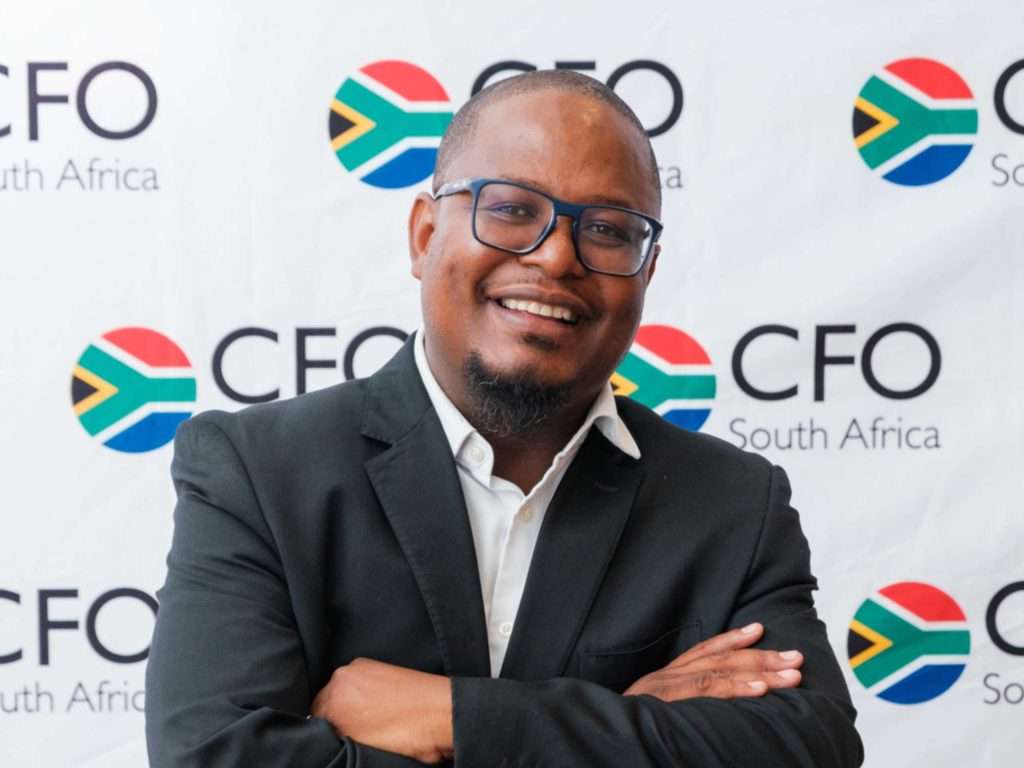
During the week, Bank Windhoek CFO Zenaune Kamberipa masters the intellectual rigour of finance. His weekends are reserved for matters of the heart and tending cattle.
A December read became a catalyst for Zenaune Kamberipa, chief financial officer of Bank Windhoek, who resigned from his position in 2015 after finding inspiration in Stephen Covey's bestseller, The seven habits of highly effective people.
“I had been with Deloitte for six years and I asked myself whether I wanted to be the man after the game was done or the man in the arena. After reading Stephen Covey’s book, I informed the partners of my intention to leave upon my return to work. I wanted to be the guy in the arena and not the guy who comes after the homework is done,” recalls Zenaune.
Zenaune can be regarded as a super achiever following his appointment to his current role at the age of 32. Though he shrugs off this achievement by dismissively saying that he is “not used to applauding himself”, he concedes that the assumption of such a critical role by someone so young came with its set of challenges.
“At the initial stages people doubt you, your own team doubts you, but I didn’t doubt myself. Things were a little bit challenging, but the organisational culture comes into play as people tend to respect your title before they respect you. As a CFO you earn credibility from your team and the organisation by doing your job. Your team can tell whether you are competent or simply faking it to make it in a short space of time,” he says.
Zenaune grew up in a village some 400km from Windhoek and moved to the capital when he was nine years old. He studied at the University of the Witwatersrand in South Africa and served his articles at Deloitte, where he was placed on a secondment to Houston in the United States after he qualified as a chartered accountant.
Solid grounding
He left Deloitte and joined FNB where he served as group finance manager reporting to the CFO. He served in this role for four years. When the opportunity for a CFO position at Bank Windhoek presented itself, he jumped at it and gave it his best shot.
He joined Bank Windhoek shortly after the Covid-19 outbreak.
“I couldn’t have chosen a worse time to start – I commenced my role in July after the lockdown and started a new role in an organisation where I could not meet people and interact with my colleagues. As a result, it was difficult to make judgement calls on how things are done, understand and know the working style of different people and team members.
However, I was well-trained and well-prepared. The sound educational background and a series of experiences and exposure from Deloitte gave me a solid grounding that prepared me for this role. When I got to FNB, my content understanding had already been solidified and by the time I was appointed to this role, I was well prepared. The upside was that I really had to be on top of my game and I quickly immersed myself into the organisation,” says Zenaune.
Reflecting on the nature of his job, Zenaune says the CFO role is a “hard job” that requires a constant balancing act between conflicting interests in the organisation. Linking this to his current role, Zenaune says he sometimes misses the availability of a cohort of experts that he can tap into to pressure test new ideas.
Incubating talent
“For example, at an institution like FNB you have subject matter experts that specialise in specific fields of study, and do nothing else but that discipline. A tax expert specialises in this domain and does nothing else. We do not have that here because of the local context. You need people that you can use as sound boards to pressure test certain things. The reality is that there are people who have already done what you are trying to do. Those are the guard rails you create to ensure that you are on the right path,” he says.
He points out that being a CFO at a young age in a Namibian-owned bank means that the age demographics he manages range between 40 and 50 plus years old. “My role is to be the star-maker and that’s my leadership style. I continuously ask myself: is the team becoming better because I am here? Or am I only becoming better? Everyone else must be better because I am leading them,” he says.
Elaborating on his leadership style, Zenaune says everything starts with ascertaining the aspirations of his team members and figuring out how best he can support them to achieve their goals.
“I am not fussed about people leaving because I believe that when we create and incubate talent, Namibia is better off because of that. The development of people comes with risk, so when things go wrong or right, your reaction should be one that reinforces that people are empowered and allowed to try things. It is easy to talk about these concepts when things go well but when things don’t go well, you have to walk the talk because if you don’t, you will lose credibility,” he says.
Zenaune points out that he’s an avid reader who loves reading leadership books. Apart from the aforementioned books, he also found pearls of wisdom in Viktor Frankel’s Man’s Search for Meaning, which chronicles the experiences of the author when he was held captive in a Nazi-run concentration camp during the Second World War.
When he’s not counting beans, the married father of a six-year-old son enjoys catching up with current affairs and global news developments, listening to podcasts and cattle farming.
“There is no correlation between accounting and cattle farming. I love the intellectual rigour that comes with my job. Cattle farming is in the blood, I am still a village boy at heart,” he says.