Cell C CFO El Kope says leaders must break transformation into practical steps, communicate consistently and remain close to their people to build trust and keep teams moving through change.
At a time when organisations are being asked to transform faster than ever, leaders must ensure that employees are not overwhelmed by the pace of change, Cell C CFO El Kope told delegates at the 2026 Executive Day in Melrose Arch.
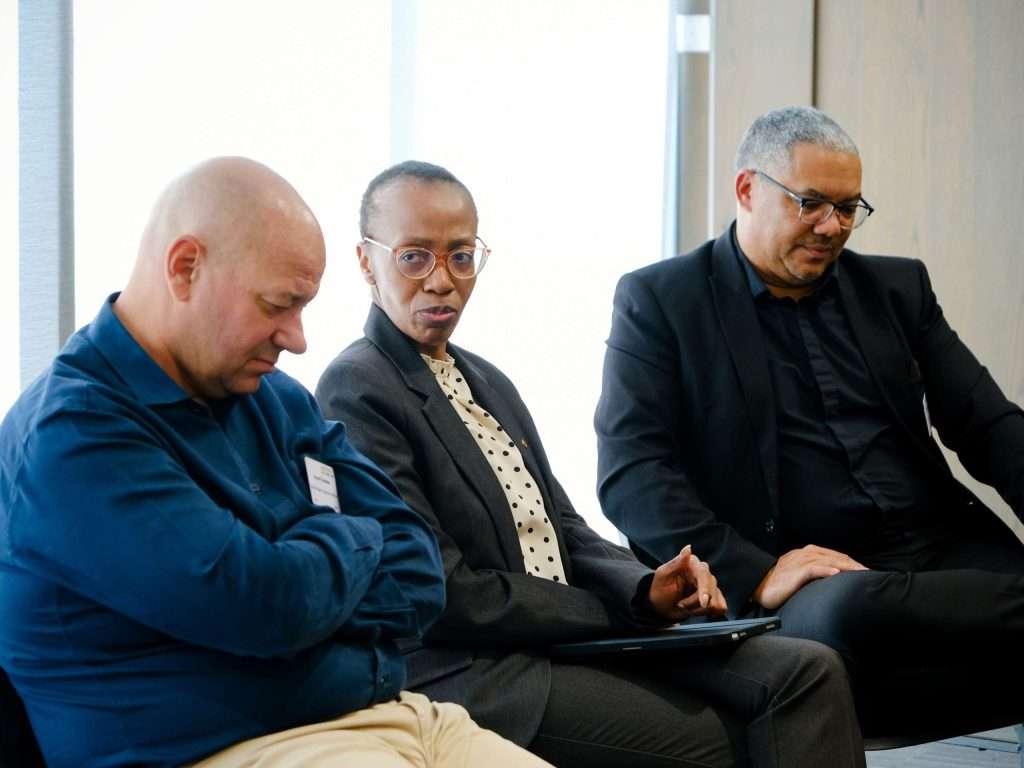
She and fellow panelists Norbit Williams, general manager: group IT at Eskom, and Steven Teasdale, chief people experience officer of Discovery, spoke during a breakaway session titled “Change Fatigue: Moving fast without breaking trust”.
El reflected on her experience of leading change at Cell C and highlighted clarity, communication and consistent execution as key to bringing people along on the journey.
“When I got to Cell C, I walked in and I think the rest of my team walked in behind me. I joined Cell C nearly four years ago, inheriting a team made up of people from different cultures and backgrounds, each bringing different expectations and experiences to the organisation.
“In the last four years, you grind everything on almost a brand-new team. Everybody came from a different culture, a different place,” she said.
She said one of the first priorities was creating clarity around what the organisation was trying to achieve.
“There’s a lot to do, so clarity was important. We have to make sure we stick true to communication and then do constant execution,” El said.
However, she stressed that execution should not become an end in itself. Instead, leaders should focus on initiatives that create maximum value for employees and help them understand and believe in the change.
Bringing the authentic self to leadership
For El, building trust also required a more personal approach to leadership, which is why she explained that leaders need to be comfortable bringing their authentic selves into the workplace, particularly during periods of significant uncertainty.
“It’s very difficult to meet people when the version of you they see is different every day. So that authentic self had to come. And I had to be comfortable with it,” she said.
She added that it was equally important for employees to feel that their contributions were recognised.
“As they’ve seen us execute, to give them a moment. And moments of knowing that they’re seen and heard,” she said.
She added that while AI is making information more accessible, leaders should not lose sight of the value of human interaction.
“AI is democratising information availability. But while that’s happening, the best way to get it is to go ask the person,” she said.
For El, involving employees in the transformation journey means allowing them to see where their input has influenced the organisation’s direction.
“That’s been important to get guys to contribute to the journey so they can see bits and pieces of their input,” she said.
Keeping middle managers from being overwhelmed
El also highlighted the crucial role of middle management in translating organisational strategy into action.
She said leaders need to provide clarity around the initiatives that can deliver value quickly, rather than asking middle managers to implement and absorb too many changes simultaneously.
“Just making sure there is clarity around the things that are going to add value quickly, so that your middle managers are not trying to implement too many things and absorb too many things that they start scattering into different directions,” she said.
At the same time, senior leaders need to recognise when intervention is necessary and when managers should be given the freedom to move independently.
“You have to know when you need to step in. Senior leaders sometimes need to take greater ownership of difficult decisions to reduce the pressure placed on middle managers,” she said.
Protecting the soul of the business
El said transformation should not come at the expense of what makes an organisation distinctive.
“The soul of most of the businesses hasn’t changed,” she stressed, arguing that organisations can lose their way when new initiatives move too far away from the values and identity that employees and customers associate with the business.
“When you start implementing things that are going against the soul of your business, which is what people identify with, you go wrong,” she said.
When that happens, leaders need to reassess, step back and rebuild.
El also urged leaders to break ambitious strategies into smaller, practical components that employees can understand and execute.
“Break it down into miniature components so people get it because your big picture view means nothing,” she said.
She recalled discussing the possibility of listing Cell C early in her tenure, but recognised that such a long-term ambition could be difficult for employees to translate into their everyday work.
“If I go back to my team and say to them, we’re going to list this thing, do you think they can see it? They can’t see this thing. They can’t even figure out how they’re going to post this journal,” she said.
For El, the lesson is that leaders need to spend more time explaining not only ‘what’ the organisation wants to achieve, but ‘how’ employees are expected to get there.
“People are not spending enough time up front on how am I going to execute this thing for you, not for me,” she said.
She also emphasised the importance of leadership self-awareness, particularly when a new strategy or operating model does not work as intended.
“If you failed, please just say you failed, and then move on. There’s nothing worse than people kicking the dog. You can see it’s failed, you can see it, but you keep flogging this thing,” she said.