Following a significant turnaround, iOCO Technology Group’s finance leadership revealed the company’s new focus on deploying capital with discipline, accelerating growth through technology and strategic acquisitions while maintaining a high-performance culture at the 2026 Finance Indaba.
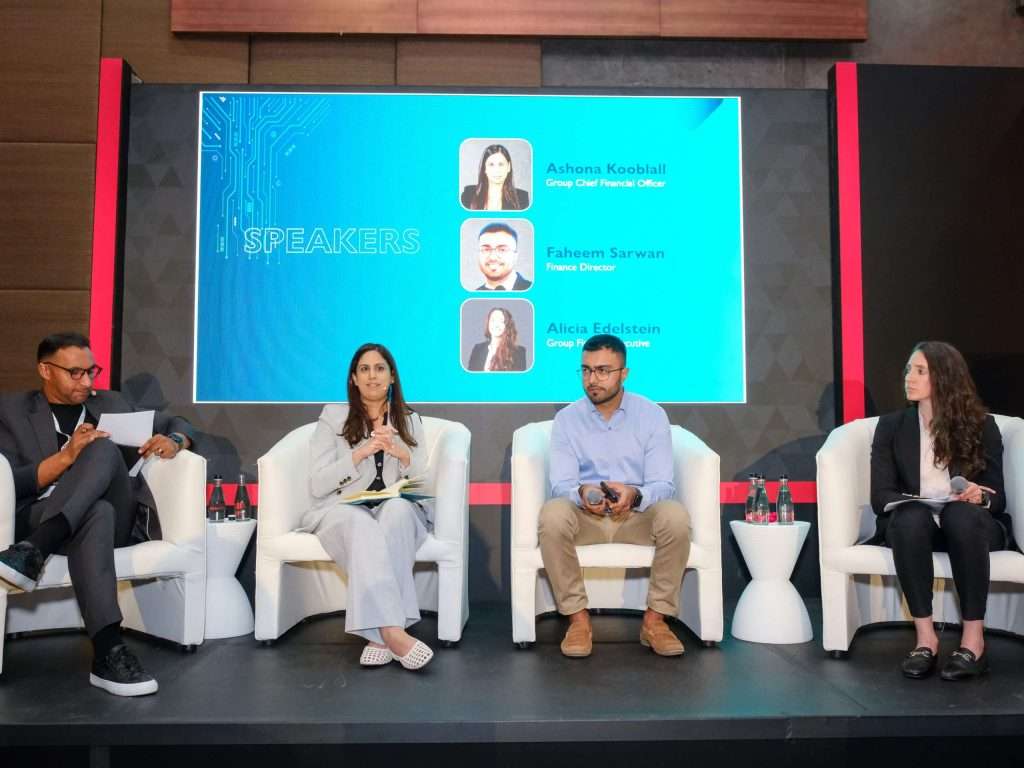
In a panel discussion titled The next chapter: Building on iOCO’s journey and accelerating what’s next, the iOCO Technology Group’s finance leadership reflected on the company’s turnaround, the culture behind it and the priorities shaping the business’s future.
Ashona Kooblall, group CFO at iOCO Technology Group, was joined by Alicia Edelstein, group finance executive at iOCO Technology Group, and Faheem Sarwan, finance director at iOCO Technology Group, for a conversation about the decisions that reshaped the business and the discipline required to maintain its momentum.
A turnaround built on three pillars
Looking back at the group’s performance in 2024, Ashona described the scale of the challenge facing the business. “Two years ago, from a JSE perspective, iOCO’s revenue found itself in the top quartile from a size perspective, but profitability-wise, the bottom decile.”
The response was a three-step strategy focused on cost rationalisation, decentralisation and smart capital allocation. The objective was not simply to reduce expenditure, but to address the operating model and establish a stronger foundation for profitability. “We had an operating model issue that we needed to very quickly rectify,” Ashona explained.
Decentralisation placed greater decision-making authority in the hands of business leaders, bringing decisions closer to customers. At the same time, cost discipline and a sharper approach to capital allocation helped establish a more focused approach to value creation.
The results followed quickly, with the group delivering a strong profit within six months of implementation, followed by further improvement. The emphasis now is on maintaining that discipline while pursuing revenue growth, margins and return on equity according to Ashona.
Building a culture of ownership
Sustaining the turnaround depends on how people across the business approach performance and accountability, Faheem said, explaining that finance has a central role in embedding that mindset.
“The culture of adding value in finance starts at the top. Our finance leaders have ensured that there’s a culture of ownership, treating the business as if it's our own and looking at each rand spent.”
Ashona linked that ownership to performance. “We’re obsessed with a culture of high-performance and having the right people in the right positions. When you have that in place, the numbers will fall in place, as we’ve seen at iOCO. Just as importantly, we believe in having fun with our people and clients while delivering high profitability,” she said.
Finance as an active participant, not a scorekeeper
That ownership extends beyond reporting results. Faheem said finance teams must identify practical interventions when forecasts indicate that a business could make a loss, rather than simply communicating the numbers.
This approach combines commercial decision-making with finance’s responsibility for compliance, risk management and independent oversight. Accurate, timely information enables finance professionals to contribute meaningfully to business decisions while maintaining those responsibilities.
“Simplicity is not about reducing what we disclose or cutting down on accuracy. It's really important that the numbers talk to the performance of the business and tell the audience where the strategy is going. We are transparent on revenue, EBITDA, cash generation, and the quality of recurring revenue,” Alicia said, further emphasising the importance of transparent reporting in supporting this performance culture.
Where capital goes next
With the turnaround providing a platform for growth, iOCO is focusing on acquisitions, cash generation and opportunities to strengthen its market position. Ashona further explained that future capital allocation will remain disciplined, with acquisitions required to meet a high bar for value creation.
Alicia added that when it comes to acquisitions, iOCO’s priority is to preserve the entrepreneurial cultures that made the businesses attractive while providing access to group customer relationships and governance structures.
Technology adoption is another part of the growth agenda. Faheem emphasised that AI and automation must be supported by training, sound business cases and appropriate governance, with employees involved in the process.
“My perspective is that AI enables super intelligence in the same brilliant minds we have in our people. I recommend to our people that they get super fascinated with AI in their day-to-day to create cumulative organisational capability,” Ashona added.
Asked by a Finance Indaba attendee what she would want to say at the next Finance Indaba about what iOCO’s finance leadership team has accomplished, Ashona offered a straightforward ambition: “We did what we said we would do.”