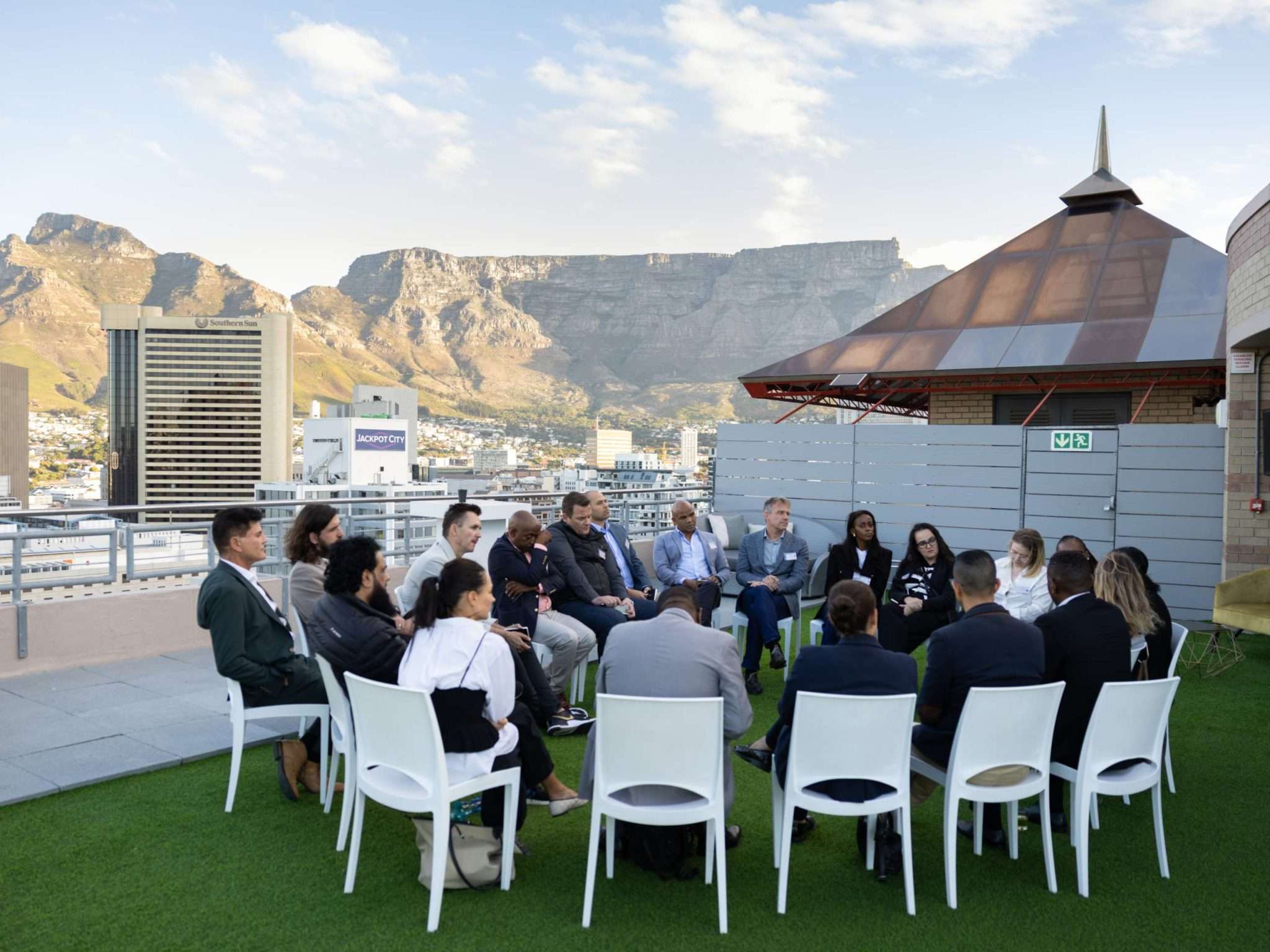
The CFO South Africa Cape Town Summit returned to the Mother City on 16 April, bringing together the city’s finance leaders in the elevated calm of 180 Lounger.
Held under the theme Next-Gen Finance, CFOs stepped out of reporting cycles and quarterly pressure into a space shaped for peer-to-peer unfiltered conversations about what it now means to lead finance in an era defined by AI acceleration.
After the first clink of glasses over networking drinks and canapés, CFOs moved into breakaway discussions in small groups for honest reflections on liquidating old ways as digital finance accelerates.
The programme then transitioned into a masterclass on sticking to unpopular decisions, featuring Kevin Jacoby, CFO at the City of Cape Town and 2025 CFO of the year, and Zaf Mahomed, CFO at Oceana Group.
Kevin grounded the conversation in the institutional responsibility of the finance function within a public environment.
Beyond the numbers
“My job is to build and sustain shareholder confidence in the City of Cape Town. It’s not easy asking people to take their hard-earned money and put it into the coffers of a political institution. They need to believe that, regardless of the political leadership, the administration is managing those funds responsibly and consistently,” he said.
“Beyond corporate finance, a critical focus area is monitoring service delivery,” he continued. “We track service requests closely, and we’re increasingly able to predict issues, whether it’s a protest or a service breakdown, by applying data and intelligent systems. It may not always be called AI, but there is a level of predictiveness in how we analyse information.”
Zaf shifted the lens to organisational structure and leadership dynamics, positioning the CFO as the quiet architect behind the scenes.
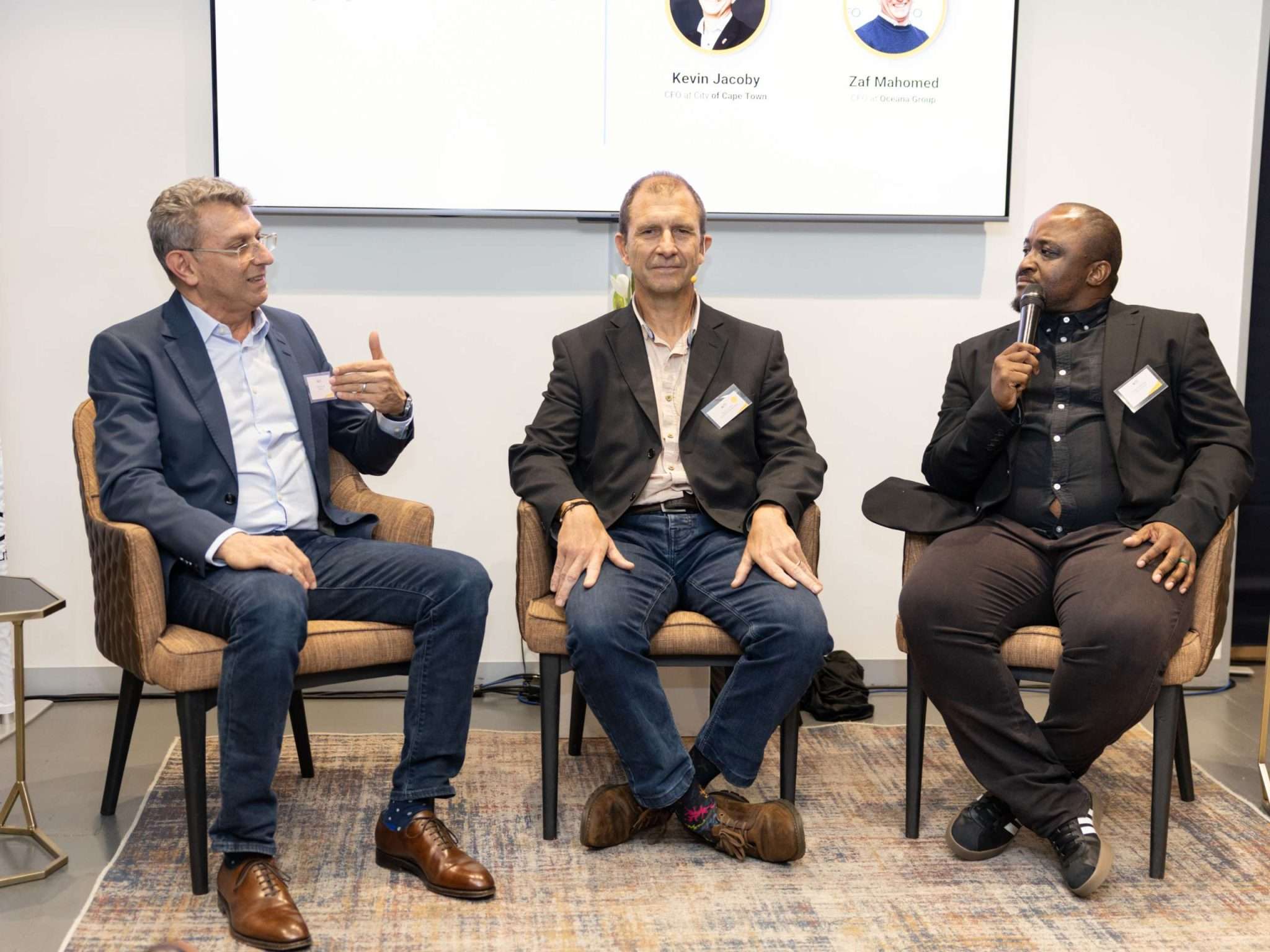
“The CEO is there to grow the business, be the mover and shaker, and to drive revenue and expansion. Our role is slightly different. First and foremost, we are the wingmen to the CEO. We look around corners and build the platform and foundation that enable them to do what they are trained to do. They shouldn’t have to look over their shoulder to check whether the basics are working or whether assets are delivering the right returns.”
The evening then moved to the scenario planning session which extended the conversation into the future of digital finance, data and AI, with Sandile Dube, MD at Equinix SA; Hywel George, director of investments at Old Mutual Investment Group, and Vuyani Jarana, founder at iLitha Telecoms and former CEO at SAA.
AI enters finance
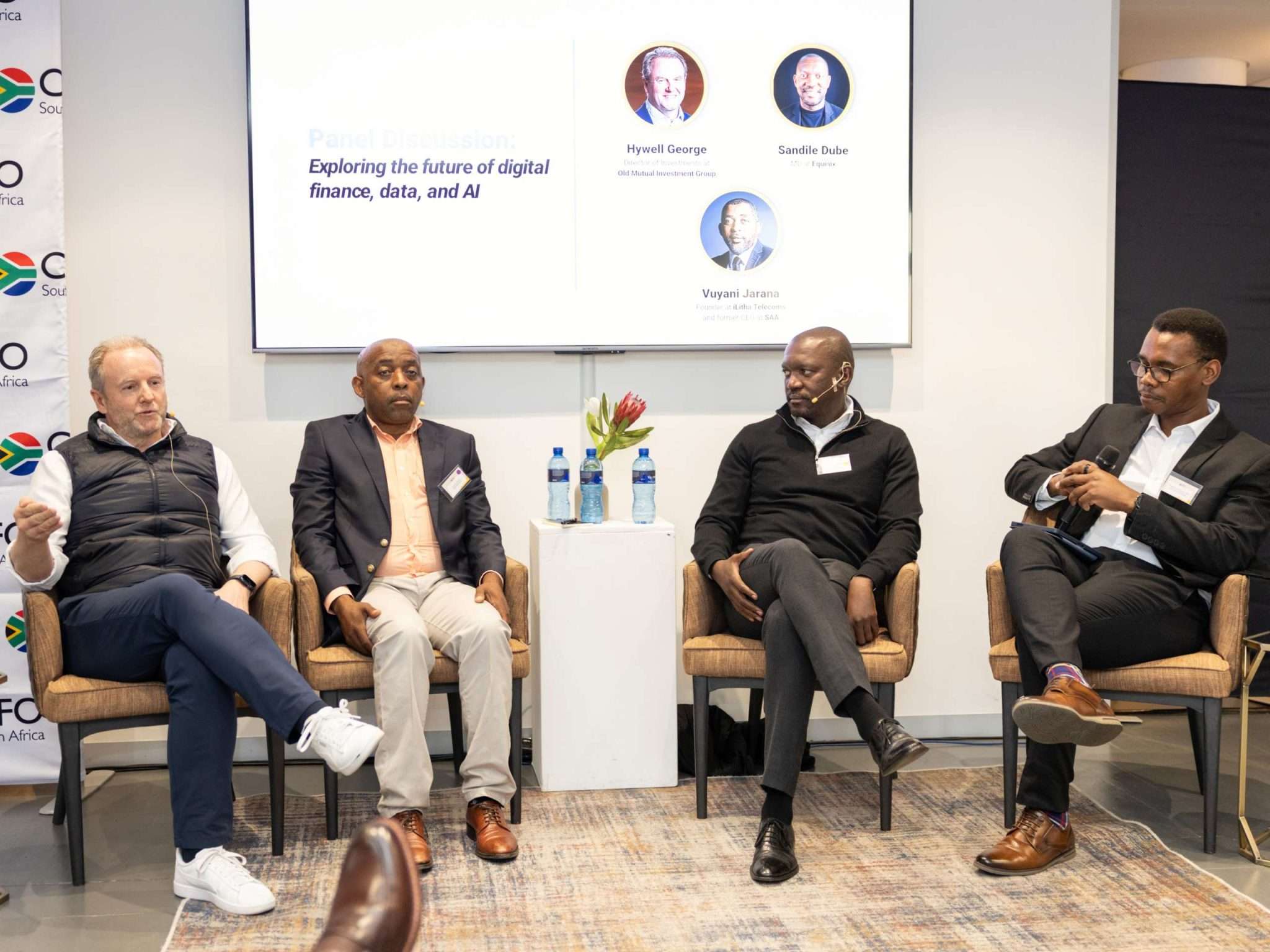
Vuyani began the conversation by describing a fundamental shift in visibility and decision-making brought about by AI. “AI is enabling greater insight into the organisation and the performance of its assets. In that sense, the CFO becomes a key partner in crafting the investment case and the business case for these investments, and increasingly owns visibility over asset performance and outcomes,” stated Vuyani.
“The tools we now have are allowing us to make this more transparent. We can see where the gaps are, where value is being created and where the opportunities lie,” he added.
Sandile emphasised that this evolution extends beyond finance into every function of the organisation.
“AI is challenging methodologies across a number of functions, not just the CFO function. The value we are seeing with AI is that it provides greater clarity and more data, so that decisions are better informed by the perspectives AI brings, while still requiring human input for interpretation.”
Hywel echoed this statement and touched on the speed of technological change. “AI has moved from being reactive to being proactive. It has become agentic, that these systems are now capable of identifying weaknesses across complex environments, including financial systems, at speed. That has triggered urgent responses to assess and patch those vulnerabilities before they can be exploited,” he said.
The CFO shift
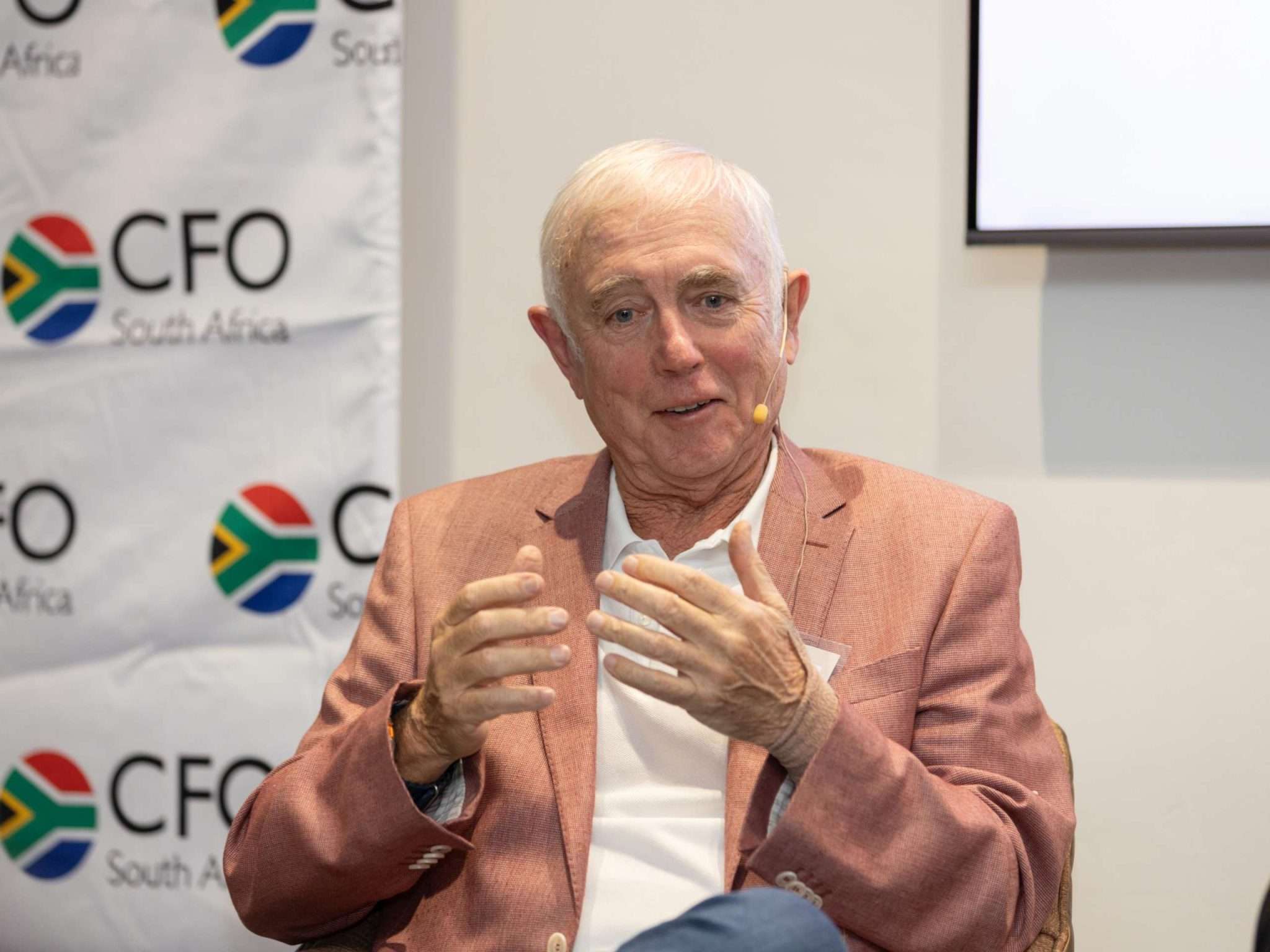
The evening that opened on a high note maintained its momentum until the end, closing off with a fireside chat with Paul Harris, co-founder and former CEO of FirstRand Group. Paul leant into what it really takes to build future-ready teams in a world moving at digital speed.
“Too often, finance leaders see their role as simply saying no, but I think the most important principle is that the business case must prevail. That means putting everything on the table, discussing it as a team, being transparent and allowing everyone to contribute. We are all human and judgement errors will happen. That is acceptable if the process has been robust and inclusive. For me, a judgement mistake is human, but a violation of values is not acceptable,” said Paul.
He thereafter closed with a strong view on capability and access in the AI era.
“The best investment we can make is ensuring everyone knows how to use AI. I think this is Africa’s greatest opportunity to leapfrog. Anyone who can read and is curious can, almost instantly, become more capable in law, accounting, or engineering because they now have access to another brain through AI,” he said.
“Access is not the issue. That idea that people don’t have access is overstated. Anyone with a smartphone and curiosity can use these tools. You can be anywhere, even digging a hole in a garden, and still have access to a powerful tool. If you are curious, can communicate, and have a smartphone, you can become proficient in almost anything,” he concluded.
The Next-Gen Finance Summit was made possible by Executive partners BDO South Africa, Marsh, STANLIB, and Workday; and Associate partner AICPA&CIMA.