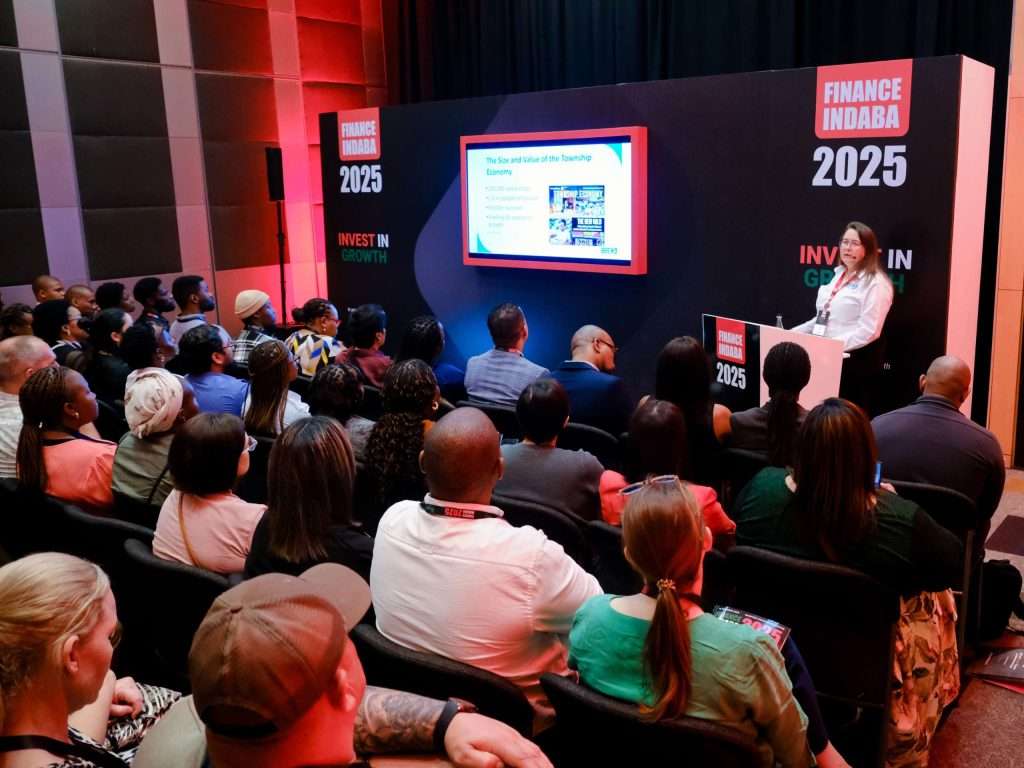
During the session themed Beyond compliance: The strategic value of B-BBEE, Jodi Joseph, CEO of BEE123, engaged the audience at the fully packed 2025 Finance Indaba in a live poll to gauge their perceptions of B-BBEE, asking attendees to share the first word that came to mind when they heard the word B-BBEE.
The word cloud that appeared on screen spoke volumes. Words like compliance, transformation and empowerment dominated, while others such as regulation, procurement and inequality hovered in the mix.
She then shifted to a question on barriers, questioning what is really holding back meaningful transformation in South Africa.
The results from the audience highlighted challenges from skills and understanding to government inefficiencies, racial divides and lack of executive support. But one response stood out and dominated all others – corruption.
She then noted how these differences and challenges cause organisations to approach BEE differently.
“Some businesses consider B-BBEE irrelevant. Some clients admit they don’t know how it works and need guidance. Others feel it adds nothing to their business and choose not to engage with it. At the other end of the spectrum is the transformational side and it is encouraging to see a high proportion of clients leaning in that direction,” she said.
“We see more of corporate South Africa saying they are willing to do the programme and invest, but they want to have an impact. Of course, many are still sitting at the compliance only side, but if you add those two segments together, more businesses are moving away from compliance into the strategic side,” she continued.
All about impact
Having held roles as CEO, CFO and COO, Jodi shared a real-world example of the compliance mindset in action. “In the last week of the financial year, it is common for a CFO to call for urgent help, often prompted by the transformation department for the first time, warning that a large payment is needed to remain compliant. This approach leads to work that lacks impact because compliance, rather than strategy, is driving the decision,” Jodi noted.
“In the South African context, the non-financial ROI is always about impact, including how many lives have been touched, how many small businesses have grown, how many employees those businesses have hired over the past year and the overall progress made against unemployment.”
She also reminded organisations to look inward, ensuring that internal teams benefit from transformation initiatives as much as external communities, and noted the opportunity to make a meaningful difference in South Africa’s economy and social landscape.
“There are 10 million young people between 15 and 24 unemployed, and another 10 million between 25 and 34, totalling 20 million young people without work. Even more concerning, 55 percent of adults are still living below the poverty line, defined as the minimum rand value needed to afford food and avoid malnutrition. This means that more than half of South African adults do not have access to R1,100 per month, highlighting the magnitude of the transformation challenge,” she elaborated.
At the same time, she pointed to opportunity in the often-overlooked township economy, which in 2022 employed 2.6 million people, created 150,000 jobs and generated R150 billion in turnover, fuelling economic growth. She stressed the need for corporates to engage with this economy and include it in their business strategies, as it represents a key area of growth.
As the session drew to a close, she invited the audience to reflect on one word taken away from the session. Transformation emerged as the dominant word, serving as a fitting takeaway to a session that moved beyond compliance and into the transformative, real impact.