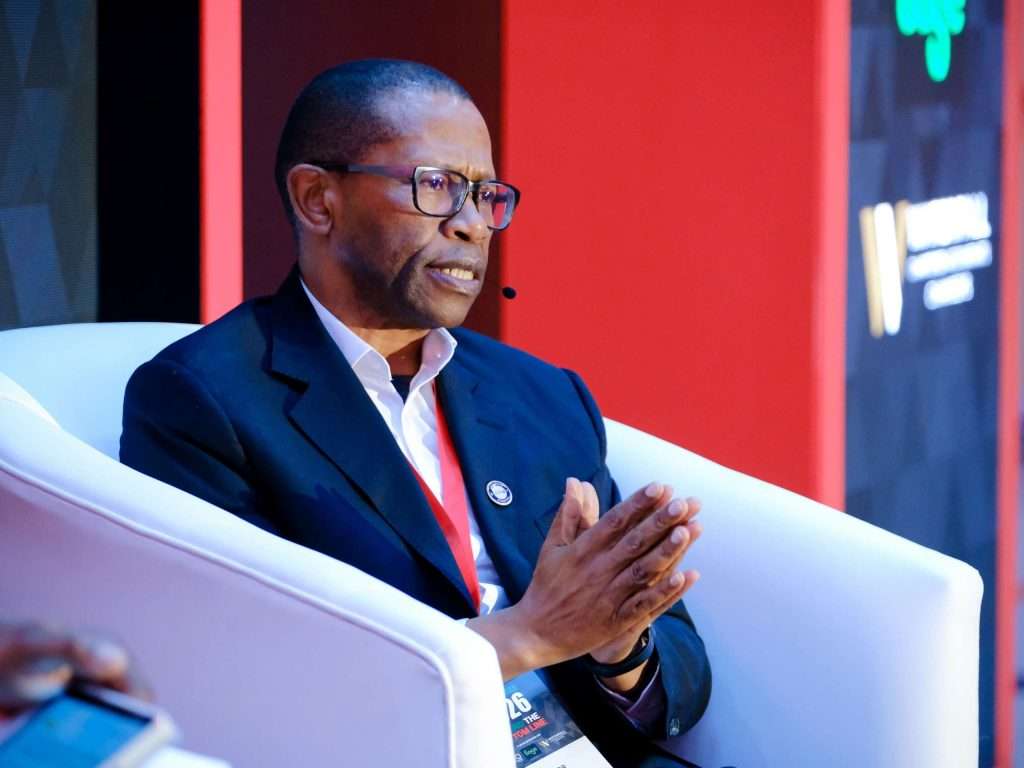
According to Victor Sekese, chairman at the Centre for Assurance Quality and Reporting, South Africa’s fight against corruption cannot be left to government, law enforcement or whistleblowers alone. He said finance professionals, with their influence over financial controls, audits, procurement and payments, have the opportunity and the responsibility to challenge wrongdoing before it becomes entrenched.
Speaking during his radical bravery masterclass on the finance professional’s antidote to systemic corruption at the 2026 Finance Indaba, Victor called on the industry to look beyond technical responsibilities and consider how individual decisions, ethical leadership and the courage to speak up could help change South Africa’s economic trajectory.
Victor opened by pointing to South Africa’s economic outlook and the persistent socioeconomic challenges facing the country, arguing that the finance profession needed to consider its contribution to changing the status quo.
Putting public interest first
“We recently heard that South Africa’s economy is expected to grow by just over one percent. That does little to ease our concerns, as the socioeconomic challenges we face, particularly unemployment, are likely to remain with us for some time. As a finance sector, including the auditing profession, we need to ask what we can do collectively and individually to change the narrative and alter the trajectory of our economy, ultimately helping to address these socioeconomic challenges,” he said.
“It is an indictment of all of us that Africa can be so rich in natural resources and human capital, yet remain so poor. Estimates suggest that by 2030, 80 percent of the world’s poor will live in Africa. This is a deeply troubling contradiction, given the continent’s resources and its young population.”
Victor added that confronting this contradiction begins with recognising that professional success comes with obligations beyond personal advancement. According to him, the knowledge and opportunities gained through education should also be used to address the challenges affecting the wider society.
“Society expects something from its professional class. If you have had the opportunity to receive an education and secure a professional position, you are privileged, and society expects you to contribute something in return. We need to step back and ask ourselves why we work. Of course, we work to make a living, provide for our families and enjoy a decent standard of living. These are legitimate objectives. However, I believe more is required of us as professionals. We have a responsibility to contribute to solving society’s problems.”
“Public interest, however, should not be a concept reserved for professional accountants. It is a principle that every good citizen should embrace. Yet, when we look at society, we can see how often this sense of public responsibility is missing.”
Victor linked this wider professional responsibility to the principle of serving the public interest, arguing that it must take precedence over personal gain and guide how professionals conduct themselves in positions of influence.
“Political leaders and public officials sometimes appear to have forgotten that their role is to serve society and the people. As accounting professionals, we occupy positions from which we can demonstrate what it means to be responsible citizens who serve the public interest. Yes, we need to earn a living, but there is a greater purpose. We should serve the public interest, and it is through serving that interest that we should earn our living. The problem arises when we reverse those priorities and focus on personal wealth and appearances, regardless of whether our actions serve the public good.”
Silence is not golden
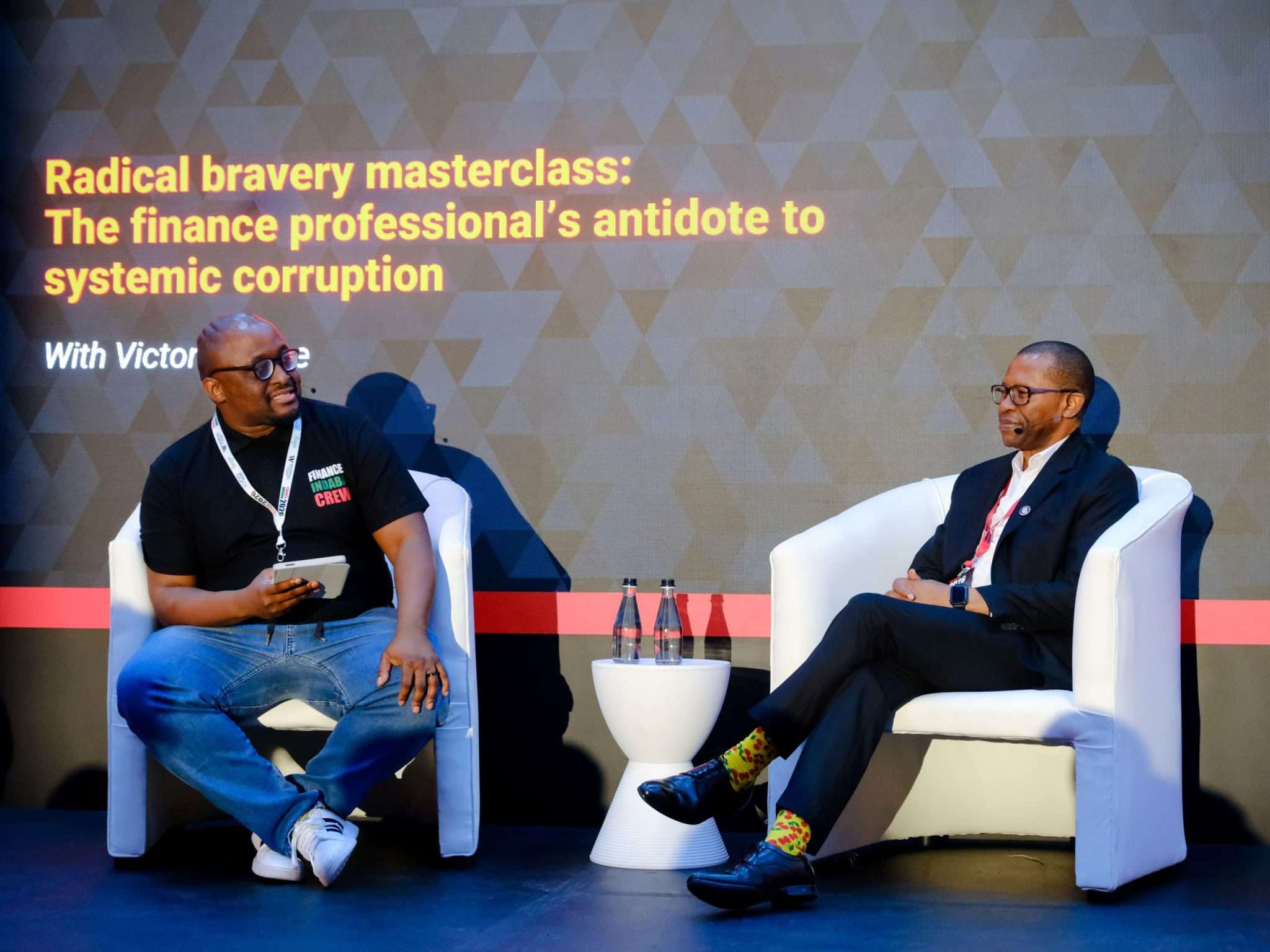
Turning this principle into practice, Victor said it requires professionals to take responsibility for the environments in which they operate, from their workplaces to their communities and beyond.
“I want to challenge us to change that narrative, starting in our immediate environments and extending to our communities, municipalities, country and continent. It has to start somewhere, and it starts with each of us.”
Victor observed that ethical failures often become public only after they have been allowed to persist, with individuals choosing not to intervene because they fear the consequences or believe the responsibility lies elsewhere.
“When ethical failures come to light, we often discover that people knew about the wrongdoing long before it became public. They chose to remain silent because they felt it was not their responsibility, feared causing trouble or needed to provide for their families. We have a responsibility to speak up. We need to create a speak-up culture that allows ethical failures to be addressed before they escalate into something disastrous.”
For Victor, building such a culture also means acknowledging that corruption is not confined to the public sector.
“Corruption often receives the most attention when it occurs in the public sector, but the private sector is also implicated. Public sector corruption attracts significant scrutiny because the government is a major procurer of goods and services and one of the largest employers. However, public officials cannot engage in corruption alone. They need other actors, many of whom come from the private sector, seeking opportunities to benefit from public resources,” he noted.
“We have seen respected local and international brands, including companies in the IT and consulting sectors, implicated in corruption and compromised through their collaboration with people acting with improper intentions. As a result, rent-seeking has become normalised in some areas.”
Don’t sign off blindly
He also highlighted the difficulties faced by township entrepreneurs who encounter demands for bribes when trying to secure contracts, illustrating how corruption can obstruct legitimate economic participation.
“Even at municipal level, small business owners trying to make a living in townships report how difficult it can be to secure contracts without being expected to offer bribes or other forms of gratification. Meanwhile, some officials who already earn good salaries continue to demand these payments for additional personal gain.”
“The challenge is systemic. It cuts across both the public and private sectors, and finance professionals are in a privileged position to help change the mindset and culture. We need to become counter-cultural and challenge practices that have been accepted as normal.”
Victor urged finance professionals not to treat reports of corruption as unfortunate stories to acknowledge and then move past. Instead, he called for a willingness to investigate concerns, establish the facts and take action, particularly when those practices undermine the integrity expected of the profession.
“I think about the entrepreneurs in our townships who are simply trying to make a living. When they tell us how difficult it is to secure a contract because someone expects a bribe, we cannot simply listen and move on. We need to ask what evidence exists and what can be done to address the problem. It is particularly concerning when these practices extend into the accounting profession itself, where we would expect people to uphold the highest standards,” he reiterated.
“We need a movement of finance professionals willing to take a stand. Finance professionals are involved in approving purchase orders and payments, establishing internal controls, conducting audits and ensuring compliance. Each of us has a responsibility to say no when something does not make sense.”
Concluding the session, he stressed that this responsibility must translate into practical action.
“Consider how often we hear about money being spent without any goods or services being delivered. Basic accounting principles require evidence of delivery before payment is approved, and it is not enough for something to have been delivered; the quality must also meet the required standard. We need to insist on evidence, verify that the work has been completed properly and withhold payment when it has not.”