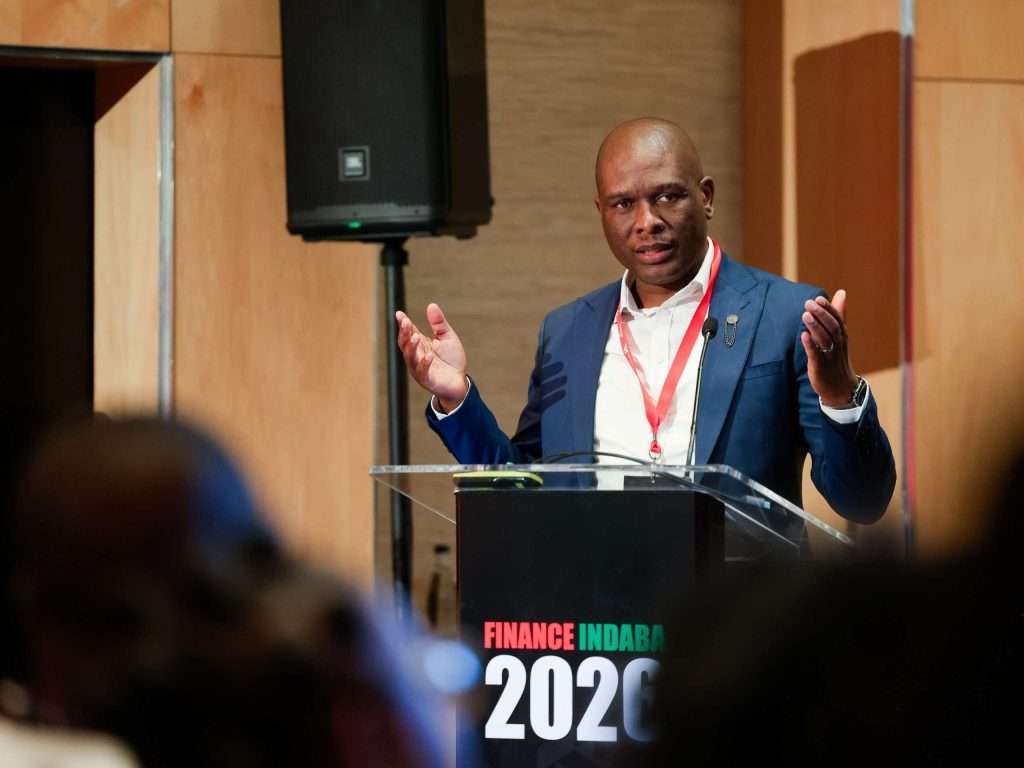
Soul City Institute for Social Justice executives discussed mental wellbeing as an essential part of an organisation’s bottom line at the 2026 Finance Indaba.
What happens when talented employees are physically present at work, meeting deadlines, and appear productive, but they are emotionally depleted and disconnected?
Dr Dumisani Dlamini, CFO at Soul City Institute for Social Justice posed this question at the 2026 Finance Indaba during a session titled Sustainable wellbeing masterclass: What the balance sheet doesn’t show you, alongside Phinah Kodisang, the organisation’s CEO.
Dumisani stated that employee mental wellbeing cannot be neglected, as employees are key to an organisation’s overall performance. “We are very good at meeting quarterly targets and delivering on projects, but at what human cost?”
“What remains unspoken eventually shows up in performance. You will push yourself until the numbers do not balance anymore,” Phinah added.
Dumisani highlighted presenteeism as a key challenge in the workplace where employees are physically present but not performing at capacity. “We can measure absenteeism, but we cannot measure the cost of presenteeism. Nobody measures the errors the person is making at work.”
Building resilience and not endurance
Phinah implored finance leaders to examine where survival looks like success and employees appear to be performing well while they are drowning under pressure.
“There is a difference between endurance and resilience. This is where organisations can be misled by their own results. The deadline is met, but what happens to decision quality? The target was achieved, but what happens to trust and collaboration? Our high performers are still producing, but for how long? Our leaders keep delivering while their capacity narrows. Short-term output can conceal long-term depletion,” she said.
“Wellbeing shapes resilience. We need to make sure that we always create a safe space for employees. Organisations need to sit with their teams and look at what holding space looks like for them. It cannot be something that comes from outside. It must be informed by the lived realities of the organisation,” Phinah added.
Challenging the status quo
Dumisani emphasised that organisations need to investigate why the current way of working makes it difficult for employees to cope. “We may give people support systems, but if we are not changing the environment that makes people have mental health issues, then we will continue to have problems.”
He added that organisations need to challenge the existing way of working by examining the false trade-offs between performance and wellbeing.
He explained that finance shapes what the organisation notices, values, funds and holds accountable. He noted that finance leaders need to make the hidden people costs more visible and must look beyond what is reflected in financial statements.
“As finance leaders, we are the first to signal when turnover is down, productivity is low, and overtime is high.”
He added that finance leaders need to look into what human factors sustain these financial indicators. “Are the strong results dependent on chronic overtime, and what does it take for people to sustain the organisation’s performance?”
In conclusion, Phinah challenged finance leaders to identify one psychosocial risk signal, run a 90-day practical experiment to reduce this risk signal, and examine the impact on business outcomes.