In leveraging trusted organisational data and AI, finance teams can drive both commercial value and operational efficiency. During the 2026 Finance Indaba senior finance leaders provided valuable insights on how to use data and AI more efficiently.
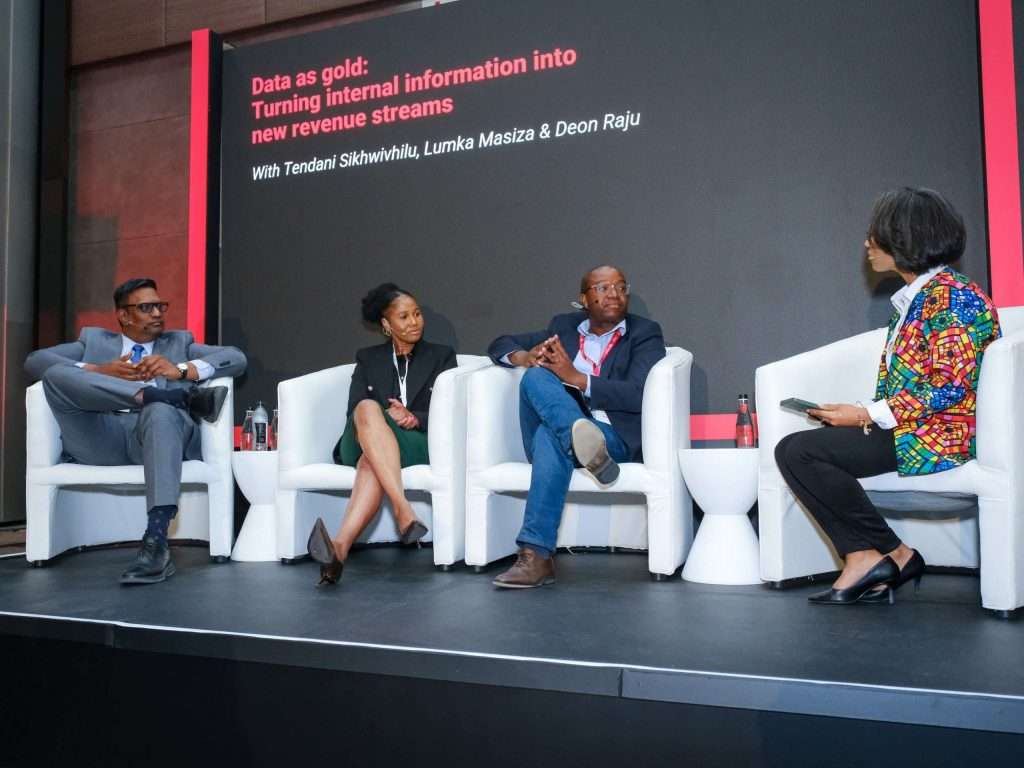
During a panel discussion titled: Turning internal information into new revenue streams, finance leaders Deon Raju, group financial director at Absa, Lumka Masiza CFO at Everllence, and VP group corporate finance at Massmart, Tendani Sikhwivhilu, offered key insights about how companies can leverage the data they collect.
Finance teams have access to an extraordinary amount of information, which they use to improve the business’s bottom line.
Yet, possessing data is not the same as creating value from it.
Scaling data for better decision-making
The information finance teams gather has an added advantage in that it is subject to rigorous auditing processes, making it trusted data.
“Trusted information can then be used to make decisions,” said Deon. Historically though, scale has posed a challenge in extrapolating meaning from the immense data sets due to the costs involved.
However, technology now allows finance to bring significant scale into what they do. “So, in as much as all of our sourcing previously sourced this thin level of data, we now have technologies that have opened the ability to open our pipe and bring it all in. Once it comes in, you apply your assurance once and then have it available for everyone, whether that's needed for financial reporting, delivery of insights and so on,” explained Deon.
“You don't have to solve everything as finite, but there is huge value in creating the trusted level of information that you make available to the rest of the firm,” he added.
It then comes down to the decisions that this data enables you to make once you integrate it with this technology.
Assessing the value
For Lumpka, converting data into value doesn’t always mean creating a new revenue stream. In industrial environments trusted data can also come from improving machine efficiency. This, in turn, can increase margins or reduce input costs to improve pricing competitiveness.
“That way, you get more profitability, which in itself is value,” she said.
“In addition, if data gives you ways of reducing your input costs, you can be far more competitive in how you price, which could then result in an increase in marketing. So, it might not be an additional revenue stream, but it means more value in your income statement overall.”
For Tendani, data can also aid customer understanding, which offers considerable business value.
"Every entity is in business because we serve customers, irrespective of which industry you are in,” said Tendani. “We need to understand who those customers are, not from a commercial perspective only, but also from a risk management perspective.”
“It’s not about just knowing the customer for the sake of compliance but also understanding what that would mean for us as a business. We then must understand their needs, many of which change over time. The data and insight that it gives us, enables us to understand these changing needs.” Understanding the customer need before the customer asks for it, can then also provide a competitive advantage.
Deon also suggested taking a problem-solving approach to maximising data value. Ask what the need that you’re trying to solve for is,” he said. “Then try to work back into what the data and what the insights it provides are, and how it is then going to be used to create value.”
Ultimately, underlying all data discussions, is the question of balance, the panel noted.
Organisations must determine how to draw the line between the drive for monetisation with the non-negotiable requirement to maintain customer trust and regulatory compliance.
“If we can't build and maintain the trust with the customers, we don't have a business as we then lose that customer,” Tendani said.