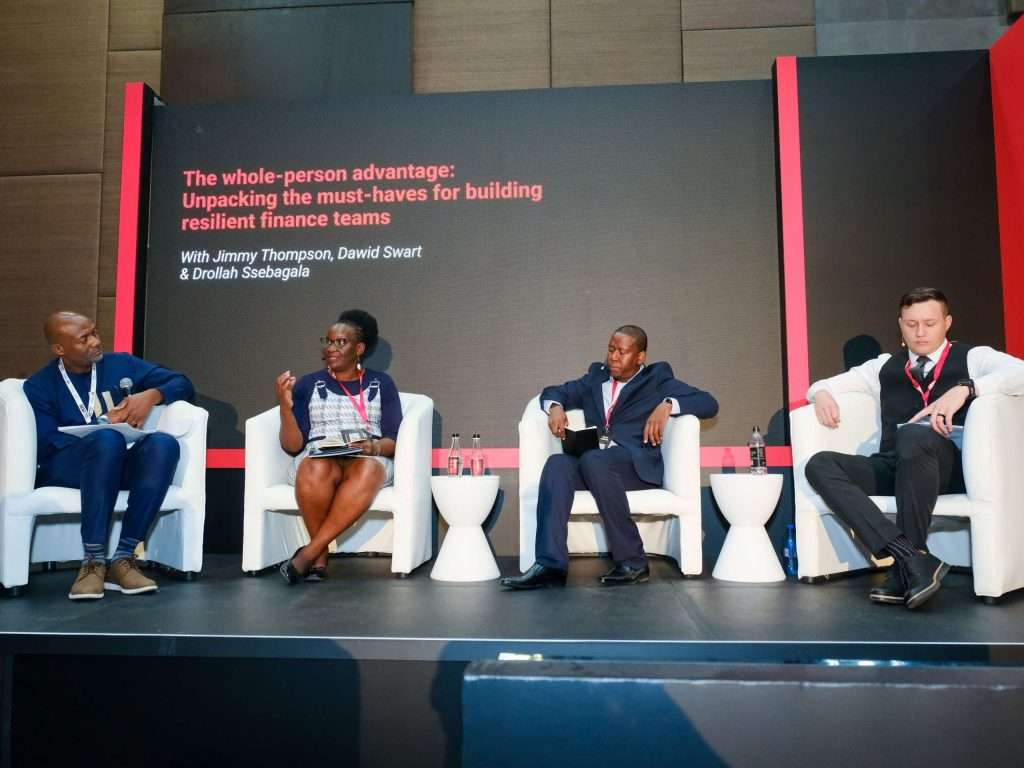
In a 2026 Finance Indaba session, panellists Dawid Swart, CFO of Afriwise, Drollah Ssebagala, deputy executive director: finance and operations at Uganda’s Joint Clinical Research Centre and Jimmy Thompson, executive head: VB FBP of sales and business operations at Vodacom discussed the importance of whole-person leadership and empathy.
The session titled The whole-person advantage: Unpacking the must-haves for building resilient finance teams, explored the human side of managing finance teams.
In an increasingly demanding industry characterised by growing complexity, technological disruption, and rising expectations, understanding the individual motivations of the people we lead is crucial to driving performance. Ultimately, it’s about understanding the people behind the numbers.
This necessitates what is termed as whole-person leadership. But what does that really involve and how does recognising who our employees really are help build resilience?
Creating human connections
Leadership that builds resilience in teams starts with the realisation that we rarely see the full story behind the people that we work with on a day-to-day basis. To really get to know them and thereby unlock their full potential, we need to understand their aspirations and motivations.
“What is very important is that you listen to people,” said Jimmy. “It may be a cliché, but listening is something that many leaders don’t do well. Yet, when you take that time to listen to people, that's when you really can unlock their real potential.”
Speaking of drawing the line between maintaining professionalism and getting to know the individual person behind the job description, Dawid said that this means recognising the fact that we are all human. “Humans thrive on relationships,” he said. While how deeply you connect on a personal level depends on one’s personal preferences, sharing experiences can help to make you a more relatable leader.
“I find that if you break down the barrier first and show an element of vulnerability as someone’s leader, it makes you a lot more relatable,” Dawid added. This lends itself to a more authentic working environment that is attuned to the needs and strengths of its people.
“Everyone’s going through a different phase, and that’s what makes it beautiful,” he continued. “But what makes it exceptionally difficult too because you need to try and meet different personalities in different phases of their lives and identify their proclivities and what makes them tick. Trying to align that to your goals and your company’s goals is the trick and the formula that you’re constantly chasing.”
Managing the pressure
No matter how close we get to realising that formula however, there is no escaping the pressure that finance professionals face. Yet while financial targets are non-negotiable, employees are not robots, Drollah said. Leaders need empathy, she added, otherwise they cannot get the best out of their teams. “There's the human element that you need to nurture and work on as a leader,” she said.
Therefore, to manage the pressure without our teams burning out, leaders need to define goals and celebrate small wins to maintain morale during intense periods of the year. “I'm not a leader who rewards long hours,” said Jimmy. “I’d rather reward you for innovative thinking and for getting the work done.” Working late at night, he said, in fact signals that there is a problem at play, and exhausted employees cannot function optimally.
Creating backups and multiple levels of review ensures that if an individual employee is struggling or unavailable, critical deliverables like audits or reports remain accurate. This also helps to minimise the pressure that team members often face.
Building capacity also means trusting staff to make mistakes – that they must however report – so that they can learn and improve over time. Resilience, Dawid added, comes with providing support and helping your team, especially those that are just starting out, to make sense of difficult experiences.
“You need to create an environment that allows people to be open about identifying that they need support,” Drollah said. Such an environment is rooted in the kind of trust that cultivates open communication between all levels of the team.